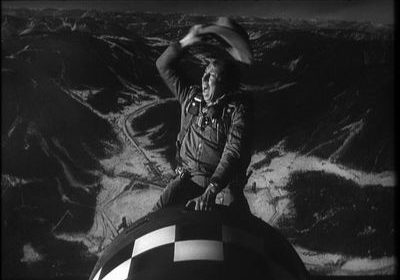
Killing Iranian scientists: Overland editor’s unintentional Orwellian irony
January 16, 2012 | Daniel Meyerowitz-Katz
Jeff Sparrow, the editor of literary journal Overland, has written a missive in The Drum today on the “terrorism campaign” going on in Iran. This refers not to what first comes to mind when one reads “Iran” and “terror campaign” in the same sentence, but rather a horrendeous campaign of murder and intimidation against scientists being waged, of course, by Israel: (emphasis added)
Last Wednesday, a motorcyclist attached a bomb to a car carrying a man called Mostafa Ahmadi Roshan, killing him instantly, and injuring his two companions.
That was merely the latest atrocity inflicted upon individuals and facilities associated with nuclear physics in that country … this is terrorism, pure and simple – the systematic infliction of deadly violence launched against civilians and their families so as to create a climate of fear among Iranian physicists and other nuclear personnel.
As Sparrow explains, the assassinations of Iranian nuclear physicists cannot be justified by pointing out that they are working towards a nuclear weapon. You see…
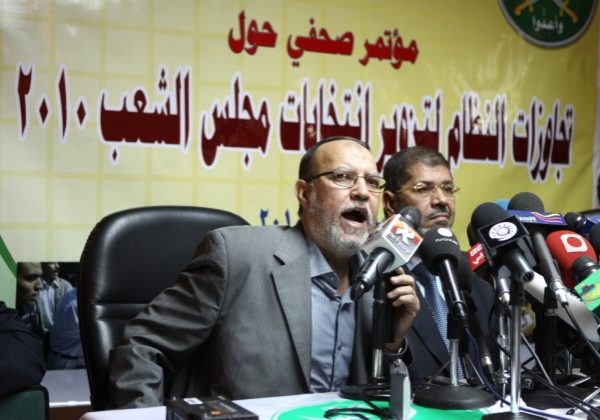
The Muslim Brotherhood’s plan for Egypt/ PA PM Fayyad speaks out on Iran
January 13, 2012
This Updates leads with two articles on the likely policies of Egypt’s Muslim Brotherhood now that it has won the parliamentary election, gaining approximately 41% of seats with other Islamist groups taking the Islamist bloc up to something like 2/3 of all seats.
First up is Washington Institute expert on Egyptian politics Eric Trager, looking at the likely agenda of the Brotherhood in power. He says that the agenda will be theocracy internally, and confrontation internationally, and that expectations that the group will moderate are very unlikely to be met – offering some behavioural evidence for this.
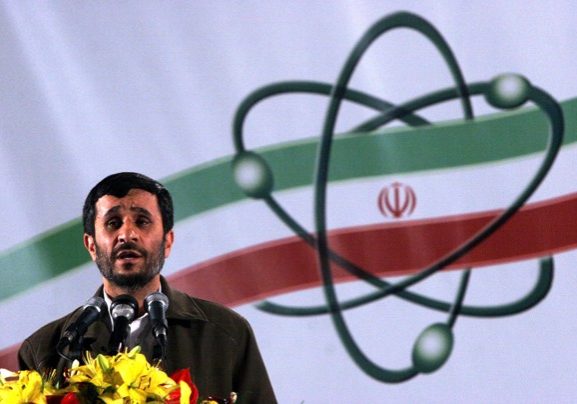
Iran escalates its uranium enrichment
January 12, 2012 | Sharyn Mittelman
The International Atomic Energy Agency (IAEA), confirmed on January 10, that Iran has started enriching uranium up to 20 percent at an underground site at ‘Fordow’, near the Shi’ite Muslim holy city of Qom.
Iran has maintained that its nuclear program is for civilian peaceful purposes. However, the underground enrichment facility ‘Fordow’ casts further doubt on Iran’s statements that the facility is for civilian purposes. The site was an Iranian secret that was only revealed in September 2009 by the US, France and Britain.
Iran’s enrichment of uranium at 20 percent also suggests that that its nuclear program is not for civilian use, which would enrich uranium at around 3.5 percent – the level needed for nuclear power plants.
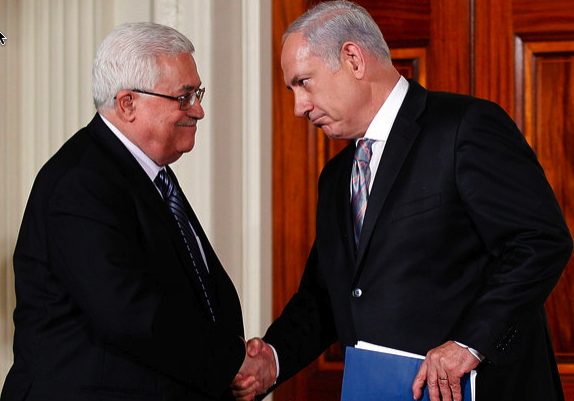
Back to the negotiating table?
January 12, 2012
The last two weeks have seen two meetings in Amman Jordan between Israeli and Palestinian representatives, in what are being called “preparatory talks”, but are the first direct public contacts between the two sides since 2010. (Some more details on the latest rounds of talks are reported here, here and here.)
A good backgrounder from BICOM on both the significance of the talks and the political factors influencing them is first up. It puts the meetings in the context of the Quartet efforts to restart talks and significant pressure on the Palestinian side to renew negotiations, and discusses what is known about the contents of the two meetings.
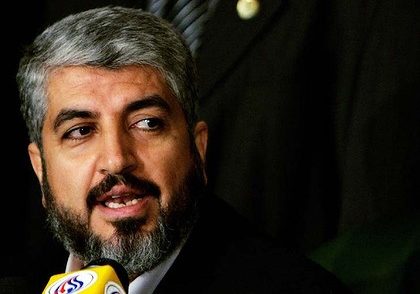
What does Hamas really believe?
January 11, 2012 | Sharyn Mittelman
Recently Palestinian Authority (PA) President Mahmoud Abbas claimed that Khaled Meshaal, the Hamas leader in Damascus, agreed during reconciliation talks between Fatah and Hamas on December 22, that “there will be no military resistance” and also agreed that “the permanent solution is on the ‘67 borders.” Abbas and Meshaal also agreed to a new temporary leadership for the PLO, for the first time in tandem with Hamas and Islamic Jihad.
However, it is unclear both the extent to which Meshaal accepts what Abbas said they agreed to and more importantly, whether Meshaal is speaking for Hamas – as many in Hamas have openly denied this new strategy, suggesting a rift between the Hamas leadership in Syria and the Gaza strip.
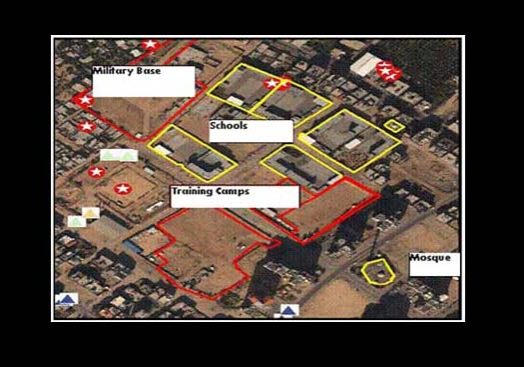
Palestinian rights activist confirms Hamas puts terror bases in civilian areas
January 10, 2012 | Allon Lee
A Palestinian human rights activist has inadvertently confirmed what Israel has always insisted, that terrorist groups live, train, operate and run riot throughout the Gaza Strip’s residential neighbourhoods.
In a piece written for the Palestinian website Maan, Gaza human rights activist Mahmoud Abu Rahma reveals that the “resistance movements” are so entrenched and widespread in residential areas that civilians are suffering frequent injuries because of their activities.
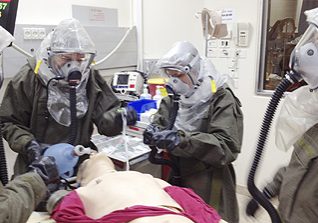
Israel – a leader in disaster planning
January 9, 2012 | Sharyn Mittelman
Israel has assumed the unwanted role as a world leader in developing medical technology and planning to prepare for disasters, and its innovations are being studied and disseminated to other countries to save lives.
In one example, American politician Gabrielle Giffords was shot in the head and almost killed a year ago, but an Israeli-made bandage is credited with stopping her bleeding. Today she is alive and on the road to recovery.
Dr. John Cohn, a Professor of medicine and assistant professor of pediatrics at Thomas Jefferson University, recently wrote about his visit to Israeli medical centres to learn about their medical disaster management plans on a program now in its eighth year run by the Disaster Management Division of Israel’s Ministry of Health…
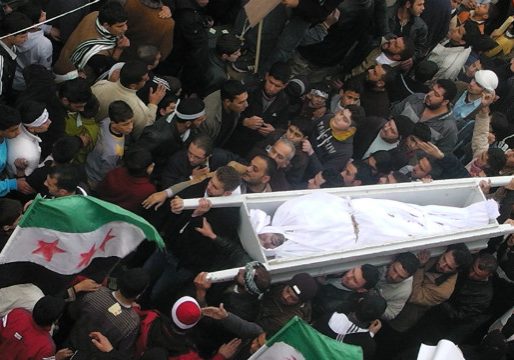
“Observing” the massacres in Syria/ Understanding the Muslim Brotherhood
January 6, 2012
Today’s Update features two pieces on the situation in Syria, where 20 civilians were reportedly killed yesterday, bringing the death toll close to 6,000 according to rebel leaders, despite the presence of a team of Arab League observers in the country.
First up is David Kenner of Foreign Policy, detailing the fact that the head of the Arab League observers mission, Sudanese Gen. Mohammad Ahmed Mustafa al-Dabi, is himself alleged to have been involved in genocide in Darfur. The allegations are that General al-Dabi was responsible for creating the Arab “Janjaweed” militias responsible for most of the massacres there. Kenner makes it clear that given this and other problems with the Arab League mission, which he discusses, “Syrians are still very much alone.”
Turkey admits to massacre, world yawns
January 6, 2012 | Sharyn Mittelman
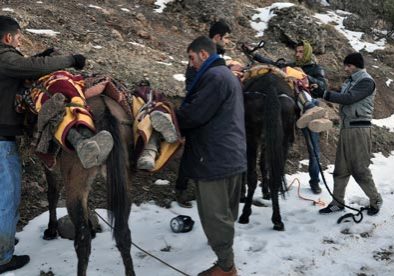
A news story which received little coverage in Australian media surrounds the tragic news that Turkey committed a massacre that killed 35 civilians in an air strike into Iraq near a Kurdish village along the Turkish border on 28 December 2011.
Turkey has admitted that the attack was an error. Turkey claimed that it intended to target suspected Kurdish militants, but that the victims turned out to be civilians not terrorists. The victims of the attack are believed to have been villagers involved in smuggling cigarettes into Turkey from Iraq.
The attack was one of the deadliest attacks since the PKK took up arms in 1984 in a conflict in which more than 40,000 people have been killed.
Naama brings into focus the debate about gender and religion in Israel
January 5, 2012 | Sharyn Mittelman
The issue of public gender discrimination and harassment in Israel has received significant media coverage both in Israel and abroad.
It began with recent controversies over women singing in a ceremony for the Israeli army, which was boycotted by religious soldiers, and the informal gender segregation on some buses in ultra-Orthodox (haredi) areas. (See a previous blog post on these issues.)
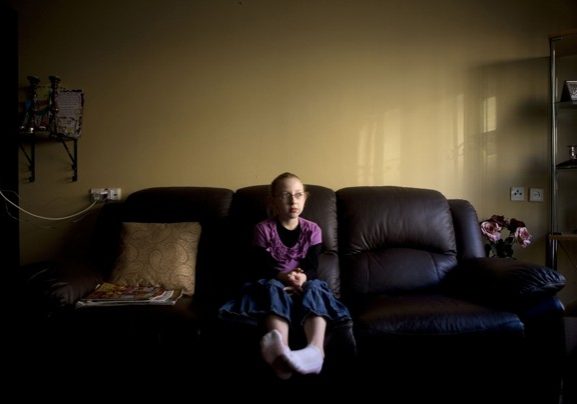
It has now been compounded by an interview with an eight year old Orthodox girl from Beit Shemesh, Naama Margolis, who was visibly shaken when she talked about her fear of walking to school due to the harassment she has been subjected to by some ultra-Orthodox Jews who have insulted and harrassed her for being dressed ‘immodestly’.
Naama said: “When I walk to school in the morning, I used to get a tummy ache because I was so scared that they were going to stand and start yelling and spitting”.
The harassment that Naama experienced has rightfully been strongly condemned by both Israeli political and religious leaders.