Is Israeli democracy under threat?
December 16, 2011
This Update deals with some claims being made that Israeli democracy is supposedly eroding or under threat as the result of a variety of controversial legislative changes being discussed in Israel, as well as certain recent controversies concerning the treatment of women by sectors of the ultra-religious community in Israeli society.
First up is American law professor and civil libertarian Alan Dershowitz, who makes it clear that the intense arguments he witnessed while recently visiting Israel over the issues in question actually make it very clear that Israel is a vibrant democracy under no threat.
Media Week – Serial Offender; Bad Move; White Wash
December 16, 2011 | Jamie Hyams
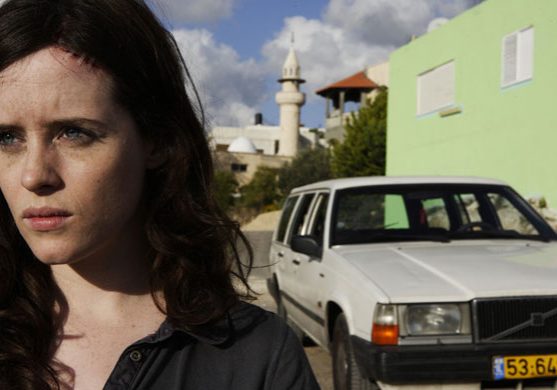
Episode three of “The Promise” (11/12) sees British Mandate soldier Len, who has had his platoon raided and soldiers shot, has been caught in the King David Hotel bombing and has been shot on the street, kidnapped with two colleagues and held in a hole for 15 days, until he is released and his colleagues hanged. He must be the unluckiest soldier in the British army. In the present day, Len’s grand-daughter Erin takes a Palestinian to the house, where he very pointedly asks her friend’s parents where they are from “originally” and the mother begrudgingly tells him Hungary. She visits Hebron where she hears an Israeli tell a group, “You’ll notice most of the streets around here are deserted. It’s known as the sterile zone. Why? To make room for 500 Jewish settlers who have no right to be here under international law, almost the entire Palestinian population of Hebron has been moved out.” This is a gross exaggeration and ignores the ancient history of Hebron’s Jewish community, and its religious significance.
Hamas and Hezbollah in Flux/ Sanctioning Iran’s Central Bank
December 13, 2011
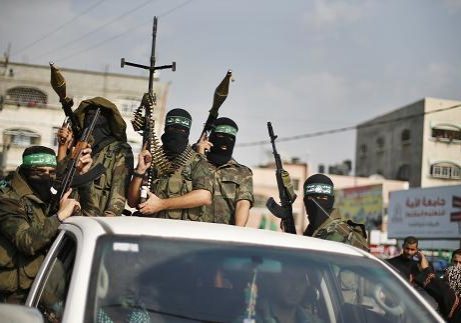
This Update features two pieces on how Damascus-dependent terrorist organisations Hamas and Hezbollah have coped with the possible loss of President Bashar al-Assad as a key ally in the wake of the recent unrest in Syria.
First up is veteran Israeli Arab Affairs analyst Pinhas Inbari, who looks at Hamas’ situation in the wake of the uncertain future in Syria and also Egypt. He notes that the leadership of Hamas is quite happy to be moving its alliance from Damascus to a Cairo dominated by their Muslim Brotherhood allies, as looks likely to eventuate.
Egypt’s Salafists/ The Forgotten Refugees
December 8, 2011
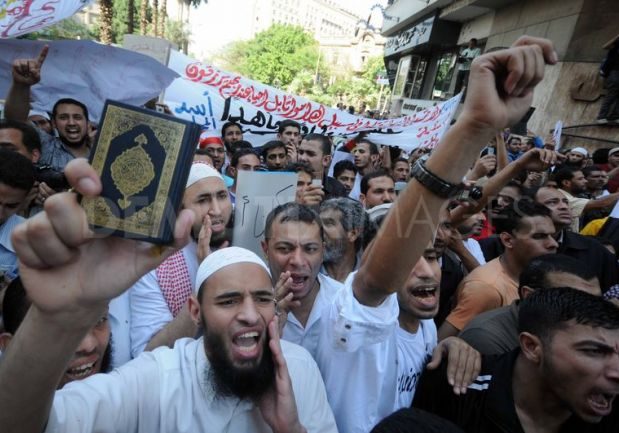
This Update features two pieces on one of the unpleasant surprises to come out of the first round of the Egyptian elections last week, the unexpectedly strong showing of the hyper-Islamist Al-Nour Salafist parties, who got 24.4% of the vote, second behind the also Islamist Muslim Brotherhood with 36%. Both reports are from analysts currently on the ground in Cairo.
Washington Institute scholar Eric Trager describes his own encounters with Salafist candidates and activists, as well as locals who support them. He finds them viewed by locals as honest, even saintly, despite the fact that they seem to have considerable inexplicable money for their campaign and it is unclear where this came from.

Media Week – Unpromising Start; Solar Flares; Court Out
December 8, 2011 | Jamie Hyams
SBS TV is showing a four-part drama, “The Promise”. The series, from Britain’s Channel 4 and France’s Canal+ and Arte France, has been widely criticised for its rampant bias against Jews and Israel. The first episode (27/11) introduced the main character, Erin, an 18-year-old English girl who stays with a rich Israeli family. She has the diary of her grandfather Len who served with the British troops in Palestine immediately after World War II, so the story switches between the British battling the treacherous Jews and the Israelis oppressing the Palestinians.
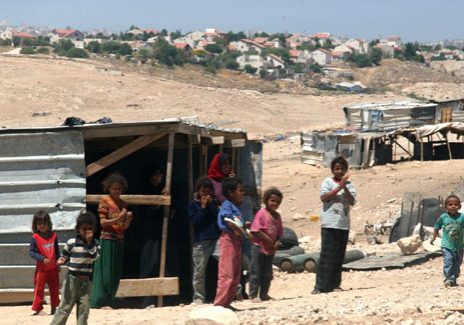
Relocation of Bedouin misrepresented by Sherwood
December 7, 2011 | Sharyn Mittelman
Today both the Age and Sydney Morning Herald published an article by Harriet Sherwood regarding Israel’s plans to relocate the Jahalin Bedouin from their camps on land which they do not own to a permanent Bedouin town.
The article, originally published in the Guardian does not provide a balanced understanding of the issues at hand. The Bedouin are living on land to which they have no legal title that has been within the municipal boundaries of Ma’aleh Adumim since 1977. Relocation has been periodically discussed with the Bedouin since the 1980s…

“Fisking” Hugh White on Iran
December 7, 2011 | Tzvi Fleischer
Oft-quoted Australian “strategic analyst” Hugh White had a piece in The Age yesterday day on the Iranian nuclear crisis which betrayed such a lack of serious and logical strategic thought, so many shallow and glib yet ill-informed assumptions, that it seemed to be simply begging for a thorough “fisking” (Urban Dictionary definition: “The word is derived from articles written by Robert Fisk that were easily refuted, and refers to a point-by-point debunking of lies and/or idiocies.”) Here’s my effort.

Ambassador of naivety
December 6, 2011 | Allon Lee
The US ambassador to Belgium, Howard Gutman, has shown breathtaking ignorance, insensitivity and naivety by blaming Israel for Arab and Muslim antisemitism in Europe.

Australia and US Senate seek tougher sanctions on Iran
December 6, 2011 | Sharyn Mittelman
As we noted in a post last week, the EU lat weeked imposed new tougher sanctions on Iran, and today Australia followed suit.
Foreign Minister Kevin Rudd announced from Lithuania that Australian intends to impose additional sanctions in response to Iran’s continuing non-compliance with United Nations Security Council (UNSC) resolutions on its nuclear program.
Meanwhile, the US Senate has voted unanimously to pass the most stringent economic sanctions against Iran to date. However, the move was opposed to by the Obama administration.
Anti-Semitism and the Arab Spring
December 5, 2011 | Or Avi Guy
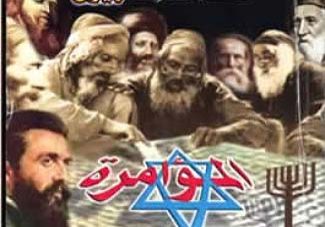
In the aftermath of the Arab Spring, expressions of explicit anti-Semitism and anti-Jewish sentiments are beginning to surge. In Middle East politics, it has long beem traditional to point a finger at Israel, “the Zionists” and “the Jews”, who were blamed for all the problems of the Muslim and Arab worlds. “The Jews” were used by the regimes as a convenient distraction from their own peoples’ misery and hardship, and its causes. Many had hoped that the Arab spring indicated a turn for the better and an end to this racist and counter-productive tradition, since intitially, Israel was hardly even mentioned as a cause for the fate of Arab societies. For once, the finger of blame was rightly being pointing at their own dictatorial regimes. Sadly, as prominent American journalist Jeffrey Goldberg has noted,
Now in Cairo, and across the Arab Middle East, Israel and the Jews are serving once again as universal boogeymen. Once dictators used anti-Semitism to divert their citizens’ attention away from their own problems. Now expressions of the most ridiculous conspiracy theories seem to rise up organically.
This truth doesn’t conform to the generally accepted narrative of the Arab Spring, but ignoring it won’t make it disappear.