FRESH AIR
Stockholm syndrome: Yemen’s disastrous ceasefire
June 29, 2022 | Oved Lobel
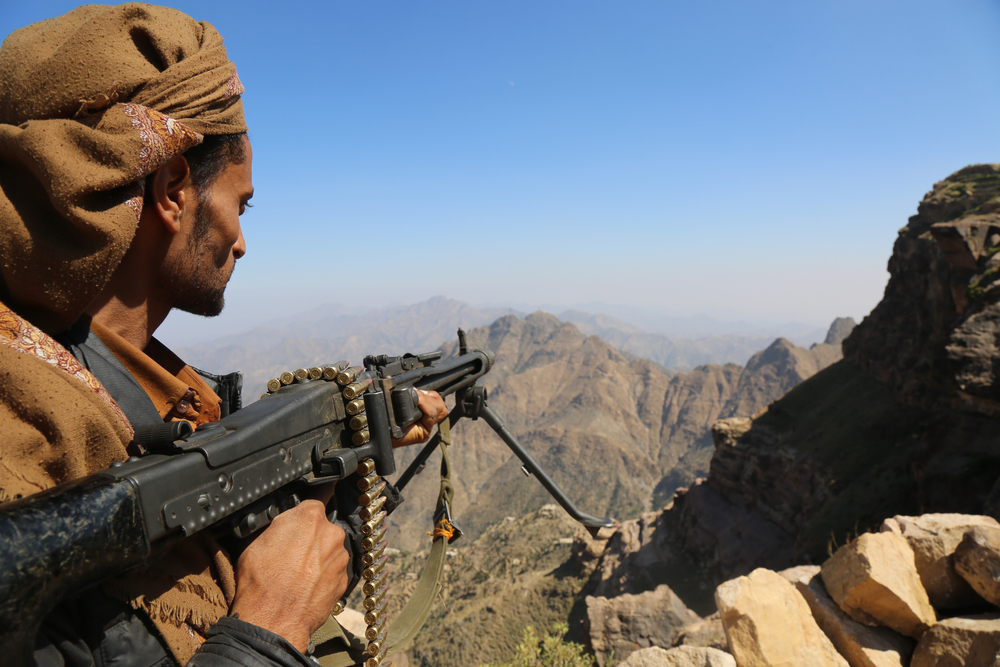
A ceasefire brokered in Yemen by the United Nations on April 2, extended for another 2 months on June 2, has been widely hailed as a step towards peace – sadly, it is likely anything but.
While there have been some humanitarian benefits flowing to some individuals, this ceasefire is an exact replay of the UN-brokered Stockholm Agreement of 2018 – which protected Houthi control of the Hodeidah port, earned them tens of millions of dollars and enabled them to transfer fighters to other fronts – and will once again grant time for the Houthis, also known as Ansar Allah, to regroup and relaunch assaults across the country while consolidating control of the areas they already occupy.
In October of last year, I warned that the US and international community were actually exacerbating the humanitarian catastrophe and empowering the Houthis by viewing Yemen solely through a humanitarian prism, and argued that the only way to alleviate the humanitarian disaster was not to pressure Saudi Arabia to cease military action, but to empower it to defend the city of Marib.
The international approach likely stems at least in part from the mistaken view that Yemen is a civil war, when it is actually better understood as merely one front in the regional jihad waged by Iran’s Islamic Revolutionary Guard Corps (IRGC).
For a while, it seemed both Saudi Arabia and the UAE had woken up to these realities, with Saudi airstrikes suddenly increasing and UAE proxies helping to roll back Houthi battlefield gains in 2021 and early 2022, prompting Houthi ballistic missile and drone strikes against the UAE in January. The momentum was objectively with anti-Houthi forces, and it appears likely that the IRGC officer overseeing the Houthi campaign, Hassan Irlu, was killed in these strikes, although he was reported to have died of COVID-19.
But then it all stopped.
With the loss of momentum and the establishment of a ceasefire, the anti-Houthi forces have almost entirely surrendered the actual and potential gains of their campaign, and a renewed Houthi assault, when it comes, will almost certainly succeed.
The Houthis continue to recruit countless children as young as ten into their ranks as cannon-fodder and are openly sending them to the various fronts in preparation for a renewed assault despite a pledge to the UN not to do so, while the city of Taiz remains besieged by the group regardless of international entreaties. Indeed, the Houthis are once again the sole strategic beneficiary of the current ceasefire, as with the Stockholm Agreement, having conceded nothing while gaining time, space, and access to funds.
Incredibly, the US and UN are both continuing to back this ceasefire initiative despite the fact that the Houthis have kidnapped current and former US and UN personnel and have been holding them hostage for months. One, Abdulhameed Al-Ajami, a retired employee of the US Agency for International Development (USAID), died in custody.
Anti-Houthi forces remain hopelessly divided and fractious, despite superficial and pointless attempts to unify them militarily and politically. UAE and Saudi proxies are recruiting separately, as they have always done, and they fundamentally see themselves as adversaries, having engaged in internecine warfare as much as they’ve fought the Houthis.
What precisely the Saudis hope to gain out of their recent engagement with Iran and the Houthis when it has been overtly counterproductive for years and indeed decades is unclear.
Whether it’s because of US pressure, IRGC ballistic missile and drone attacks on the UAE and Saudi Arabia, or because Riyadh and Abu Dhabi genuinely haven’t learned any lessons from previous years, the outcome of this ceasefire, once it inevitably collapses, will likely be a Houthi victory.
In March 2021, I detailed how the IRGC had been instrumental in creating the Houthis as an extension of itself. The summary of that report in the May 2021 edition of the Australia/Israel Review remains as relevant today:
Like its progenitors in Iran, Ansar Allah is a supranational revolutionary movement, and its officials have explicitly asserted their goals are pan-Islamic conquest, not just a traditional Zaydi Imamate in Yemen. Unless this fanatical ideology crashes into a much stronger military force, it will continue its expansion. While the catastrophic humanitarian situation in Yemen must be addressed, this will remain impossible without a peace process that has Ansar Allah’s defeat at its core.
In other words, what is required is exactly the opposite of this ceasefire. Until people recognise some basic facts about the Houthis and the broader situation in Yemen, the current wrong-headed approach to the war will continue to enhance the power of the Houthis, and thus the IRGC. And this will only increase the suffering of the Yemeni people.
Tags: Ansar Allah, Houthis, IRGC, Iran, Marib, Saudi Arabia, Taiz, UAE, Yemen
RELATED ARTICLES


Australia gripped by the plight of the Iranian women’s football team: Dionne Taylor on GB News
Enormous hope that Iran is being liberated: Colin Rubenstein on Sky News