FRESH AIR
Somaliland – Israel sets a moral example via recognition
January 27, 2026 | Alana Schetzer
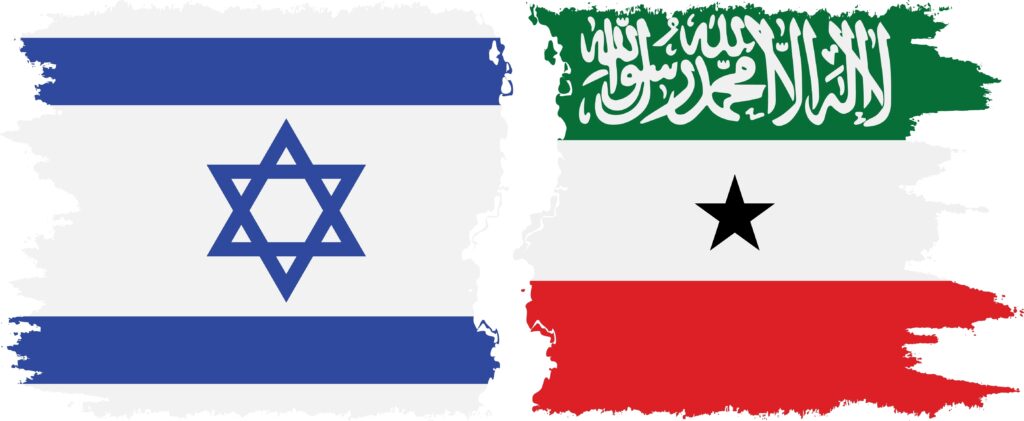
Why did Israel officially recognise Somaliland, the Muslim-majority breakaway African state that had, until Israeli Foreign Minister Gideon Sa’ar’s unexpected announcement on December 26, spent 34 years being internationally ignored?
During a phone call with Somaliland President Abdirahman Mohamed Abdillahi, Israeli Prime Minister Binyamin Netanyahu said the two countries shared a “seminal and historic” friendship and would work together across economic, agriculture, and social development fields.
For Somaliland – a territory on the very tip of the Horn of Africa that broke away from Somalia in 1991 and has fought for international recognition ever since – the news was met with literal cheers on the streets and fireworks.
Other than the usual assortment of benefits, such as full diplomatic relations, and the fact that it will “institutionalise ties between the two countries across a wide range of fields,” the deal appears to be focused on two key pillars – defence and economics.
While the two countries may appear on the surface to be odd bedfellows, they have more than one might expect in common, especially when it comes to their respective high-tech industries and ongoing problems with terrorists on their respective doorsteps.
All about Somaliland
Somaliland split from Somalia in 1991 after the latter’s government collapsed – although there had been an independence movement underway since the early 1960s – and has remained an unofficial but functional country ever since.
But Somaliland has a longer history than that. It was a separate British protectorate between 1884 and 1960, gaining independence on June 26, 1960 – after which it was recognised by 35 countries, including Israel, China, Egypt, Ethiopia, and France. It voluntarily united with Somalia shortly afterwards, although problems arose almost immediately.
Somaliland’s break with Somalia came in the wake of a state-sponsored genocide of civilians from the Isaaq tribe between 1987 and 1989 by the Somali Democratic Republic, under the dictatorship of Siad Barre. The number of civilian deaths in this massacre is estimated to be between 50,000 and 200,000, according to various sources. The majority of Somalilanders are Isaaqs.
Despite these origins, Somaliland has been the sort of success story to which many African countries aspire. It has achieved genuine internal peace, political stability, and democratic elections, and has a promising free market-based economy.
Somaliland isn’t even the only breakaway state from Somalia; Puntland declared itself an autonomous state in August 1998. And although not as successful as Somaliland – armed conflict and piracy remain – Puntland is an important destination for Somalis to escape from the endemic violence that has been a result of Somali state collapse since 1991.
Countries such as the United Kingdom, Denmark, Taiwan, Ethiopia, Turkey, the United Arab Emirates and Kenya have liaison offices in Somaliland, and it has trade with Oman, the UAE, Saudi Arabia, Djibouti and Ethiopia, plus an inventory of foreign investors. This is despite not having access to many global institutions, such as the international financial system, due to its unofficial status.
While the territory still grapples with many issues, including high unemployment and relatively low GDP, its peace and stability are a genuine success story achieved almost entirely indigenously by Somalilanders, with very little outside assistance.
Somaliland meets the criteria to become a country
Under the Montevideo Convention on the Rights and Duties of States, there are four basic tenets that a territory must meet for nationhood: a government, defined territory, permanent population and “the capacity to enter into relations with other states.” Somaliland meets all those criteria, while the ‘State of Palestine’ – which has now been recognised by 157 of the 195 member states of the United Nations – clearly does not.
US-based analyst Michael Rubin of the American Enterprise Institute, who has long advocated for international recognition of Somaliland, told AIJAC the fact that Somaliland had been denied recognition for so long was “hypocrisy plain and simple.”
While Israel’s decision was unexpected by most, it was several years in the making, and experts had pegged it as an option four years ago. While it doubtless did little to improve Israel’s international reputation in the short run, it was arguably an astute political manoeuvre for several reasons:
- It meets international legal obligations to recognise a state that meets all the criteria for statehood;
- It gives Somaliland an overdue and deserved reward for what it has achieved, despite extraordinary obstacles;
- It will play well in many parts of Africa, where Israel is trying to build relationships, by helping display the benefits of relations with Israel; and
- It provides a clear contrast with the legally unjustifiable recognition of “Palestine”, which does not meet the criteria for recognition, drawing attention to the completely political nature of the decision to do so by so many states.
It’s also, symbolically, a recognition from one indigenous people that established self-determination in the wake of a genocide to another that is doing the same.
A tense region
Israeli strategic analysts say Somaliland offers an essential and much-needed ally in the strategic Horn of Africa. Israeli Foreign Minister Gideon Sa’ar made his first official visit to Somaliland in early January, meeting with President Abdillahi – who said the mutual recognition agreement was about “serving the mutual interests of both nations and contributing positively to peace and stability in the Horn of Africa.”
Israel now has a partner with direct access to the Red Sea for the first time since Sudan signed the Abraham Accords in 2020 (a partnership that has effectively been paused due to Sudan’s civil war). Israel previously also had a relationship with Eritrea to allow some access, but this effectively ended a few years ago. Such access is vital for Israel as its only access to the Indian Ocean, its own Eilat Port, has been all but closed for almost two years due to Houthi attacks.
Tensions have been rising across the Horn of Africa for years. Ethiopia and Eritrea have been teetering on the brink of war over conflict in the Tigray region; Ethiopia incurred the wrath of Egypt over its Grand Ethiopian Renaissance Dam project, which Egyptian officials claim could be an ‘existential threat’ to their country during drought; Turkey’s long-term – and growing – economic, political and military presence in Somalia continues to rattle neighbours; and Egypt has been growing its already large military force in Somalia since August 2024 amid rising tensions between Somalia and Ethiopia.
And Russia, in December, finally achieved its long-term objective of successfully negotiating a naval base at the Port of Sudan. This will make future US military operations across the Red Sea-Suez-Eastern Mediterranean corridor trickier, and give Russia a base for intelligence-gathering and an extraordinary degree of leverage over the vital Red Sea trade routes.
The Israel-Somaliland relationship could very well redraw the power balance in the region.
Fighting terrorism
Somaliland is surrounded by quasi-failed states, including Somalia and Ethiopia, which grapple with political corruption, terrorism, drought and extreme hunger. One of its biggest threats is the Al-Qaeda branch in Somalia, Harakat al-Shabaab al-Mujahideen, widely known as al-Shabaab, which has been fighting the Somali government for years and controls large swaths of that country.
As part of the deal, Israel will presumably be able to monitor the Yemen-based, Iran-backed terrorist group the Houthis – which fired thousands of ballistic, crude, and modified scud missiles, plus drones at Israel between October 2023 and October 2025 – from Somaliland. This will also benefit Somaliland, as the Houthis have been working with al-Shabaab since 2024, a partnership that has allowed them to increase their capabilities. In October, there was serious concern that Mogadishu’s fall to the terrorist group was just a “matter of time”.
Al-Shabaab eyes Somaliland to extend its power base, and it is part of its overall goal to establish a ‘Greater Somalia’ under strict Islamic rule. Somaliland’s government spends approximately one-third of its annual budget on security and defence and has so far successfully secured its borders from weapons smuggling via Yemen and piracy. It’s in Israel’s interest to ensure those borders remain solid.
After significantly subduing threats from Hezbollah and Hamas – also backed by Iran – the Houthis have become one of Israel’s biggest threats.
Some have mentioned the potential for Israel to establish a military base along the Red Sea in Somaliland, but Somaliland officials have denied this. More likely, at least in the short-term, will be the IDF exercise access rights for short-term operations.
Michael Rubin argued as long ago as 2019 that Somaliland shares the same security goals as the United States, and that working with Somaliland was a key way for Washington to help defeat al-Shabaab and other Somalia-based terrorist groups, such as ISIS-Somalia, Al-Itihad al-Islami, Hizbul Islam and Ahlu Sunnah Wal Jama’a.
Last June, a US congressman introduced a bill into the House of Representatives to recognise Somaliland as an independent sovereign nation. This push could well be renewed in the wake of Israel’s move.
Rubin told AIJAC that he believes Israel’s decision could also pave the way for other countries to follow, including the UAE, Ethiopia and Paraguay. Noted Israeli journalist and analyst Ehud Yaari has reported that Sa’ar has spoken to his Ethiopian and Kenyan peers about the prospect of recognition.
Economic ties
Economically, there are clear mutual benefits to Israel-Somaliland ties. While Israel is a technology powerhouse, Somaliland – despite its struggling economy – is starting to make its own strides in hi-tech. Rubin told AIJAC that “Somaliland is not far behind Rwanda as the Silicon Valley of Africa.”
“I’ve walked from a dusty, unpaved road in [Somaliland capital] Hargeisa into the control room of the multibillion-dollar communications conglomerate Telesom and it was like entering a NASA facility.”
Telesom established Somaliland’s first 5G network when it switched on the connection in January 2024. Two Israeli companies, VisiRight and Amore Capital, have already announced plans to set up in Somaliland to support Israeli businesses wanting to enter the market there, most likely in the fields of agricultural innovation, water management, and technology.
Tags: Africa, Ethiopia, Islamic Extremism, Israel, Somalia, Somaliland, al
RELATED ARTICLES
March 31 will be the key deadline in Bibi’s delicate political balancing act
After the War: Israel’s revival, America’s power, and the Palestinian narratives


Australia gripped by the plight of the Iranian women’s football team: Dionne Taylor on GB News
Enormous hope that Iran is being liberated: Colin Rubenstein on Sky News