FRESH AIR
New “Magnitsky” laws should apply to Iranian abusers
December 6, 2021 | Naomi Levin
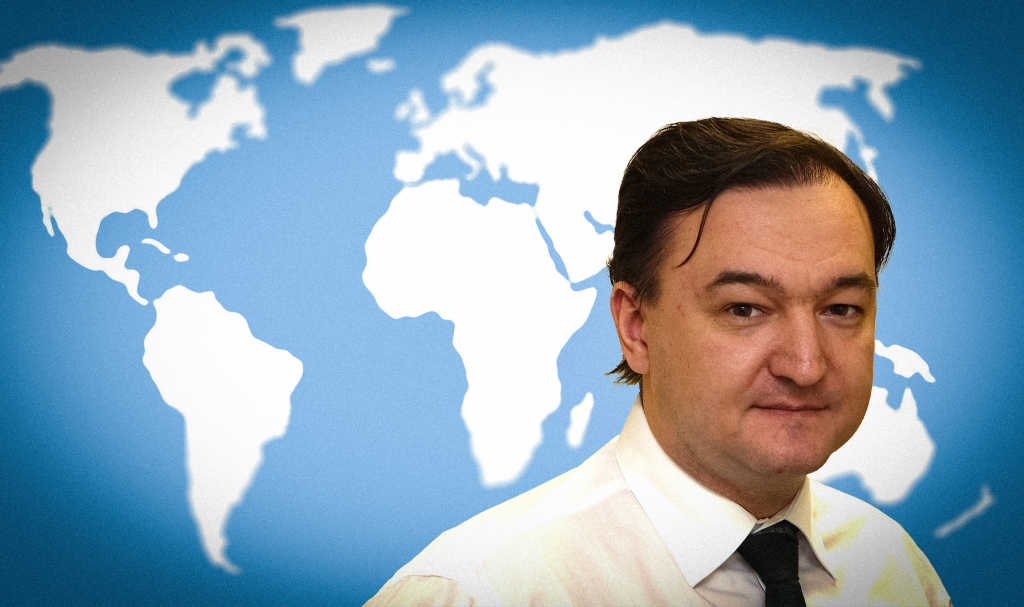
The thugs who detained Australians in Iran’s worst prisons could potentially be among those soon to be sanctioned by the Australian Government.
This month, the Australian Parliament passed amendments that will allow the Government to implement Magnitsky-style sanctions on human rights abusers.
Australian academic, Dr Kylie Moore-Gilbert, who was held hostage by Iran for 26 months, has said it would be a “no-brainer” to impose sanctions on the “Iranian government, judiciary and Islamic Revolutionary Guard Corps officials who kidnap Australian citizens.”
But what are Magnitsky-style sanctions?
These are laws named for Sergei Magnitsky, a Russian tax lawyer who uncovered a massive fraud being conducted by the Russian Government. For his efforts, Magnitsky was imprisoned, tortured and eventually killed. Magnitsky was still tried by Russia, three years after his death. In response, the US Congress passed the Sergei Magnitsky Accountability Act to sanction officials responsible for human rights breaches.
In addition to the US, Magnitsky-style laws have been passed by the European Union, Canada and the UK. These laws impose sanctions against individuals – not countries – who have committed serious human rights offences. [More background information available here]
Australia has now joined its allies in being able to target individual abusers with sanctions, rather than penalising whole societies or countries.
Much of the media attention on these new Australian laws has centred on the possibility of the Government using them to sanction Myanmar’s Tatmadaw (armed forces), Chinese Communist Party officials responsible for human rights breaches against Uyghurs, and the thugs who killed Magnitsky. However, Australia’s Magnitsky-style sanctions can – and should – also be applied against the worst violators of human rights among Iran’s ruling regime and its Islamic Revolutionary Guard Corps (IRGC), as Dr Moore-Gilbert has highlighted.
If Australia were to impose sanctions against Iranian human rights abusers, such as Dr Moore-Gilbert’s IRGC interrogators, it would not be without precedent.
In April of this year, the European Union imposed sanctions on eight Iranian militia commanders and police chiefs, including the head of the IRGC, Hossein Salami. Those sanctioned were involved in a brutal crackdown of Iranian protesters in 2019 that, Reuters reported, left 1500 demonstrators dead in a period of just two weeks.
In October this year, the United States issued sanctions against Iranian individuals – and companies in this case – responsible for providing military drones to Iran-backed terrorist groups, including Hezbollah and Hamas.
A month earlier, the US had sanctioned Iranian intelligence operatives who targeted Iranian dissidents living in the US, UK, Canada and the UAE. A statement from the US Department of the Treasury said the work by the sanctioned Iranians “demonstrates the pernicious role of Iran’s intelligence apparatus in targeting Iranians abroad, to include brazen attempts to return dissidents to Iran.”
During the Australian Parliamentary inquiry that led to the recommendation that the Morrison Government should adopt Magnitsky-style laws, former Canadian Attorney-General and human rights activist Irwin Cotler explained that he, and others, had advocated for Canada to use its Magnitsky laws to sanction Iranian human rights abusers. At the time, he even nominated the man who is now the Iranian President, Ebrahim Raisi, as a possible candidate to be sanctioned.
Cotler told the Parliamentary inquiry:
“One would have thought that this would be an opportune time for the sanctioning of the major human rights violators in Iran on behalf of the people of Iran who are increasingly the targets of those violations. I am referring to the women in Iran, who increasingly emerge as the specific and express targets, or where Iran has become the first country internationally to make environmental protection a crime and where eight environmentalists, at a time that Iran needs the preservation of the environment, were sentenced to prison for seeking to protect the environment. It is similar with regard to journalists, trade union leaders, students, human rights defenders and the like.”
At the time he made this statement, Dr Moore-Gilbert was still incarcerated by the IRGC in horrific conditions on false charges.With the passage of this important reform to Australia’s sanctions laws, Australia can now take a firm stand against the world’s worst human rights abusers. It would send a powerful statement if Dr Moore-Gilbert’s IRGC captors were among the first to be listed under these new laws.
Tags: Australia, IRGC, Iran, Magnitsky laws, Russia
RELATED ARTICLES


Australia gripped by the plight of the Iranian women’s football team: Dionne Taylor on GB News
Enormous hope that Iran is being liberated: Colin Rubenstein on Sky News