
Fatah on Hamas: “Why should they get all the credit? We reject Israel too!”
December 3, 2011 | Daniel Meyerowitz-Katz
Despite the widely-trumpeted new reconciliation deal between Hamas and Fatah, the two factions appear to remain irreconcilable.
… The Palestinian Authority (PA) itself seems to resent these accusations of reliance on Israel. This was made clear by Adli Sadeq, the PA’s ambassador to India, in an article written for PA newspaper Al-Hayat Al-Jadida. The article, translated by Palestine Media Watch, unequivocally rejects the “common mistake or misconception” that the PA in any way recognises the right of Israel to exist. As Sadeq explains, this is merely a line of thinking that Israelis have “fooled themselves” into following…

Vale David Greason, 1961-2011
December 2, 2011
AIJAC mourns the passing of our esteemed former colleague David Greason – a brilliant writer and contributor to AIR, especially in the field of far-right politics in Australia and the UK.
David came to us with a colourful background…
US and EU place tougher sanctions on Iran
December 2, 2011 | Sharyn Mittelman
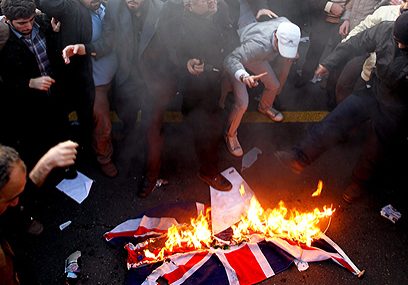
Following the Iranian ‘mob’ attack on the British embassy, France, Germany, Italy and the Netherlands have recalled their ambassadors temporarily from Iran. The UK immediately closed its embassy in Iran and ordered Iran’s dipxlomatic staff to leave London.
A meeting of EU foreign ministers in Brussels condemned the attack on the British embassy, and announced new economic and travel sanctions on Iran to deter its nuclear program. The sanctions will freeze the assets of 143 companies and ban 37 Iranian nationals described as “directly involved in Iran’s nuclear activities” from entering the EU. However, the EU did not follow Britain, Canada and the US which severed all dealings with Iran’s Central Bank. France has also been urging collective EU action to follow the British example and also to stop oil imports from Iran.
The US Congress also seems poised to push stronger action on Iran. On December 1, the US Senate unanimously approved tougher sanctions against Iran, voting to penalise foreign financial institutions that do business with Iran’s Central Bank – the main conduit for its oil revenues…
Islamists poised to win Egyptian elections
December 2, 2011
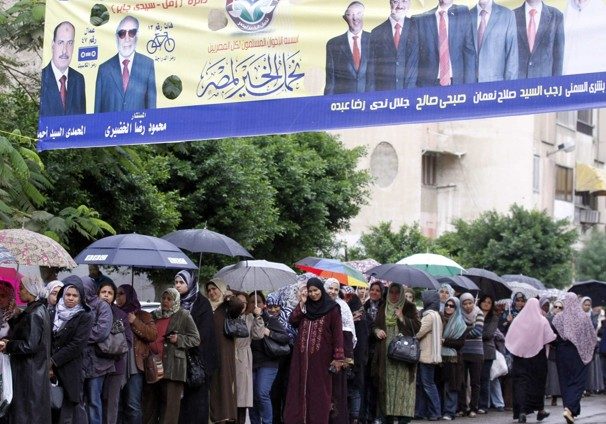
As readers are probably aware, in the first round of voting in Egypt earlier this week, the Muslim Brotherhood did even better than many polls had predicted, as did the even more extreme Salafists. This Update is devoted to analysis of this outcome.
First up is Israeli academic Barry Rubin, who says that he was criticised for being too pessimistic in projecting an Islamist win in Egypt – but the results from the first round are worse than anything he predicted. He points out that the “Facebook” liberals that started the revolution got barely 5% of the vote, and that things may well get even more extreme with the next round of voting…

Responses to gay Israel slur
December 1, 2011 | Daniel Meyerowitz-Katz
Following on from this post concerning an accusation of Israel supposedly “pinkwashing” its public image by spruiking its record on gay rights to hide alleged injustices, a number of gay writers have penned scathing responses in the Jewish and international media.
Writing in the Forward, Jay Michaelson gives a critique of the piece by Sarah Schulman in the New York Times that began the whole kerfuffle…
Ilan Grapel tells his story
December 1, 2011 | Sharyn Mittelman
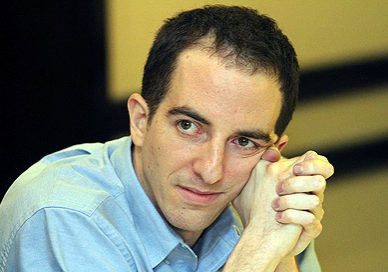
Ilan Grapel, a twenty seven year old American-Israeli was finally released on October 27 in exchange for 25 Egyptian prisoners in Israel, after having spent four months in an Egyptian jail due to false allegations of espionage. In 2009, he was a Goldmann Fellow at AIJAC’s Melbourne office.
A month after his release, Grapel has told his story in an interview with Yedioth Ahronoth. Grapel describes how he spent 150 days in a four-by-four metre room, two weeks of which he spent in complete confinement that made him “nearly lose his mind”.
Understanding the attack on the British Embassy in Teheran
November 30, 2011 | Daniel Meyerowitz-Katz
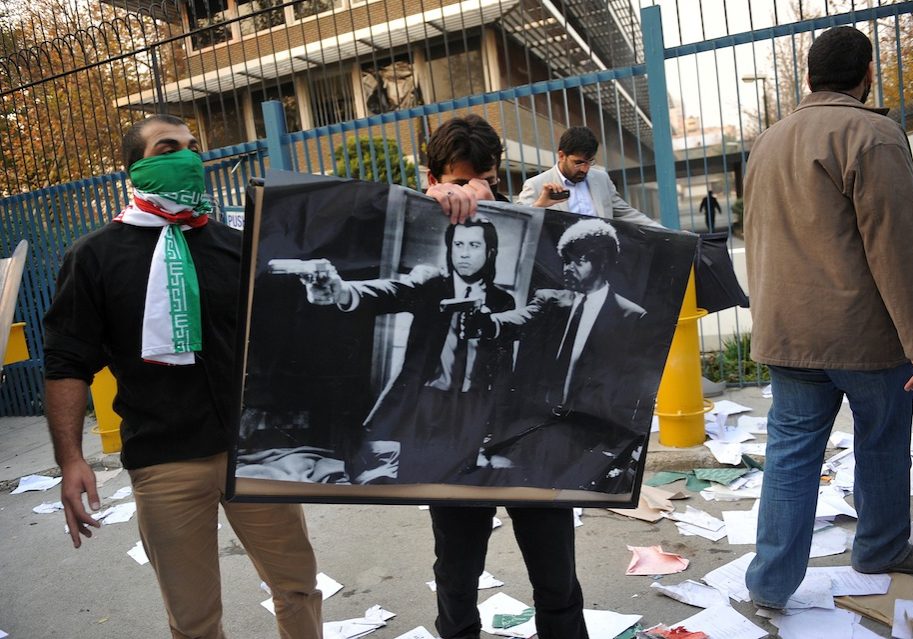
Following increasing threats of sanctions over the Iranian nuclear program, as was being progressively reported in the Guardian‘s liveblog, the UK embassy in Iran was stormed last night (Australia time) by a group of supposed “students”. The British government has unequivocally held the Iranian regime responsible.
Even though France has been the strongest European champion of the new round of sanctions, as British journalist Christopher de Bellaigue noted in a 2008 article, the British hold a special place in Iranian paranoia…
The 1947 UN Partition Plan mis-remembered by the UN
November 30, 2011 | Sharyn Mittelman
On 29 November 64 years ago, the UN General Assembly voted on the partition plan, and the United Nations General Assembly Resolution 181 was adopted by a vote of 33 to 13, recommending the establishment of two states – Arab and Jewish. The Jews accepted the partition plan, the Arabs did not and five Arab states went to war with Israel.
However, November 29, is not called ‘Israel day’ but rather the ‘International Day of Solidarity with the Palestinian People’. Marking this day at the UN was a General Assembly resolution on the “Question of Palestine” which condemned Israel, pre-empted the results of final status negotiations between Israel and the Palestinians and failed to acknowledge Israel’s legitimate security rights, amongst other concerning features of the resolution.
In response to the UN resolution, Ron Prosor, UN Representative to Israel delivered a stirring speech that condemned the UN’s consistent attack on Israel and outlined the real reasons that have so far prevented peace…
Egypt’s chaos
November 29, 2011 | Sharyn Mittelman
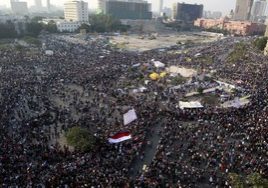
In the lead up to Egypt’s first ‘free and fair’ election, the streets of Cairo have become increasingly chaotic.
On November 25, tens of thousands of people protested in Tahrir Square demanding an end to the military rule of the Supreme Council of the Armed Forces (SCAF), which has ruled Egypt since former president Hosni Mubarak lost power in February. More than a week of civil unrest and government crackdowns left 42 people dead and 3000 injured.
There are not only tensions between political parties in Egypt but also a resentment of ‘foreigners’ – seen in conspiracy theories of ‘foreign meddling’ in Egyptian politics, and also in recent attacks on foreign journalists including sexual assaults.

“The Promise”
November 29, 2011 | Tzvi Fleischer
On Sunday night, SBS-TV screened the first of four episodes of a controversial British historical drama set in pre-state and contemporary Israel, entitled “The Promise”. When it was screened in Britain by Channel 4 in February, it led to an official letter of complaint by the Board of Deputies of British Jews, as well as strong critiques from Booker prize winning novelist Howard Jacobson, noted British academic expert on the Holocaust David Cesarani, and others….
I include below some of the critiques of “The Promise” from Britain for the benefit of Australian audiences.