UPDATES
Could Australia’s closest neighbour be a key to Middle East democracy?
July 11, 2011 | Daniel Meyerowitz-Katz
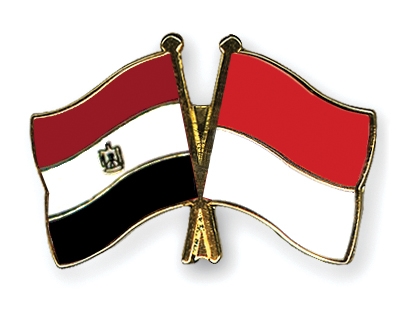
Being the country with the world’s largest Muslim population, Indonesia’s success in transitioning from a dictatorship to a relatively functional democracy over a short period of time arguably makes it the perfect example for the nations in the Middle East now attempting a similar feat. Giora Eliraz, author of Islam in Indonesia: Modernism, Radicalism and the Middle East Dimension certainly thinks so – observing that despite a traditional Arab disdain for South-East Asian Muslims, Egypt has been clandestinely working with the Indonesian authorities on developing a democratic model.
As he points out, Indonesia is perhaps a better partner in democracy building than the more obvious choice, Turkey, as the latter is Egypt’s rival for regional hegemony, whereas Indonesia is very much removed from the politics of the Middle East.Indonesia has also asked in recent years to be more involved in Middle Eastern affairs by playing the role of mediator and peacemaker. It has sustained such aspirations by having a model that combines Islam, democracy, pluralism, tolerance and modernity.
In fact, Indonesia has a surprising relevance to the Egyptian situation:
Amazing similarities exist between Egypt’s current circumstances and those of Indonesia in the late 1990s and early 2000s. To mention just a few of them: Two countries with a dominant Sunni majority experienced a massive democratic protest, mainly by the middle class, against an authoritarian regime headed by an ex-general who had ruled for about three decades. In both cases, the ruler eventually lost the crucial support of the army.
The preliminary years of the post-Suharto era were marked by deep political turmoil that included manifestations of religious extremism and violence, sectarian conflicts, awakening separatist aspirations, the growing voice of radical Islam, increasing religious militancy and threats of terror.
Many observers watched gloomily, fearing that the just-born democracy was liable to crash soon. It was only in 2004, after the second parliamentary elections and first direct presidential elections, and after Indonesia had surmounted many obstacles, that observers started to believe the Indonesians were displaying the attributes of a consolidated democracy. Hence it is no wonder that the Egyptians dig into the Indonesian case.
Given Australia’s significant influence in our region, there may be much potential for us to focus our policy on helping to create better ties between the Arab states and Indonesia. If Eliraz is correct, this Strategy could encorage postive outcomes.
Tags: Australasia, Indonesia