IN THE MEDIA
Why the United States had no choice but to strike Iran
March 1, 2026 | Arsen Ostrovsky
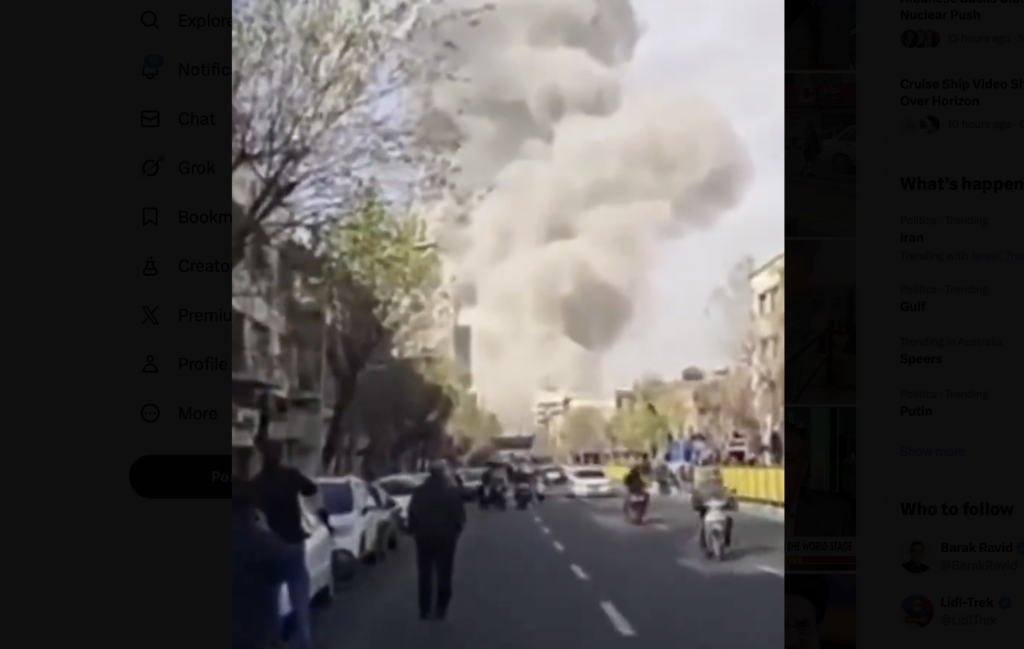
The United States is making the entire world, including Australia, safer. We welcome Australia standing with our US ally and the people of Iran.
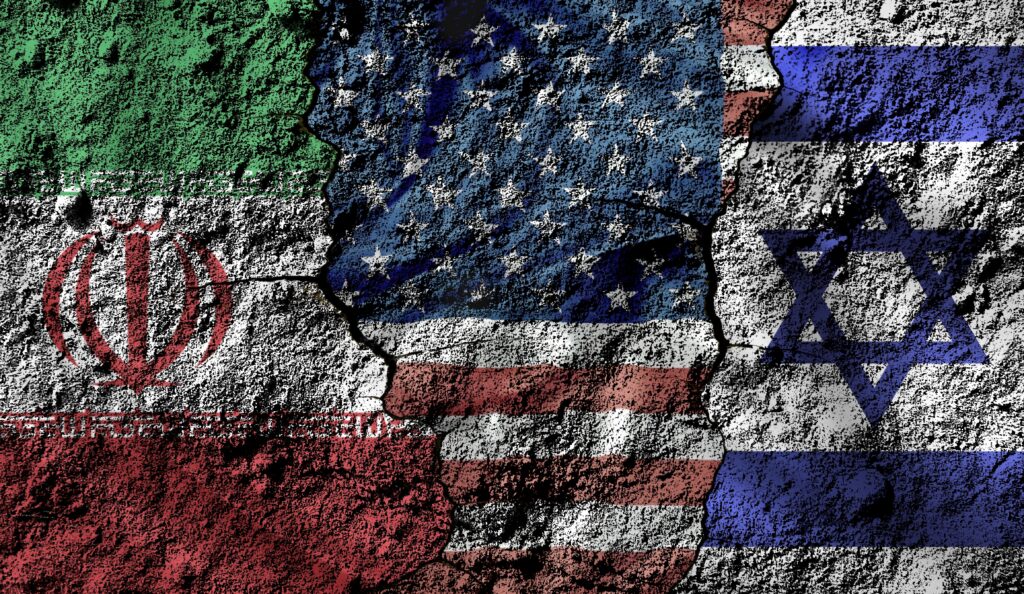
No sooner had President Trump ordered a joint military strike with Israel against Iran’s nuclear infrastructure and ballistic missile program, as well as Supreme Leader Ayatollah Ali Khamenei himself, it drew the predictable handwringing from many parts of the international community, including in Australia.
Critics immediately accused the United States, and by extension Israel, of destabilising the region and acting outside the bounds of international law. But the facts – and the law – tell a very different story.
For nearly five decades, the Iranian regime, led by Ayatollah Khamenei, waged an unrelenting campaign of terror against the United States and its allies, chanting “Death to America”, while plotting attacks on U.S. troops, officials, and civilians, including even President Trump himself.
From the 1983 Marine barracks bombing in Beirut that killed 241 Americans, to attacks on the USS Cole, and the October 7th massacre by Hamas, Iran’s record is a litany of deliberate assaults on American lives. Its proxies across the region have continued to wage this war across the Middle East, from Hezbollah in Lebanon to Hamas in Gaza, from the Houthis in Yemen to terror networks operating in South America and Southeast Asia.
The threat to the U.S. was real, imminent, and growing by the day.
Intelligence confirmed that Iran was developing intercontinental ballistic missiles capable of reaching the continental United States. At the same time, it was rebuilding its nuclear weapons program. President Trump made it plain: “They’ve rejected every opportunity to renounce their nuclear ambitions, and we can’t take it anymore.”
Iran has also repeatedly threatened Israel’s annihilation, and given its attempt to rebuild their illicit nuclear weapons and long-range missile program, forced the Jewish state’s hand, in joining this military operation with the United States.
Furthermore, in the last months, Iran has waged a ruthless assault on its own civilians, massacring tens of thousands of heroic young Iranian men and women, demanding their basic human rights. Addressing the Iranian people directly, President Trump declared, “I say tonight that the hour of your freedom is at hand. When we are finished, take over your government. It will be yours to take. This will be probably your only chance for generations. Do not let it pass.”
The reality is that, notwithstanding the best efforts of the US administration, diplomacy had failed, with President Trump saying that the Iranians were not negotiating in good faith, despite repeated warnings.
Faced with an imminent threat, the United States together with Israel had no choice but to act.
Accordingly, the actions of the United States must be perceived within the bounds of the laws of armed conflict, given the U.S., like Israel, was already engaged in an ongoing armed conflict with Iran through decades of proxy and direct attacks.
Once such a conflict exists, states may lawfully target enemy military objectives, as defined in the Geneva Conventions and customary international law, provided they observe the principles of distinction, necessity, and proportionality – which evidence thus far indicates has been the case.
Iran’s nuclear weapons program, ballistic missile infrastructure and key military officials and political officials, clearly qualify as military objectives. These targets directly contributed to Iran’s war-making and strategic capability, and their neutralisation offers a definite military advantage.
To be clear, the president did not require Congressional approval to conduct the military operation.
Under Article II of the US Constitution, the president as Commander-in-Chief has authority to use military force to protect the national security and defend US interests. Obama invoked it in taking out bin Laden in 2011 and Biden when US bombed Iranian proxies in Syria in 2021.
The president’s decision to strike Iran is also reinforced under War Powers Resolution Act (1973) and the 2001 Authorisation for Use of Military Force (AUMF), as well as the “inherent right of individual or collective self-defence” under Article 51 of the UN Charter.
Any nation faced with the same imminent threat would act similarly. Australia itself has demonstrated this. Last year, Canberra designated the Iranian Revolutionary Guard Corps (IRGC) as a terrorist organisation and expelled the Iranian Ambassador after irrefutable evidence emerged of Iranian-directed terror attacks on Australian soil. When presented with clear threats to their citizens, nations act. The U.S. strike is no different and it was not only entitled to act under international law, but had a duty to do so, to protect its citizens and vital strategic interests.
In striking Iran’s nuclear weapons and ballistic missile program, President Trump stated, “Our objective is to defend the American people by eliminating imminent threats from the Iranian regime.”
However, in doing so, the United States is also making the entire world, including Australia, safer, so we welcome the joint statement from Prime Minister Albanese, Defense Richard Marles and Foreign Minister Penny Wong acknowledging this and reaffirming that Australia stands with our US ally, and with the people of Iran.
Arsen Ostrovsky is an international human rights lawyer and Head of the Sydney Office of the Australia/Israel and Jewish Affairs Council.
Tags: Iran, Israel, United States