IN THE MEDIA
Why Jews stand with the Iranian people
January 29, 2026 | Rabbi Ralph Genende, Ran Porat
Australian Jewish News – 29 January 2026
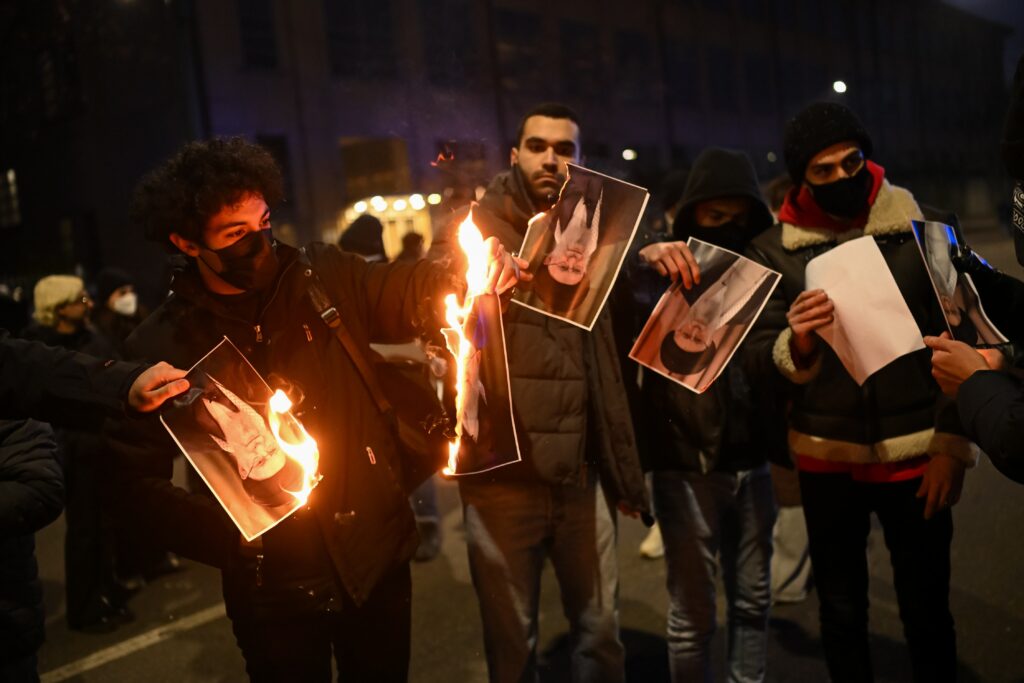
In Iran today, a courageous population is once again rising against an oppressive fundamentalist regime that has systematically stripped away their rights and dignity since its establishment in 1979. Despite a national internet blackout, the horrific images emerging tell a story of brutal violence against those who call for freedom, with thousands confirmed dead, and even more injured, arrested or abused.
Everyone of goodwill must surely feel immense sympathy for the Iranian people being gunned down on the streets, sincere admiration for their almost incomprehensible courage, and hope that their efforts to transform their regime will finally succeed.
Yet there are reasons why the Jewish community worldwide feels especially profound resonance with this struggle – based on the foundational values and historical experiences that shape the Jewish worldview.
Judaism contains a deep-seated recognition of our common humanity, rooted in the foundational belief that the progenitors of all people – Adam and Eve – were not Jewish, but the ancestors of every human being.
While the Jewish community has often been forced to seek refuge behind guards and high walls to protect ourselves against the persistent dangers of antisemitism, Jewish tradition has never been content with isolation. Instead, Jewish thought celebrates a balance between Jewish particularity and a broader universality. This ethical framework is best expressed by the sage Hillel, who taught that while one must be for oneself to survive, being only for oneself diminishes one’s very humanity. Hillel said both “If I’m not for myself, who will be for me?” and at the same time noted that “If I am only for myself, what kind of human being am I?”
Jewish education emphasises that the most basic texts and daily prayers serve as constant reminders to care for the vulnerable, the poor, and the marginalised. It is through this lens of Tikkun Olam – the healing of a wounded planet – and Mipnei Darchei Shalom – the pursuit of world harmony – that the Jewish community views the plight of the Iranian people.
Jews have frequently been at the forefront of revolutions and movements for dramatic change, such as the civil rights struggle in the United States during the 20th century, when Jews stood side-by-side with African Americans, women and migrants in their fight for equality.
Jews remember their liberation by the Persian King Cyrus II (‘the Great’, 600-530 BCE), who allowed the Jewish people in the Babylonian exile to return to their homeland. Iran and Israel were in fact allies during the 20th century during the reign of the Shah Mohammad Reza Pahlevi.
All that ended with the establishment of the authoritarian rule of the ayatollahs in 1979. When he took power over Iran, the founder of the Islamic Republic Ruhollah Khomeini argued that his new theocracy would deliver justice to the Iranians, protect and fight for the ‘oppressed’ against the ‘global arrogance’ – his codename for Western society. Yet his regime resulted in millions of deaths, spreading a culture which idolised and idealised martyrdom and killing, promoting hate and antisemitism, and proliferating terror across the globe with proxy militias. The ‘oppressed’ supported by Iran, such as Hezbollah in Lebanon and Hamas in Gaza, are now far worse than ever before, as Tehran has used them as pawns in its cruel ideological game of chess against ‘the Zionist entity’. The regime has brought both the Iranian people and its Arab allies nothing but misery and defeat.
So, while others choose to say nothing, Jews know better than most the cost of silent bystanders. The current silence of certain political factions sounds even louder to Jews. While some are strident in other crusades, most notably the Palestinian cause during the past two years since the horrific October 7 Hamas attack on Israel, the same elements remain mute while unarmed men and women face snipers in a human struggle for basic rights in Iran. The powerless against the brutally powerful.
For the Jewish community, the uprising of brave Iranians represents more than a political shift; it is also a moral calling and an opportunity to restore a historic friendship between the Jewish and Persian nations, replacing 47 years of darkness with renewed connection.
Dr Ran Porat is a Research Associate at the Australia/Israel & Jewish Affairs Council (AIJAC). He is also a Research Associate at the Australian Centre for Jewish Civilisation at Monash University and a Research Fellow at the International Institute for Counter-Terrorism at the Reichman University in Herzliya. Rabbi Ralph Genende OAM is Interfaith and Community Liaison at AIJAC.
Tags: International Jewry, Iran, Judaism, Middle East