IN THE MEDIA
What will happen when the missiles stop flying?
March 31, 2026 | Bren Carlill
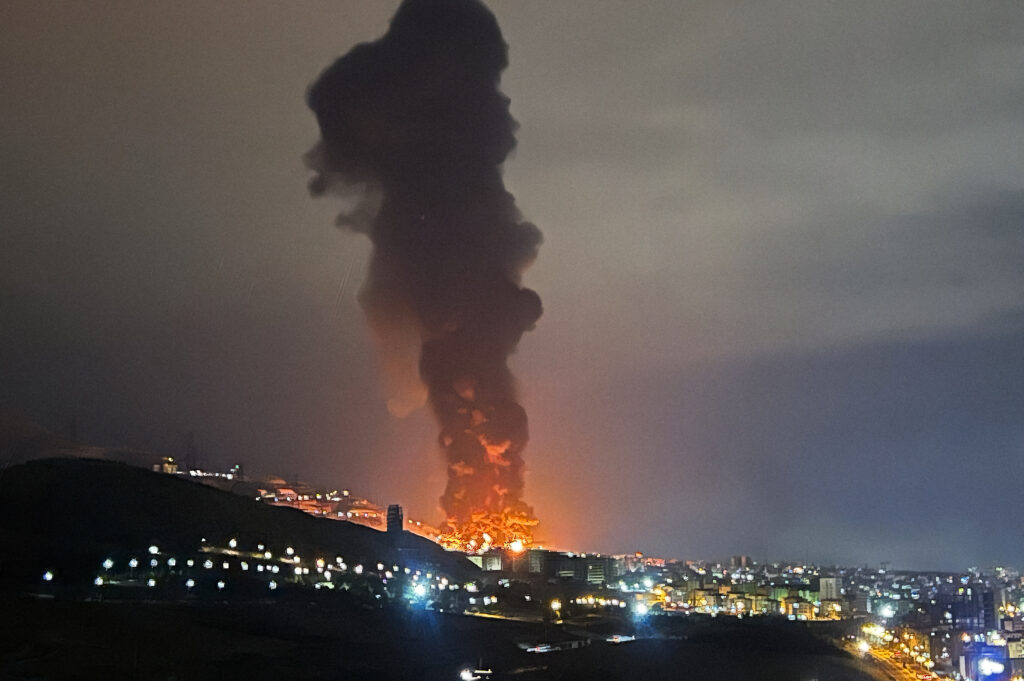
The largest cog in Tehran’s network of terror has suffered a massive existential blow as Donald Trump goes for the jugular in his war on evil
Sky News – March 31, 2026
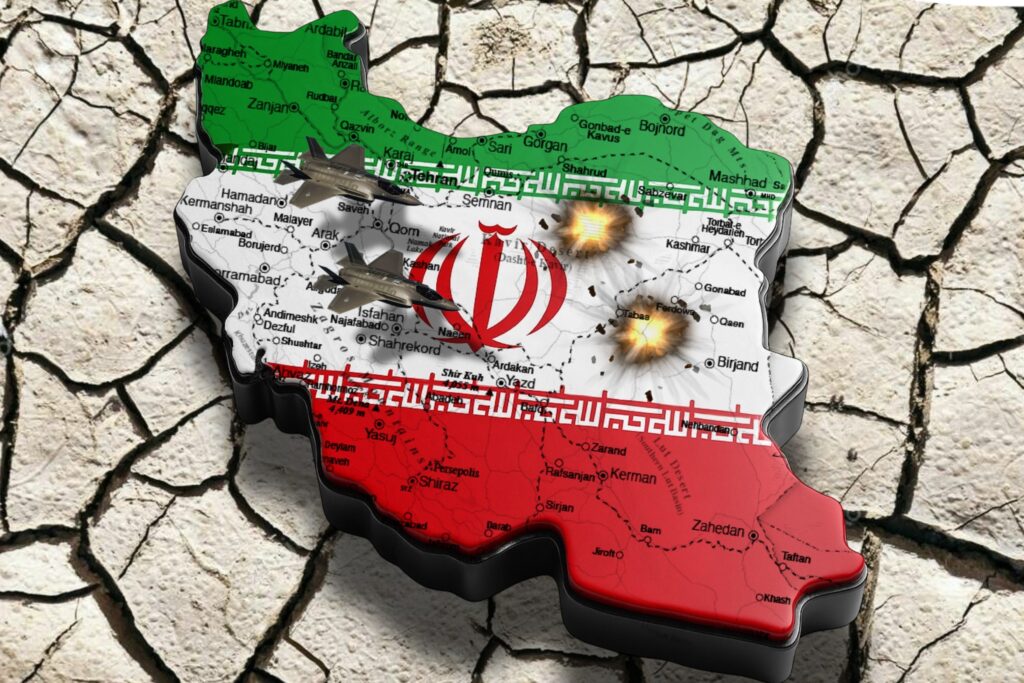
What will happen inside Iran after the current war is very hard to predict, but it is possible to imagine what might happen in the wider Middle East.
First, the uncertainties: We don’t know if the campaign will last another day or another month.
Likewise, we don’t know whether the Islamic Republic will collapse or carry on after the war.
And, if it does collapse, it is impossible to know whether the result will be a clean break or a messy break-up, such as a civil war between regime elements and a yet-to-emerge Iranian opposition, or separatist conflicts launched by Kurds, Arabs or Balochis.
But there are some relative certainties.
The first is that, even if the regime survives, it will emerge from this war far weaker than it entered it.
Further, it will be inwardly focused – fighting for regime survival and repairing the damage to its instruments of internal oppression and military capabilities.
This is significant because, for years, Iran’s regional influence has rested not just on ideology, but also on its capacity to sustain external proxies.
Those proxies weren’t sustained with slogans alone, but with money, weapons, training, intelligence and strategic direction.
A weaker, internally fragile Iran will, for the foreseeable future, not lavish largesse on its proxies.
This will leave those proxies in a delicate situation.
Certainly, they won’t simply disappear.
Hezbollah, the Iraqi militias and the Houthis in Yemen are not mere puppets waiting for orders from Tehran.
They all have their own local support bases, local agendas and, to varying degrees, their own revenue streams.
However, they were also – for decades – recipients of significant Iranian funds.
There is a great difference between a proxy with local roots that is backed by a powerful regional state, and a proxy with local roots whose patron has been mauled and is struggling to recover.
In the latter case, the proxy is isolated, vulnerable and exposed to local enemies who had previously been too weak, too frightened or too divided to confront it.
Lebanon is the clearest case.
Hezbollah has repeatedly dragged the Lebanese into wars they didn’t want.
Even among Lebanon’s Shia, Hezbollah is wearing thin.
Israel’s current campaign is not only weakening Hezbollah, it is also allowing the Lebanese Government to find some steel – its recent declaration that all Hezbollah military activities are illegal would have been unthinkable just a few months ago.
If Hezbollah is largely cut off from the Iranian teat, and if Israel keeps pounding it, the Lebanese willingness to roll back Hezbollah will continue to grow.
In Iraq, pro-Iraqi Shia militias have been in competition with the pro-Iranian Shia militias.
Iran’s weakening provides a real opportunity for the nationalist Shia groups to gain dominance within their community.
Yemen is different again – the Houthis are a territorial power in their own right, so they are less likely to be rolled back simply because Tehran is weaker.
Still, a lack of regular arms shipments equals a threat to the Houthis its rivals will seek to exploit.
Three becomes two?
A crippled Iran means more than a weakening of its proxies.
It also means that one of the three principal power centres in the modern Middle East would have been badly diminished.
For decades, the region has been best understood as a competition between three groups of interest: ‘the Status Quo bloc’, the Resistance bloc, and the Sunni Islamist continuum.
The Status Quo bloc consists of those states that, despite their many defects, broadly prefer order, sovereignty and stability to revolutionary upheaval.
The Resistance bloc consists of Iran and its proxies.
They have long sought to overthrow the status quo by replacing the US as regional hegemon, destroying Israel and undermining the sovereignty of other countries.
The Sunni Islamist continuum is the spectrum of Sunni Islamist actors, which range from ostensibly non-violent groups like the Muslim Brotherhood all the way to groups like Islamic State that glory in gratuitous displays of horror.
There are three state members within this continuum – Turkey, Qatar and, since December 2024 when the Jihadist Ahmad al-Shaara took control, Syria.
This regional strategic competition was never evenly distributed.
In Egypt, the main contest was between the status quo regime and the Sunni Islamist Muslim Brotherhood.
In Lebanon, all three forces were present.
In parts of the Gulf, the Resistance bloc represented the principal external threat whereas Sunni Islamists present an internal threat.
With Iran’s ability to sustain the Resistance bloc badly reduced, the regional contest compresses.
The Iranian-backed network won’t disappear overnight.
But in much of the region, the strategic competition will increasingly look like a two-way struggle between the Status Quo camp and Sunni Islamism.
That, for instance, allows the Status Quo Gulf governments to refocus on the internal ideological challenge.
Israel on the outer?
One of the major reasons several Arab states have drawn closer to Israel in recent years is a fear of Iran.
As American reliability came increasingly into question, those states looked for other regional partners.
Israel offered intelligence, technology, military capability, a shared perception of the Iranian threat and a willingness to take on – not appease – its enemies. =
It wasn’t all about Iran, of course.
The UAE, in particular, had and has economic reasons for deepening ties with Israel.
But fear of Iran was undoubtedly one of the key motors of Arab–Israel convergence.
The more the Iranian threat recedes, the weaker the security argument for further normalisation becomes.
That is why Saudi normalisation with Israel will now become less likely in the short term.
Saudi Arabia will likely continue quietly cooperating with Israel where useful, while avoiding the domestic, regional and ideological costs of formal recognition.
How the West can win
A weakened Iran means a weaker anti-Western axis, less capacity to arm and direct proxies, and greater scope for regional states to recover sovereignty from forces that have acted for years as instruments of Iranian power.
That is directly in Western interests.
The ways to reduce the influence of Resistance bloc movements in Lebanon and Iraq will be specific to those countries.
The West should work with both of them to ensure it is done – and done in a permanent, not a kicking-the-can-down-the-road manner.
For Gulf countries, a significant or permanent reduction of the Iranian threat will see a much greater emphasis on their internal Islamist threat.
There are many ways that this might happen, from brutal repression to an effort to reduce the types of endemic inequalities and lack of education and opportunity that often collectively feed Islamist ideologies.
A renewed focus on Qatar’s pro-Muslim Brotherhood sentiments and actions might also result.
Democracy won’t blossom in the Arab Middle East just yet, but the West should use its influence to guide its friends to reduce the influence of Islamist actors in a way that won’t stock the fuel for future Islamist fires.
Western interests are not served merely by Iran’s weakness.
They are served by an outcome in which Iranian weakness translates into greater state sovereignty, greater regional stability and a stronger position for those states that, whatever their many flaws, broadly favour order – and the West – over revolutionary chaos.
The Middle East is on the precipice of a geopolitical earthquake, and we know that nature abhors a vacuum.
If pro-Western states and the West don’t take advantage of this situation, we can be reasonably sure that they will end up being taken advantage of.
When the dust settles, the Middle East will not return to the ante-bellum status quo.
The missiles will stop flying.
The strategic consequences will not.
Dr Bren Carlill is the director of special projects at the Australia/Israel & Jewish Affairs Council
Tags: Hezbollah, Iran, Israel, Middle East, United States