IN THE MEDIA
Roadmap to a viable Palestine requires holding Abbas to account
September 29, 2025 | Bren Carlill
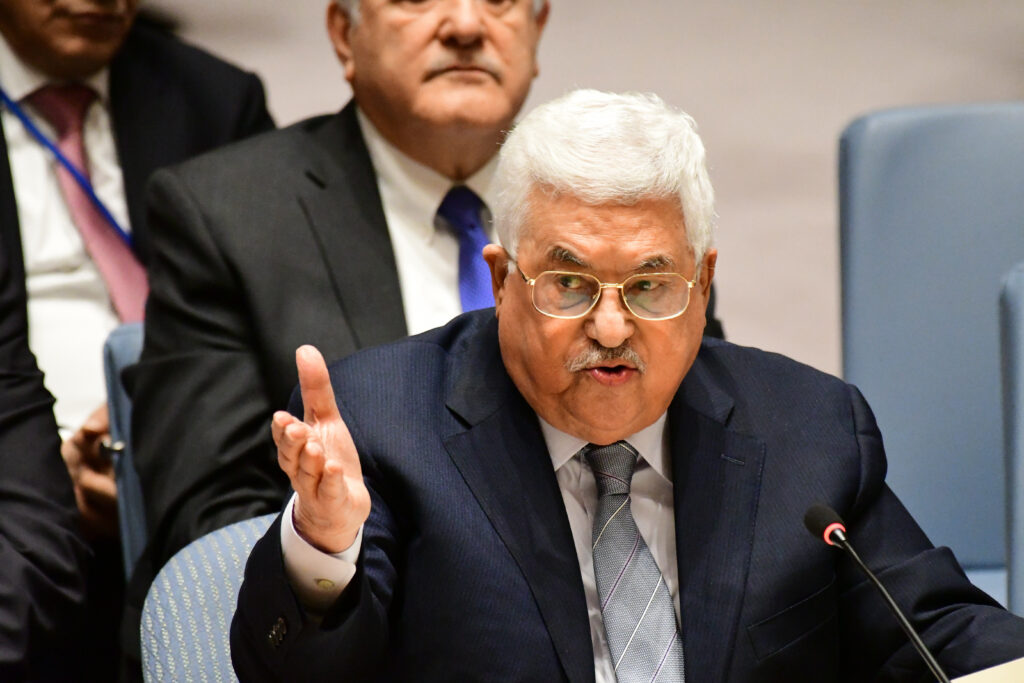
Western recognition of Palestine was supposed to be in exchange for commitments made by Palestinian Authority President Mahmoud Abbas, but these promises are highly popular and may not be politically feasible to implement.
The Jewish Independent – 28 September 2025
On 23 September, 10 new Western countries, including Australia, officially informed the UN that their nations now recognise a Palestinian state.
The formal recognition followed announcements in July and August this year by France, Canada, the United Kingdom and Australia that they would be recognising Palestine in exchange for numerous commitments made by Palestinian Authority (PA) President Mahmoud Abbas. These commitments include promises to:
- hold elections within 12 months of the war ending
- end the “pay-for-slay” payments to convicted terrorists or their families
- disarm Hamas and other armed groups and prevent Hamas from playing any role in a new Palestinian state
- reform school curriculum to remove incitement to violence and promote coexistence
- accept a demilitarised Palestinian state
Additionally, the international community has included a condition that the PA implement governance reforms. The commitments made by Abbas, and the conditions that the various Western leaders have declared, would – if implemented– pave the way for the creation of a viable Palestinian state and sustainable Israeli-Palestinian peace.
The problem is that Western recognition of the ‘State of Palestine’ rewards Palestinian promises, not Palestinian actions. This means the recognition of a non-existent Palestinian state is premature and counterproductive.
Only a very careful Western approach, based on unstinting conditionality, will allow for the creation of a viable Palestinian state, regardless of the rhetorical recognition that ostensibly gives credence to the fiction that such a state already exists.
Palestinian attitudes
All of the commitments made by Abbas are highly unpopular amongst Palestinians and, because the PA lacks popular legitimacy, implementing them is almost certainly not politically feasible. Enforcing them risks PA collapse or violent backlash; not enforcing them entrenches corruption, armed militias and ongoing conflict – the Catch-22 at the heart of current policy.
A new report by AIJAC assesses eleven years of survey data sourced by the Palestinian Center for Policy and Survey Research. It exposes the long-term, consistent positions of Palestinians on the issues at the centre of the commitments that Abbas has made, and upon which Western recognition of Palestine is predicated.
For example, in almost every survey between the beginning of 2014 and the most recent survey of May 2025, Palestinians were asked if they support the establishment of a Palestinian state alongside Israel. For the first four years, opinion was relatively evenly split. However, from the beginning of 2018, an increasing majority was against the establishment of a Palestinian state alongside Israel.

World leaders have been adamant that there will be no role for Hamas in the new Palestinian state. Unfortunately, data shows a decreasing proportion of Palestinians share this view, with support for Hamas increasing markedly since October 7 2023.

A meaningful roadmap
Western recognition has removed one of the few credible carrots that could be used as leverage to hold the PA to account. The remaining sticks (e.g. aid conditionality and political pressure) are politically hard to wield and historically inconsistently applied. This will make holding the PA to account very difficult.
If this recognition is to mean anything Australia, in concert with like-minded countries, needs to establish a roadmap for the creation of a Palestinian state in which movement from one phase to the next will be clearly and directly dependent on the PA meeting its commitments.
It must not be a time-bound roadmap, but an achievement-based roadmap. The first phase of the roadmap will focus on rebuilding the PA’s popular legitimacy. This will provide it with the political currency it needs to agree to and implement the necessary compromises that peace requires.
Unambiguous pro-peace messaging will need to slowly reverse 30 years of anti-peace messaging and help change Palestinian societal attitudes towards peaceful coexistence and Israel’s permanency. Only when Palestinians have internalised that Israel is permanent will sustainable peace be possible.
Tags: Israel, Palestinian Authority, Palestinians