IN THE MEDIA
A rabbi’s dream of Morocco
December 4, 2025 | Rabbi Ralph Genende
Australian Jewish News – 4 December 2025
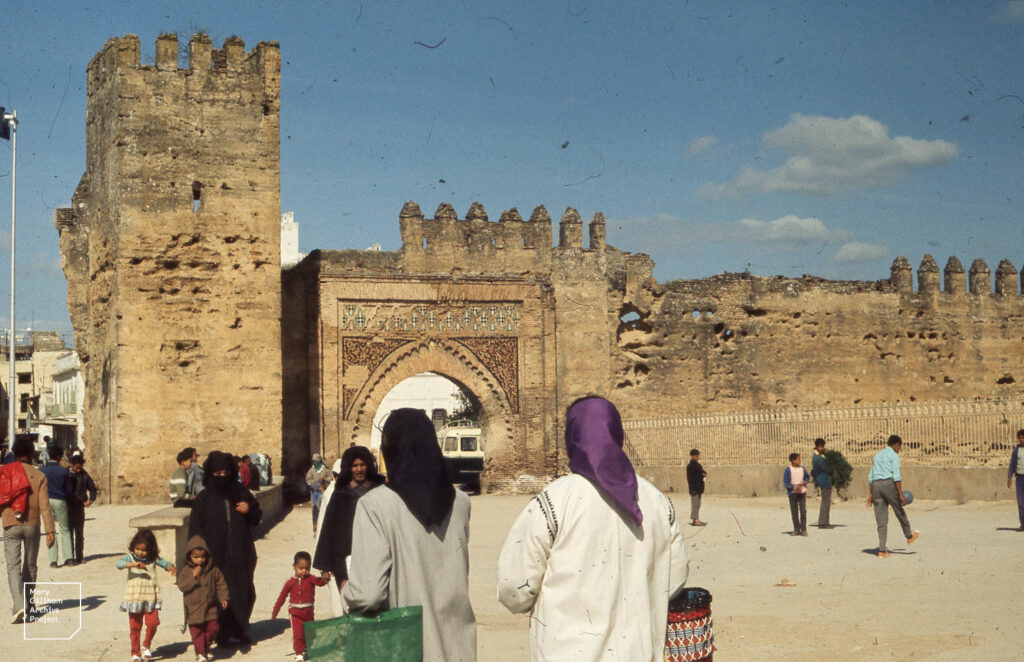
It’s on a Jewish study trip to Morocco (with the inimitable Melbourne educator Paul Forgazs ) in the city of Fez that I dream of my deceased Rosh Yeshiva, Rabbi Azriel Goldfein. We are in our daily Gemara class but I’ve fallen behind and ask him to help me catch up on the last pages of a Talmudic tract. He is reluctant but concedes, saying he only has a few minutes.
“How odd,” I think when I wake, to dream of my austere Ashkenazi Torah teacher in this most Sephardi of lands. But then, on reflection, perhaps not so odd, for Fez was once a place of Jewish scholarship and academic excellence. It is still regarded as the intellectual capital of Morocco, Casablanca being the economic capital and Marrakesh the political one.
It was here that Maimonides fled to escape the radical Almohad Muslims. It was here he is said to have studied at one of the oldest universities in the world. It is here, in one of the supposedly 13,000 seductively serpentine alleys in the Mellah (ancient Jewish area), you can find the tiny house that Judaism’s greatest philosopher – revered by all Jews, Ashkenazi and Sephardi – lived for a few years before migrating to Egypt. An incongruous sign alerts you: “4 meters to Moroccan Restaurant at the Philosopher Maimonides House.” I wonder what the illustrious Rambam would have made of this.
The historical and current relationship between Jews and Muslims in Morocco is a story of some horror and yet more of honour. There were times of forced conversion and even brutal intimidation of Jews and other non-Muslims. Yet for the most part Jews thrived, built countless Shuls and houses of learning and practiced their Judaism without fear. They did not suffer the endless pogroms auto da fes and expulsions as they did in Christian Europe. In modern times (before 1948), some 200,000 Jews lived here and, unlike the rest of the Arab countries, Morocco did not force them to leave. Under the centuries-old Moroccan monarchy, Jews have been protected and fully accepted by their fellow citizens. The current King’s closest advisor is a Jew.
I felt more comfortable wearing my kippah in Moroccan cities than I often do in Melbourne CBD. The community may have shrunk to just several thousand, but in Casablanca you can find a minyan, kosher food and a Jewish school to send your kids. Most astonishingly, Jewish Dayanim sit as respected officials in the Casablanca Court.
On Shabbat, our Australian group had a sumptuous kosher meal of Moroccan delights at the home of Dorit, a local Jewish woman. She is a passionate Casablancan who insists that the community is not dying and that the relationships between Jews and Muslims are about coexistence and not mere tolerance. There have been tightly controlled pro-Palestinian protests, but anti-Israel Graffiti has been removed immediately.
At the end of our trip, we had a brief hike through the High Atlas Mountains, a place of dramatic, rugged scenery, snow-capped peaks and lush valleys, ancient paths, red rock canyons and diverse flora and fauna. We made our way in jeeps and on foot through impossibly narrow winding roads and pathways. As always, the strongest impressions are made by people, and it’s here that the proud and resilient Berbers have lived for centuries. Their angular faces and traditional dress distinguish them from their compatriots.
And it is in these high and winding mountain paths that traces of small, abandoned and ancient Jewish communities can be seen. It is here Paul introduces us to the High Atlas healer and mystic Jacob Wazzana. An ascetic who never married, he occasionally prayed with his Muslim counterparts and was apparently contemptuous of convention. There are lots of myths but no written records of his life.
While some of his detractors both then and now (in the Moroccan Jewish community in Israel) suggested his strength came from demons, many in Israel consider him a saint. In the Atlas Mountains his name rings with honour among the Berbers and his tomb in Aguim is revered and visited by many expatriates. This place moves me in unexpected ways and I pen a poem:
In these high Atlas Mountains there are moments when you dip down into your heart, there are quiet moments to meditate on the cliffs you have climbed and the crevices where you have cracked,
in these moments there are mountains you have fallen and tiny rivulets you have refreshed …
high mountains edging into eternity
Atlas awaits your return like a patient old friend.
There is a tradition of great Jewish learning and spirituality in this ancient African civilisation. Perhaps my dream of my Rosh Yeshiva was a reminder of this – of the need to find time to explore some of the precious tracts of our history.
Rabbi Ralph Genende OAM is Interfaith and Community Liaison at the Australia/Israel & Jewish Affairs Council (AIJAC).
Tags: