IN THE MEDIA
Iran’s long war of aggression made US-Israeli strikes inevitable
March 27, 2026 | Colin Rubenstein
The Australian – 27 March 2026
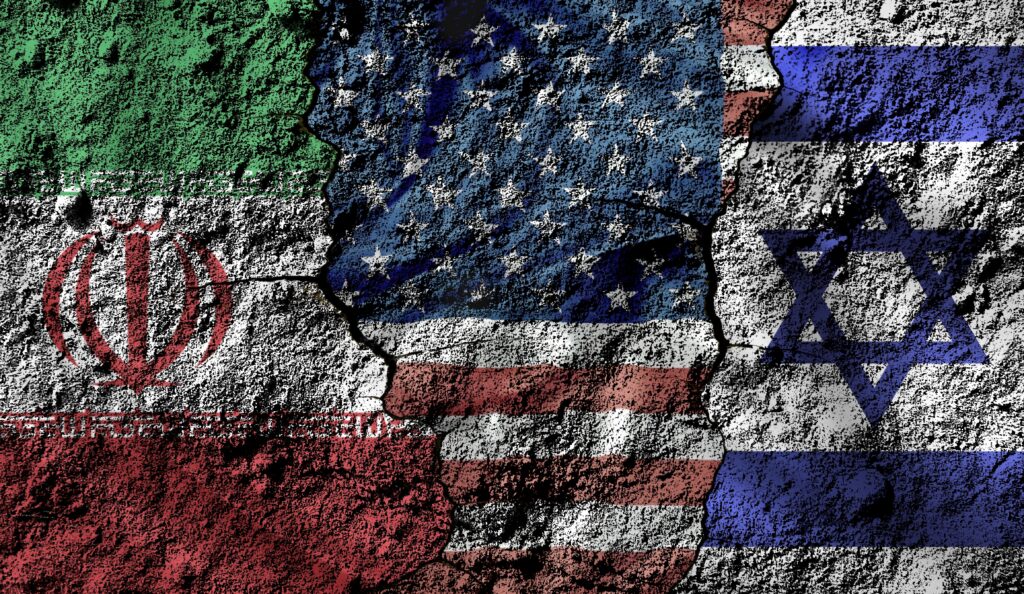
The US–Israeli operations launched against Iran last month prompted predictable criticism. Some insist the strikes are illegal because force can supposedly only be used in response to an actual attack or immediate risk of imminent attack. Others argue the campaign risks destabilising the international order. Both claims rest on a profoundly misleading understanding of the Iranian regime and the conflict it has waged for decades against the United States and Israel.
Iran has waged a violent war of aggression against the United States since the Islamic Republic’s foundation in 1979, through a combination of direct attacks and proxy warfare.
American forces have been targeted repeatedly, from the bombings of the US Marine barracks in Beirut in 1983 and Khobar Towers in Saudi Arabia in 1996, to Iranian-backed militias attacking US troops with Iranian-made weapons in Iraq.
Israel has faced even more sustained violence. Hezbollah in Lebanon, Hamas and Palestinian Islamic Jihad in Gaza and the West Bank, and various militias elsewhere in the region have all received Iranian funding, training and weaponry explicitly to attack Israel. And, in 2024, Iran twice directly launched huge salvos of missiles and drones against Israel, removing the shield of deniability it had employed as it waged a war the regime openly declared was intended to wipe Israel off the map.
The current operations should thus not be viewed as beginning a new war but as another phase in a long-running one. To pretend the conflict somehow begins only when Israel or the US respond directly to Iran’s aggression turns the spirit of the laws of armed conflict on its head.
What’s more, the Islamic Republic has, for decades, been one of the most determined and disruptive opponents of the international order.
It has not merely attacked Israel and American interests via proxies, it has also systematically undermined the sovereignty of the states where those proxies operate. Hezbollah’s long domination of Lebanese politics and security have almost completely hollowed out the Lebanese state’s authority. Iranian-backed militias in Iraq have similarly eroded Baghdad’s ability to exercise control over its territory. In Yemen, the Houthis have prolonged a devastating conflict that has led to hundreds of thousands of deaths.
Iran’s regime gravely threatens all its neighbours, not just Israel – as epitomised by its recent missile fire at Saudi Arabia, the United Arab Emirates, Qatar, Kuwait, Oman, Bahrain, Jordan, Syria, Azerbaijan, Turkey and even distant Cyprus. Moreover, despite Teheran’s claims, it is clearly targeting not just US military bases but many civilian sites.
Globally, Iranian intelligence services and their proxies have perpetrated attacks and plots against Jewish and Israeli targets around the world – as Australia witnessed in 2024 – and against Iranian dissidents abroad. The regime and its affiliated networks have also long been linked to large-scale drug trafficking and co-operation with organised crime groups.
Taken together, this behaviour represents a sustained and fundamental challenge to international stability. And if, as critics claim, international law says there is no lawful, effective means for victims to respond to this blatant aggression, it is hard to see how the current system of international law is sustainable.
The Islamic Republic is also deeply oppressive at home, imprisoning and killing dissidents by the tens of thousands and enforcing the state’s ideological strictures on a population that numerous credible polls show overwhelmingly hate the regime and desire its fall by almost any means necessary.
Regime change is not the US or Israel’s stated objective, though clearly both hope it might eventuate. Nonetheless, strikes that have targeted the Revolutionary Guards and the Basij, the regime’s main instruments of repression, are significant. Their degradation may create conditions in which the Iranian people feel both the courage and the capacity to once again demand a different future.
Regime change would have profound effects – with positive consequences well beyond the Middle East, including on counter-terrorism, nuclear non-proliferation and other weapons proliferation, energy stability, and international crime, as well as prospects of democratisation and improved human rights in many nations currently under pressure from Iran.
What’s more, it is hard to think of any action that could do more to encourage movement toward real and sustainable Israeli–Palestinian peace than removing the existential Iranian threat to Israel, along with Teheran’s sponsorship of the most extreme, violent and rejectionist Palestinian elements.
Ultimately, the current campaign was a predictable result of Iran’s own behaviour and policies. For decades, Tehran has pursued a strategy of confrontation, intimidation and destabilisation while benefiting from its adversaries’ reluctance to respond directly. If the present operation reduces the regime’s capacity to wage that campaign, it will have served an important purpose that extends well beyond the immediate battlefield, making the world a better place.
However, if it does allow the Iranian people to finally replace a murderous, authoritarian, revanchist regime they hate, with one that actually looks after their needs and serves their real interests, that would indeed transform the entire region.
Colin Rubenstein is executive director of The Australia/Israel & Jewish Affairs Council.
Tags: Iran, Israel, Middle East, United States