IN THE MEDIA
The Iran war is a strategic gamble with global consequences
March 6, 2026 | Ran Porat
Eureka Street – 6 March 2026
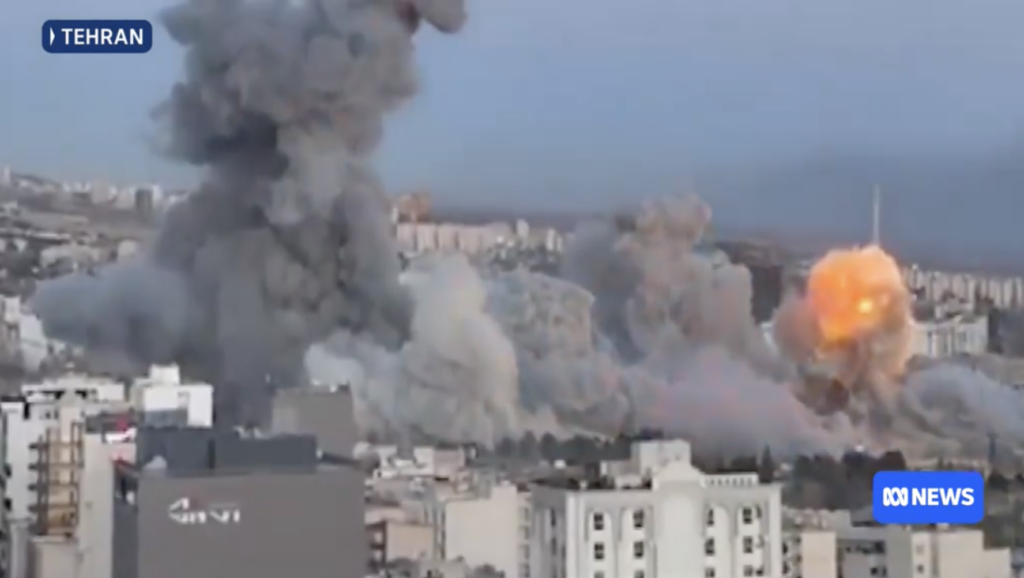
On Saturday, 28 February, at 8:10 am Tehran time, bombs struck several locations across that city. Within minutes, dozens of senior regime officials, ministers, and Supreme Leader Ali Khamenei were dead. News of his death spread rapidly, and Iranians from across the political spectrum and around the world reacted with jubilation. This was the death of the man responsible for brutally oppressing and killing his own people since he assumed office in 1989 – including perhaps 30,000 protestors gunned down over recent months. He brought the country to its lowest point: an isolated autocracy with a failing economy, able to offer no hope for its citizens.
At the same time, many Shi’ites were shocked and grief-stricken, fearing for the future of their minority sect within Islam. Under Khamenei, Iran had served as the preeminent Shi’ite power, standing against the Sunni arch-nemesis, Saudi Arabia. Now Shi’ites were being driven from power once again — evoking a new version of the Battle of Karbala (680 CE), the founding tragedy of the Shi’a sect, when Ali, grandson of the Prophet Mohammad, and his followers were massacred by rivals who prevented him from becoming the ruler of the Islamic world.
In 2026, the killing of the top echelon of the Islamic Republic was the opening strike of Israel’s “Roaring Lion” campaign and the US’s “Epic Fury” operation — a joint, full-scale war against Iran. The first objective was to establish air superiority by destroying whatever Iranian anti-aircraft defences remained after the previous war in June 2025 (“Rising Lion”). While Israel had, over the years, refined the targeted killing of terror organisation leaders and senior officers in enemy militaries, this was the first time it had conducted a ‘decapitating’ strike against the leadership of a sovereign state, or one on this scale.
How the war unfolds into a regional conflict
The stated goals of the war include removing Iran as a regional threat, reducing its capacity to produce and fire ballistic missiles, and dismantling its remaining nuclear weapons program. Given the immense military superiority of the US and Israel over Iran, and their demonstrated ability to operate over Iranian territory with impunity, these aims are broadly achievable — though the measurability of these outcomes is expected to remain contested.
Over the coming weeks, the forces of both countries, supported by regional actors and Western allies, will likely relentlessly bomb nuclear sites, missile depots, and army bases; hunt ballistic missile launchers; and strike a range of other military targets and command headquarters throughout Iran.
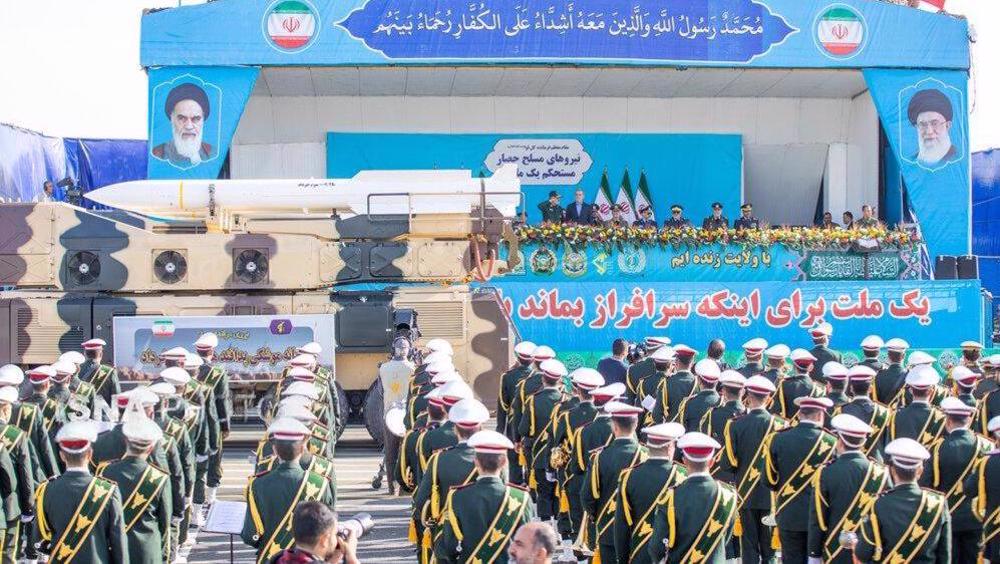
Also on the target list are symbols of the regime — parliament buildings, police stations, and most critically, people and institutions associated with five decades of brutal repression, torture, mass arrests, and killings of Iranians. Foremost among these are the feared Basij militia and the powerful Iranian Revolutionary Guard Corps (IRGC).
Scrambling to defend itself, the regime is drawing neighbouring Arab countries into the conflict by firing missiles and drones at US bases, embassies (a clear breach of international law no one mentions), and other targets including airports and hotels in Jordan, Iraq, the UAE, Qatar and Kuwait, as well as hydrocarbon infrastructure in Saudi Arabia and Qatar. It is notable that the Iranians even chose to strike the self-appointed international mediators, Qatar and Oman. Iran’s rationale for attacking some of the world’s leading energy exporters appears twofold: to drive up oil prices (which is already happening) and to generate domestic and international pressure on US President Donald Trump to shorten an already unpopular war at home, anticipating long-term damage to the global economy.
This may prove to be a colossal Iranian strategic miscalculation. Until days earlier — at least publicly — these Arab states had been working hard to prevent the war, insisting they would not permit use of their airspace or US bases on their soil to attack Iran, while carefully maintaining relations with Tehran. Iran has now destroyed the assumption that befriending the ayatollahs can buy protection from Iranian aggression. Instead, at least some of these states will likely actively join the war against Iran.
Israel continues to absorb intense barrages of Iranian missiles. Iran’s proxy in Lebanon, Hezbollah, has also been drawn into the fighting, launching an attack on Israel. This immediately triggered a large-scale, pre-planned Israeli counter-offensive, which will further degrade Iran’s most important and powerful proxy militia, already significantly weakened following major Israeli operations in late 2024. In its desperation, Iran — or Hezbollah — targeted a British base in Cyprus, marking the first direct Iranian strike on a NATO member and EU state. An Iranian ship was sunk off the Sri Lankan coast, and even Australian forces stationed in the Middle East were put at risk.
In addition, with six American soldiers killed and Israeli civilians under sustained bombardment, the resolve in Washington and Jerusalem to see this mission through appears to have only intensified.
The ‘regime change’ gambit
The additional goal of the war for the US and Israel is far more difficult to achieve. US President Donald Trump and Israeli Prime Minister Benjamin Netanyahu speak openly about their hope that it will lead to the removal of the ayatollahs from power, framing their military campaign as clearing the way for the Iranian people to reclaim their country.
But toppling a foreign government is an inherently elusive goal, especially in the absence of significant “boots on the ground”. So far, Israel and the US have relied almost exclusively on strikes from afar and from the air, supplemented by influence operations targeting the Iranian public directly — exposing the regime’s vulnerabilities and signalling that the moment for action to overturn the regime is approaching.
Analysts consistently argue that regime change is simply not achievable through air power alone; it requires an organised force on the ground capable of assuming control of government institutions, security structures, and the machinery of the state. The United States is unlikely to deploy ground troops inside Iran for this purpose.
The 2003 invasion of Iraq — which toppled Saddam Hussein at enormous human and financial cost — destabilised the region for years. The only plausible path for regime change in Iran, though it remains far from certain, would require millions of Iranians to take to the streets, supported by organised internal opposition forces, such as the Kurdish minority militia, and perhaps defecting elements of the armed forces. Such an effort could potentially coalesce around Crown Prince Reza Pahlavi, son of the late Shah Mohammad Reza Pahlavi, deposed in Khomeini’s 1979 revolution. The younger Pahlavi has publicly committed to facilitating a peaceful democratic transition, though his actual reach inside Iran and the depth of organised opposition remain very unclear.
Post-war Iran: Two scenarios
Two broad scenarios appear possible for post-war Iran.
In the first, a weakened version of the Islamic Republic survives — stripped of its strategic nuclear and missile capabilities but still exercising control over significant parts of the country. Hardline IRGC-affiliated politicians could plausibly step into the vacuum, preserving key state mechanisms and economic structures under a reconstituted authoritarian government. This scenario should not be dismissed out of hand, especially given that, even now, there is a substantial section of the Iranian population which is economically dependent on the existing regime and supports it.
In the second scenario, the regime collapses and a new political order emerges — one aligned with the strategic and political expectations of the war’s primary instigators (though this is also not guaranteed even if the regime collapses). This is the outcome Washington and Jerusalem are working toward, and both governments have staked significant prestige and resources on this gamble.
For Trump, anything short of full regime removal risks being framed as a strategic failure. With mid-term congressional elections approaching, the Republican Party is anxious about its majorities in both the House and the Senate. Trump needs a decisive outcome to justify the war’s costs — in casualties, diplomatic capital, and economic disruption — to his political base. A clear change of regime in Tehran would also provide ballast against mounting domestic criticism over the constitutionality of launching a war without congressional approval, as well as accusations that he has betrayed his own campaign pledges to be a president of peace.
In Jerusalem, Netanyahu is equally invested in a decisive outcome. Elections are scheduled before year’s end — the first since Hamas carried out the deadliest massacre of Jews since the Holocaust on 7 October 2023. Netanyahu has never publicly acknowledged personal responsibility for the catastrophe — including his controversial policy of allowing Qatar to indirectly fund Hamas. He has polled badly ever since, and few analysts expected him to survive the next general election. But the political winds could now be shifting.
Netanyahu now presents himself as the architect of three key achievements, most notably: the return of all Israeli hostages from Gaza — including the bodies of those who did not survive — since October 2025; the June 2025 12-day war against Iran; and the current war, framed as aiming to finally eliminate Iran’s nuclear and missile threats. Rising support for his Likud party suggests he may contest — and possibly win — a snap election that could be called as early as June. Netanyahu will point to his close personal relationship with Trump — a key partner for all three of these achievements — as of unique strategic value to Israel.
Paradigm shifts
The Iran war is testing several long-held assumptions about international relations and global order.
First, it reinforces a growing perception that existing international law — as it currently operates through bodies such as the UN — is an increasingly insufficient framework for managing power among states. In a post-Cold War world where the United States remains the only actor with both the will and the capacity to act decisively against rogue states, Washington has come to view legal multilateralism as an obstacle rather than a tool. Al-Qaeda’s 9/11 attacks demonstrated, in Washington’s view, the peril of restraint and dependency on the international community and its unreliable legal structures. Two and a half decades on, under Trump, the logic has evolved further: American power is viewed by elements of the US leadership as a form of order, exercised as US interests dictate, in itself, as seen in the removal of Maduro from power in Venezuela.
This is not a world order that appeals to everyone — and its risks are real. But it is worth acknowledging that power, for now, still rests with a democracy rather than with an autocracy such as Putin’s Russia, whose invasion of Ukraine has shown what unchecked revanchist ambition can produce — and which “international law” has shown no ability to halt.
Second, the war has exposed the limits of accommodation as a survival strategy for smaller states navigating relations with aggressive powers. Qatar and Oman — and indeed, to a lesser extent, other smaller Gulf states — operated on the assumption that engaging diplomatically with Iran would insulate them from its unpredictability and threat. That assumption proved wrong. Iran struck them anyway. The lesson echoes, if imperfectly, those learned from the pre-war appeasement strategies of UK Prime Minister Neville Chamberlain in handing Germany the Sudetenland before WWII — accommodating an expansionist actor does not moderate its appetite.
Gulf states will now need to recalibrate, potentially setting aside intra-regional disputes to forge closer alignment with Washington and integrate into the security framework it offers. This would likely involve closer alignment with Washington’s strongest regional ally, Israel.
Australia, a self-defined middle power operating in an increasingly contested Indo-Pacific region, should study carefully the strategic and moral lessons emerging from this conflict. A world in which democratic nations stand together, honour their alliances, and support the legitimate aspirations of people living under repressive regimes is a more reliable path to a more stable and just world than any realistic current alternative. Australia’s alliance with the United States is central to that kind of world — and the events now unfolding in Iran are a reminder of what is at stake when that alliance is put to the test.
Tags: Iran, Israel, Middle East, United States