IN THE MEDIA
Violent incitement should not be allowed to masquerade as free speech
February 11, 2026 | Justin Amler
Sky News – 11 February 2026
The Bondi murders on December 14 last year, in which 15 people were killed, marked one of the darkest moments in Australian history – and an unprecedentedly traumatic moment for Australian Jews, targeted while attending celebrating the festival of Hanukkah.
The pain of that day still lingers, and for many in the Jewish community, the scars will never fully heal.
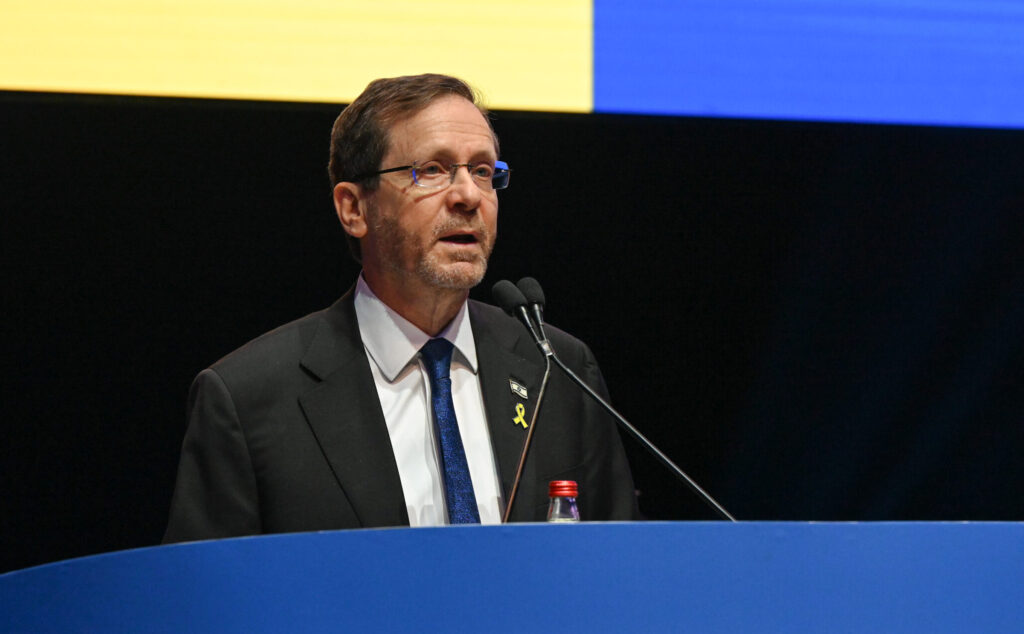
It is in this context that the visit of Israeli President Isaac Herzog has taken on deep significance. As the head of state of the world’s only Jewish state, the empathy he has shown has offered comfort to a community that has felt increasingly isolated ever since the October 7, 2023 Hamas massacre in Israel.
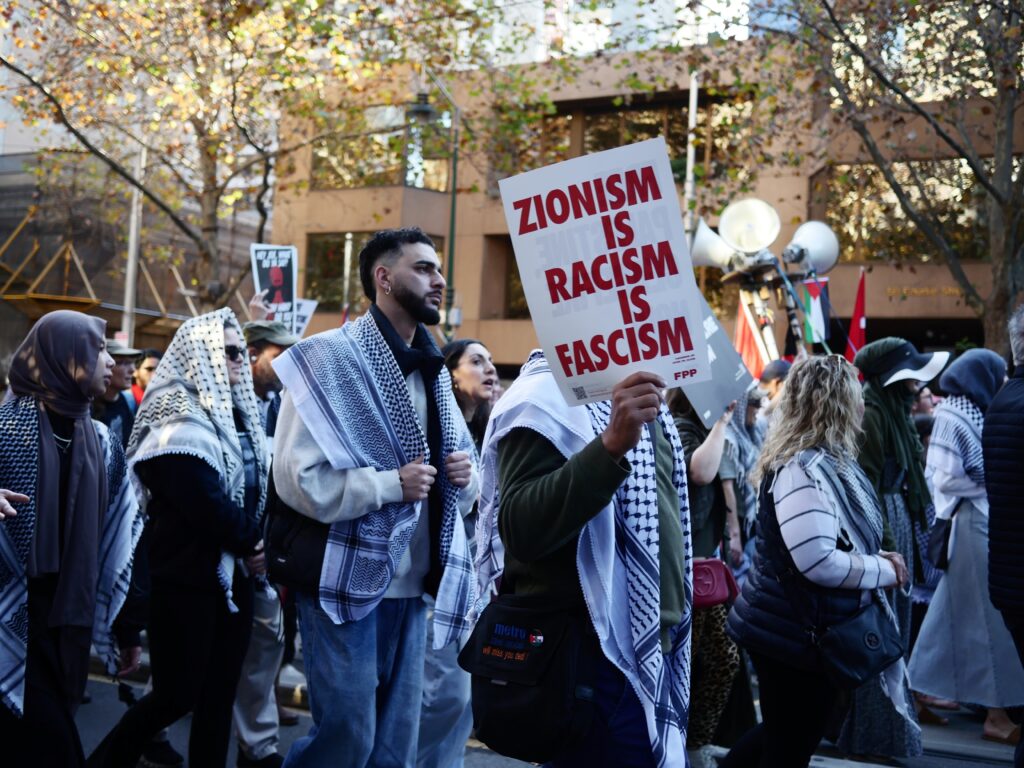
For over two years, Australia’s streets have frequently been dominated by aggressive anti-Israel demonstrations. Many Jews now avoid city centres altogether, fearing harassment or intimidation – fears that have proven justified.
Even in moments of acute Jewish grief, the protest movement has refused restraint or empathy. That was again evident this week, when thousands are taking to the streets of Sydney – and also Melbourne and Adelaide – to protest President Herzog’s visit, directing hostility not only at Israel, but with clear spillover effects onto the local Jewish community.
Claims that President Herzog incites genocide are demonstrably false. He was very clear in the very press conference cited by those making these claims that innocent Palestinians should never, ever be targeted and Israel complies fully with international law. Other pretexts used to attack him – he works with the elected Israeli government (which is his job), he once signed a smokescreen shell as a way to express support for Israeli troops in the field – are obviously just that, pretexts. But this is a movement that prefers slogans to facts, and emotive rhetoric to reality.
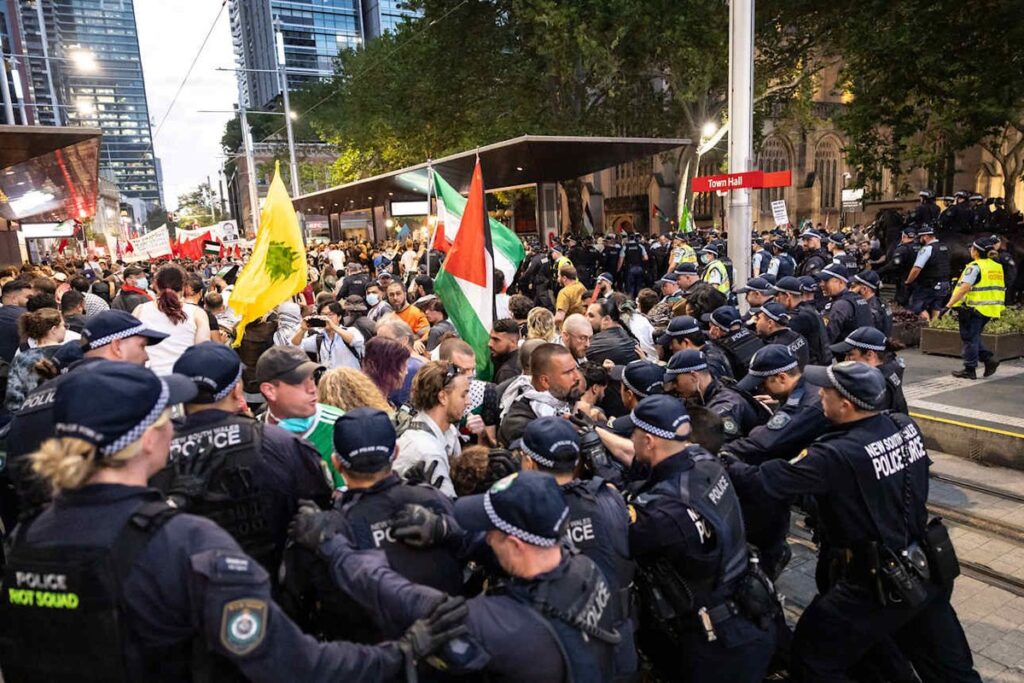
As has occurred too often before, the Sydney protest descended into violence. NSW Premier Chris Minns confirmed protesters attempted to breach police lines while officers were protecting Jewish mourners. Twenty-seven people were arrested, including for assaulting police.
Similar scenes unfolded in Melbourne, where police deployed pepper spray after fires were lit and one woman was arrested for burning flags, allegedly causing damage to a tram stop.
Throughout it all, familiar chants calling for Israel’s destruction echoed through the streets.
In Sydney, former Australian of the Year Grace Tame, a figure who rose to prominence as a voice for victims, led protesters in chanting “globalise the intifada” at Town Hall. Premier Minns has correctly described the phrase as “violent” and “hateful”. Historically, intifada refers to waves of mass violence targeting Israeli civilians as well as soldiers. In particular, the Second Intifada in Israel saw over a thousand Israelis murdered. Calling for it to be “global” is to endorse violence far beyond the Middle East, violence that ultimately targets Jews.
This is not abstract speech. It is the sort of incitement that effectively leads to events like Bondi.
Around the world, Jewish communities have already experienced rising intimidation in the wake of such rhetoric, including violent attacks, the targeting of Jewish institutions and even murder. In Australia, Jewish Australians have been made to feel less safe in their own country – their synagogues firebombed, community restaurants attacked, schoolkids targeted for harassment, and a 400% increase in antisemitic incidents. And if there was any doubt, any remaining sense of security was shattered in Bondi on December 14.
If public figures can openly lead chants that glorify and encourage violence against Jews without consequence, it underlines the urgency of legislation to prohibit such incitement. While laws may not change hearts and minds, they do establish boundaries and real-world consequences.
This is not just about Jewish sensitivity, nor the obvious hurtful insult of a violent call so soon after the worst terrorist incident on Australian soil. Nor is it about shielding Israel from criticism – everyone agrees that criticism of Israeli governments or policies similar to those directed at other countries’ governments and policies is fair game.
What it is about is preventing language that normalises violence and places an Australian minority at risk.
If Australian Jews cannot feel safe in their own country, then how can anyone?
Australia functions as a vibrant, multicultural liberal democracy because it is built on law, fairness, and mutual respect, compliance with which is the overriding responsibility of all Australians. When respect for those principles erodes, society itself begins to fracture, and it is not only Jews who will suffer negative consequences as a result.