IN THE MEDIA
Writers’ block at the Adelaide Writers’ Festival
January 19, 2026 | Justin Amler
JNS – 17 January 2026
For one week in January, a rare moment of moral clarity seemed to emerge at the prestigious Adelaide Writers’ Week festival — a recognition that words are not uttered in a void, but carry real consequences.
That moment, however, was fleeting. Almost as soon as it appeared, it evaporated, retreating to a familiar posture: one that says targeting Jews and Israel is acceptable, even laudable, while any challenge to those doing so is an unforgivable transgression.
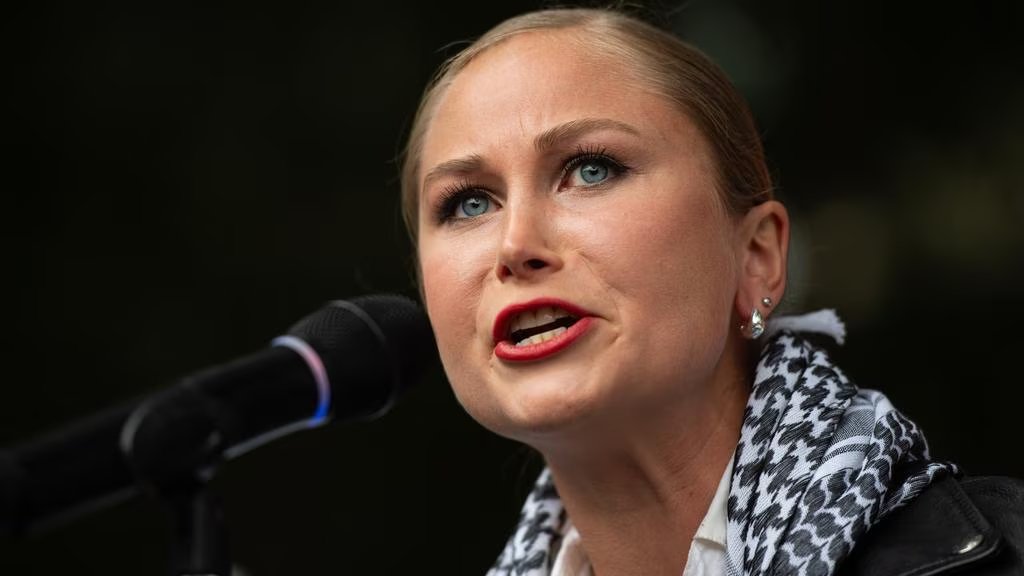
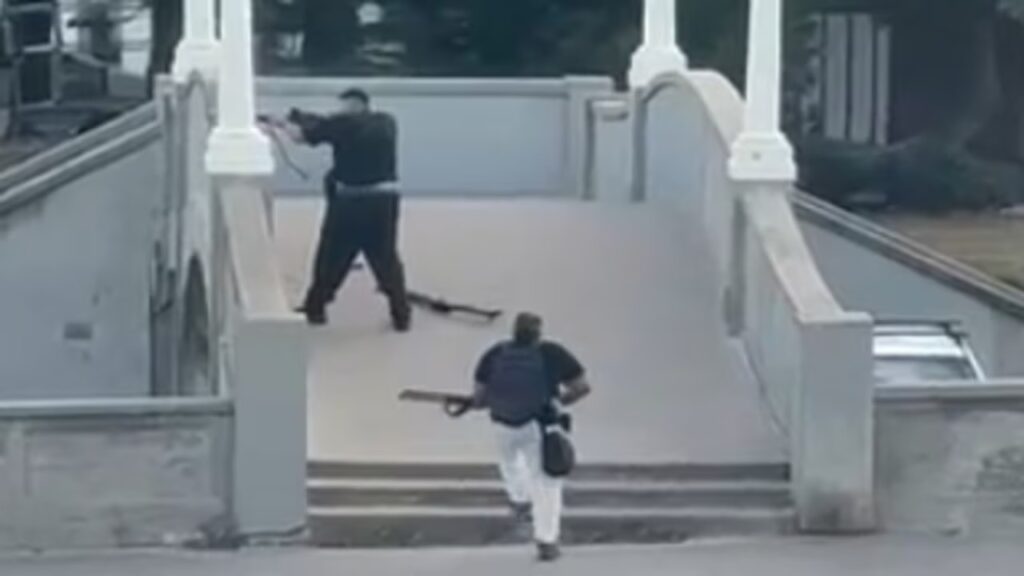
On January 8 the Adelaide Writers’ Week board cancelled the scheduled appearance of writer Randa Abdel-Fattah, who had previously appeared in 2023. This followed the December 2025 Bondi Beach massacre in Sydney, where 15 people were murdered and dozens injured at a Hanukkah event by Islamist terrorists. While the board stressed it was not suggesting Abdel-Fattah’s writings were connected to the attack, it concluded that, given her past statements, it would not be “culturally sensitive” to proceed so soon after Bondi.
The terrorists responsible for the Bondi massacre reportedly recorded a video manifesto condemning “Zionists,” underscoring how language that dehumanises Jews moves from rhetoric into violence—a transition the board briefly acknowledged, before completely reversing course.
Abdel-Fattah has acknowledged writing that Zionists “have no claim or right to cultural safety” and that everyone who opposes racism must “ensure that every space Zionists enter is culturally unsafe for them.” And in a publicly reported post in December 2024, she said: “May 2025 be the end of Israel … May we see the abolishment of the death cult of Zionism.”
Given that the overwhelming majority of the world’s Jews identify as Zionists — in the sense that they support Israel’s existence and Jewish self-determination — it could be interpreted that such language effectively targets Jews themselves. As Martin Luther King Jr. is widely reported to have observed, “When people criticise Zionists, they mean Jews. You’re talking antisemitism.”
Abdel-Fattah has acknowledged that, the day after the October 7 massacre, as it still dominated global headlines, she changed her social media icon to a Palestinian paraglider – later saying she was unaware of the scale of the attack and insisting she does not support the killing of civilians. Paragliders were among the methods Hamas used to carry out its attack.
At a children’s pro-Palestinian event at the University of Sydney in April 2024, where she spoke, primary-school-aged children participated in chants including “5, 6, 7, 8, Israel is a terrorist state” amid calls for an intifada.
Writers, of all people, understand the persuasive power of words — and their ability to normalise ideas, good, bad, and ugly.
Since the October 7 Hamas massacre, antisemitism has surged globally at levels not seen since the 1930s — including in Australia, where incidents have risen 5.5 times, according to the Executive Council of Australian Jewry.
Chants such as “From the River to the Sea” and “Globalise the Intifada” are not harmless slogans but calls for violence with real-world consequences — consequences made painfully clear at Bondi. As NSW Premier Chris Minns observed, “There has to be a recognition that words have consequences.”
Yet, more than 180 writers pulled out of the festival in solidarity with Abdel-Fattah. Accusations included the death of freedom of speech, the so-called denial of Palestinian voices and predictable allegations of racism, even though Abdel-Fattah’s cancellation had nothing to do with her ethnicity and everything to do with the content of her posts.
The irony is hard to miss, given that Abdel-Fattah herself supported calls in 2024 to rescind the invitation to Jewish New York Times columnist Thomas Friedman — a move that was ostensibly rejected by the board, but which in fact led them to cancel his appearance by citing “timing” issues, according to Friedman.
Ultimately, this year’s Festival was cancelled amidst numerous resignations and a re-shuffle of the Board.
But within days of its cancellation, the board apologised, then fully retreated — retracting its original statement and inviting Abdel-Fattah to appear at next year’s festival.
And just like that, the fleeting moment of moral clarity was gone.
But we shouldn’t be surprised. Back in February 2023, I noted that the Adelaide Writers’ Festival — a supposed festival of ideas – had instead become a festival of hate. Of the roughly 200 writers appearing that year, seven were billed as being from “Palestine” and none from Israel.
Some of those writers had used some of the most vile antisemitic language imaginable. Israel was described as an “abomination.” Jews were likened to Nazis. Israel was accused of deliberately infecting Palestinians with COVID-19, while “Zionists” were said to possess an “unquenchable thirst for Palestinian blood and land.”
And yet, amid this violent and dehumanising language directed at Israel and Jews, there were no moral crises, no mass resignations, and no boycotts. The festival proceeded with little interruption.
The Adelaide Writers’ Week festival, far from being about the free exchange of ideas, remains what it has long been, an exercise in political grandstanding and virtue signalling. Marketed as an exploration of truth, those responsible for its programming have decided that some truths — particularly those involving the deliberate targeting of Israel and Jews — are too inconvenient to be explored at all, and must be blocked from the outset.