Australia/Israel Review
The key to the future of the Middle East
Dec 19, 2025 | AIJAC staff
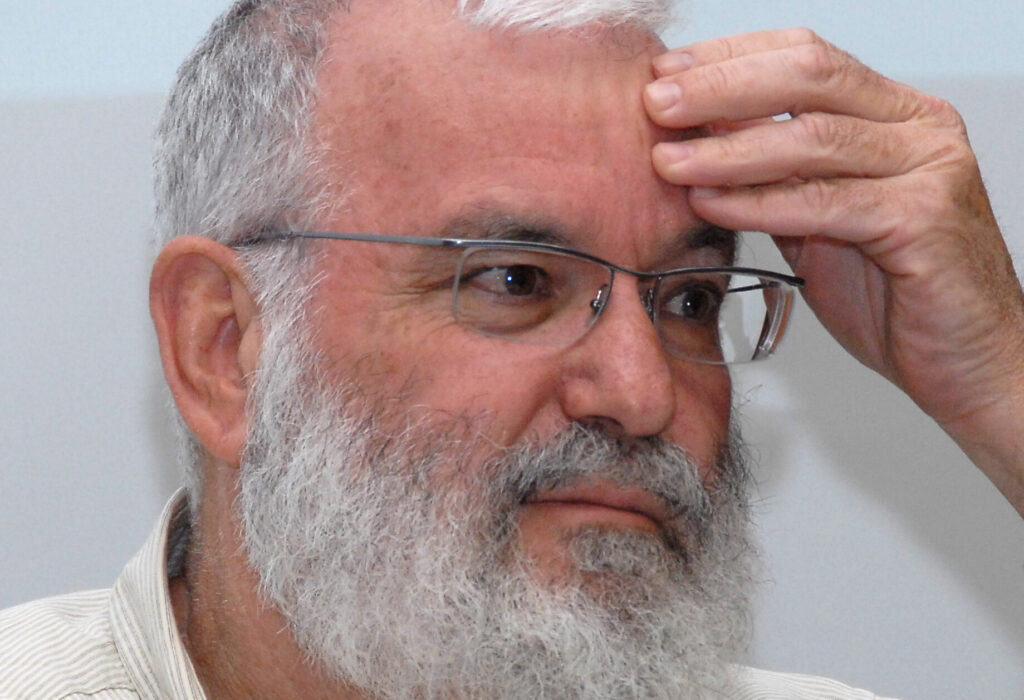
An interview with retired Israeli Major-General Yaakov Amidror
Maj. Gen. Yaakov Amidror (res.) is one of Israel’s most highly regarded and sought-after experts on strategic and military affairs.
Gen. Amidror served as the National Security Advisor to the Prime Minister of Israel, as well as the head of the National Security Council, from 2011-2013. During his 36-year career in the IDF, he served as Commander of IDF Military Colleges, Military Secretary to the Minister of Defence, and Director of the Intelligence Analysis Division. He has authored several books on intelligence and military strategy, including Winning Counterinsurgency War: The Israeli Experience. Today, he is the Anne and Greg Rosshandler Senior Fellow at the Jerusalem Institute for Strategy and Security.
Amidror spoke with AIJAC’s Joel Burnie in early December to discuss the strategic challenges for Israel and the region in the wake of Israel’s seven-front war with Hamas, its Iranian patrons and Iran’s many proxies, as well as the Trump Administration’s current plans designed to bring that conflict to an end.
Joel Burnie: As you know, Australia is geographically very, very far away from Israel. But we are eternally connected to what you and the Israeli people have endured over the past two years… We are all concerned with the current situation in Gaza. Can you give us some type of idea as to where we’re at now in terms of finishing up stage one and heading into stage two of the Trump plan? What’s the situation on the ground there? And what do you see happening over the next couple of weeks and months?
Maj. Gen. Yaakov Amidror: I think that one element is very clear. Hamas in Gaza is not relevant as a threat to Israel…We succeeded to destroy its military positions and capabilities. And now Hamas has been encircled inside Gaza. We are controlling more than 50% of the area… And the ability of Hamas today to launch an attack on Israel is almost zero…
The question is, what next? It’s not about the ability of Hamas to launch any attacks towards Israel. It’s about how we are disarming Hamas.
The Americans have a plan. According to their plan, international forces are supposed to come in. Hamas is supposed to be disarmed by those forces and then [those forces will help] rebuild Gaza. From what we understand and what was declared by Hamas, Hamas doesn’t have any intention to be disarmed.
And either the Americans will call it a big failure or they will try to put pressure on Hamas through Turkey and Qatar and the Egyptians and so on. And Hamas will change its attitude towards the demand.
Or [else] we [Israel] will have to come in… and destroy Hamas totally inside Gaza. We don’t know yet. We are discussing it with the Americans. The Americans have a headquarters in Kiryat Gat, not far from Gaza, inside Israel, and they are trying to coordinate all the efforts.
They want to begin with some change on the ground, in the area which is controlled by Israel, but most of the Palestinians are not living there… They are living… in the area which is under Hamas control. So even if something will be built [in the Israeli-controlled portion of Gaza], for 80% or 90% of the Palestinians, it’s not relevant.
And the decision should be taken, what we are doing [regarding] the area which is under control of Hamas, in which the vast majority of the Palestinians are living in unacceptable conditions, under the control of [the] brutal Hamas regime, [with a] very devastating housing situation.
We are ready to fight Hamas and to destroy it totally, to finish the job that we took upon ourselves after the seventh… of October. But the Americans have to decide how they want to proceed. We try to be as coordinated with Americans as possible, and our forces are maintaining what’s called the yellow line, which is the border between the part of Gaza which is under control of Hamas and the part of Gaza which is under our control… we have all the time in the world… we are not under pressure. We can continue with this situation a long time, and the Americans will have to make a decision. We are ready to do our job if we’ll be needed.
Joel Burnie: So there’s a lot to unpack there… firstly, as you say, Israel can currently stay in its current positioning inside Gaza for an extended period of time, which I guess not only buys Israel time, but it also buys time for the Americans to figure out a way, if they can, to demilitarise and take the weapons away from Hamas… What’s your faith in their ability to, with the leverage that they potentially have with Turkey and Qatar, to exert enough force on Hamas to demilitarise… without a military campaign to do it?
Amidror: I should be very cautious, because I didn’t believe that they [could] release all the hostages without a big operation, a real war… But they succeeded, so I have to be very cautious. If you ask, ‘What is my assessment?’ My assessment is that Hamas is not going to disarm itself, and the Americans don’t have the leverage to achieve it. But they did it in the past. So… maybe I’m wrong. I don’t know. But if you ask me to bet, I’m betting that the Americans do not succeed to disarm and demilitarise the area.
Joel Burnie: If they’re unsuccessful, do they then give some type of cover and legitimacy to Israel’s green light to go in and finish the job?
Amidror: This is what we are negotiating with them now, to understand how they see the future if they don’t succeed. If they succeed, it’s very easy. International forces will come in, and Gaza will be rebuilt.
If they fail to put the pressure, to succeed with the pressure on disarming Hamas and demilitarise the area, the question, “Okay, what will happen next?” Our offer will be to bring the IDF and to give the IDF the order to destroy Hamas.
Joel Burnie: And how long do you think that it will take the IDF to complete the objectives, given the fact that it appears as though, from most assessments, with all the hostages, bar one, now back in Israel, it removes certain hurdles and difficulties that the previous campaign had?
Amidror: It will take between a few weeks to months of intensive war to gain control of the area, and then half a year to cleanse it… it’s a very slow process, underground and above ground, to clean the area from all the remnants of Hamas. We did it in the area that we are controlling now, and we have more experience, but it will take a long time to deal with all the underground facilities, and the new recruited Hamas members that are under Hamas control now in the west side of the Gaza Strip.
Joel Burnie: The Americans are going to try and bring in other parties to assist in their objectives. They were successful with… Arab involvement in the 20-point plan that was signed in Egypt. What… role do certain countries need to play, namely Turkey, Qatar, Egypt, in assisting the Americans in avoiding the need for a military campaign to disarm Hamas and transition from phase one of the 20-point plan to phase two and phase three?
Amidror: The Americans use all these countries to put pressure on Hamas. As I said, I don’t know if they will succeed or not.
We are very determined not to let the Turks and the Qataris to be involved in the next stage. We don’t want to see Turkey military forces inside Gaza and Turkey’s involvement in Gaza in the future. The Turks are very negative force, hostile to Israel… Can we prevent money comes from Qatar and Turkey to enter… probably not. But we don’t want to see Turkey and Qatar involved in the next stage.
Can they put pressure on Hamas to disarm itself? I don’t know.
I’m not sure that they really want it. I think it’s in the interest of both Turkey and Qatar that Hamas will remain a strong movement within the Palestinian society. Both agree with the Muslim Brotherhood ideas… So I think that ideologically and politically … it is the interest of Turkey… and Qatar that Hamas will remain a strong position inside the Gaza [Strip] and… Palestinian society. So I think that they are not relevant in the demand to get rid of Hamas in the Gaza Strip.
Will Iran rebuild the “Ring of Fire”?
Joel Burnie: So a lot’s happened in the past two years. The seven-front war was obviously widely covered. And Israel’s military and strategic achievements are also very well noted. You now live in a very, very different region to what you lived previous to the events of October 7, 2023. And I guess the major reason for that is Israel’s decisive action against Iran. We had the 12-Day War earlier in the year against Iran’s nuclear facilities… There is no doubt that the regime has been significantly weakened by Israeli military action, not just directly inside Iran’s borders, but also regionally. So can you just walk us through… what it actually means in the short term for Israel, but also what your expectations are of the Iranian regime, [as they] to try to rebuild from the great losses that they’ve experienced over the past 6 to 24 months?
Amidror: Before the seventh of October, we lived in a Middle East shaped by the Iranian strategy of the last 45 years… by the way, it’s not Khamenei, [but] Khomeini, who made the decision to [seek to] destroy Israel
This led to a very clear and defined strategy with three legs: A nuclear umbrella; huge ability to launch ballistic missiles into Israel; and the most sophisticated leg was to build around Israel armies of proxies, a “ring of fire” that’s supposed… to crumble Israel. When the system [would] be ready, they [would] coordinate an attack which [would] be led by the Iranians while the Iranians [remained] far away.
The combination of Hamas, Islamic Jihad, Hezbollah, what they tried to build in Syria, the Houthis and… militias from Iraq, all together coordinated by the Iranian plan, [was supposed to] crumble Israel.
So the Iranians build a whole Middle East around these ideas. We called it “Ring of Fire”. King Abdullah of Jordan called it the “Shi’ite Crescent”.
We destroyed all these elements of [Iran’s strategy]. None of them still exist.
We destroyed the proxies. They are not relevant as a threat to Israel. Hezbollah, which we are attacking every second day in Lebanon, still have 20 to 30% of their [capabilities] that they had before the war.
Hamas, as we just spoke about previously, [has been decimated].
Syria was taken out of the land bridge from Teheran to the Mediterranean. They don’t have any land connection to Lebanon. They cannot bring back all the capabilities and the missiles and the weapon systems that Hezbollah had because there is [no] land bridge. They can smuggle from here and there, bring money, but they cannot go back to the [situation] before the seventh of October.
Even the Iraqis understood that they should stop the Shi’ite [militias] and since November 2024, nothing was launched from Iraq into Israel…
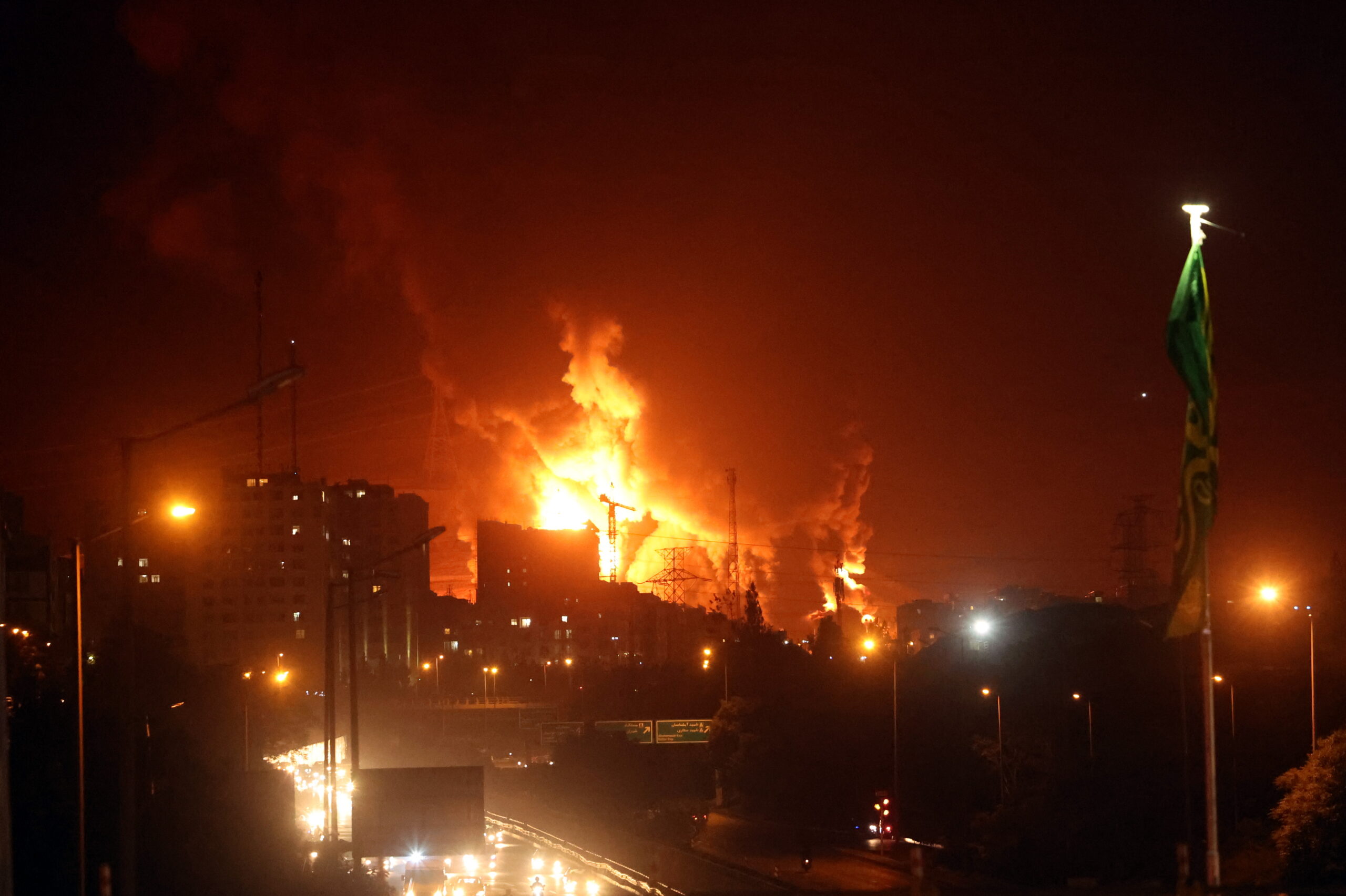
Fire and smoke rise from an oil warehouse in Teheran, Iran, June 15, 2025 (Image: EPA/ Abedin Taherkenareh)
So the Iranians lost all the elements of their strategy – but Iran is a very, very sophisticated state. They are a wounded animal now and they have to make a decision. Do they go back to invest in the missiles, in the nuclear project or not?
Because the proxies they cannot rebuild. This element is lost forever, probably. If [Israel] will be determined enough, they cannot do [it] again.
But they can theoretically rebuild the missile project and produce the thousands of missiles that they had in mind before they [were] attacked by us in the 12-Day War [in June]. And they have to make a decision about the nuclear project.
They have some abilities to continue [uranium] enrichment. What they don’t have is the conversion system that we destroyed and then Americans put another nail into it in Isfahan. And they have to take a strategic decision [whether] they want to continue and take the risk that Israel and America will react in the future.
In terms of having any kind of ability to defend it, they have to rebuild their anti-aircraft system almost from the beginning. We destroyed more than 80% of what they had.
So it’s a long process… a process [over] years, not many years, but… years.
You have to add to that the domestic problematic situation of the Iranian regime. Their economy is collapsing.
They have a huge problem with providing water to the people in Iran. It’s a very dry year in the Middle East and it is especially felt by the Iranians inside Iran.
So it’s a very complicated situation for the regime domestically and strategically and they have to make decisions, very tough decisions… And I’m sure that they are taking it into account that they might give us and the Americans… reason for another attack on Iran and they don’t have a good answer to the capabilities that Israel showed in the 12-Day [War].
Joel Burnie: So given that there’s a very coherent answer and very detailed, but given everything that you’ve just said, my assumption is that your conclusion would be that it’s unlikely that there will be another round of direct military confrontation in the next 12 months between the regime and Israel.
Amidror: No, I think that Israel should prepare itself for such a round. We don’t know what the Iranians decide and we have to be very careful not to [repeat] the same mistake that we did in the past… We should not let the Iranians rebuild those capabilities and come [in] at the last minute.
We made a mistake in giving the beast [a chance] to grow around us – Hezbollah in the north, Hamas in the south. We gave too much time to the Iranians to continue with their nuclear project, and they now have enriched uranium for at least five bombs. It was almost too late, and we should not make the same mistake again.
Joel Burnie: So it’s a good segue to my next question because it’s directly related to… the consequences of Iran’s regional failures… Israel’s efforts against Iran allowed for the weakening of the Assad regime in Syria, changing the government there, and the potential for some type of dialogue, some type of security arrangement with the Syrians and then even recently civilian dialogue with the Lebanese Government…
Where is Israel trying to lead… the bilateral relationship between Israel and Lebanon and Israel and Syria given… the changes of the situation domestically in those two countries?
Amidror: With the Lebanese, we have an agreement and based on the agreement… and we have a side letter with the Americans which gives us the ability to react inside Lebanon.
And our expectation is that the Americans succeed in convincing the Lebanese Government to disarm [Hezbollah]… this is the big difference between Gaza and Lebanon. Lebanon has a government, it’s a state, it’s a member of the United Nations and they have all the rights and the capabilities to do what is needed… So our expectations are very clear. There is a government in Lebanon and this government should make the job of disarming Hezbollah.
If the Americans come to the conclusion that the Government of Lebanon cannot do it or does want to do… from our point of view… the operation is ready. We know how to destroy more… of Hezbollah’s capabilities… Will it lead in the future to disarming this organisation because it will be even weaker and it will be easier for the Government of Lebanon to act against it? I don’t know. But… there is an agreement and the Lebanese Government is part of the agreement. So let’s implement the agreement.
In Syria it is more complicated because in Syria we don’t know who is the regime. We know where the regime came from. It’s a combination of ISIS and al-Qaeda. They claim that they [have] changed. We don’t know…
So here we are puzzling what we are really facing. We decided from the beginning, one, not to let them to rebuild their military capabilities. This is why we bombed all the hardware of the old regime.
And we broadened the area that we are controlling in the Golan Heights. But we are negotiating with them all the time – a dialogue between us and them. And we try to find the common ground that will guarantee our interest, including defending the Druze in the south. But mainly the security of Israel. And to let them to show the world and themselves that they are serious about building a new Syria, which is not extreme, led by ISIS and the al-Qaeda movement. We have to learn and to see. Here it would be judged by actions and what we will learn about their attitude towards issues like women and minorities and Israel.
Our red lines are very clear. Nothing which might threaten Israel will be built in the south close to Israel’s border.
What Arab leaders say privately
Joel Burnie: All the things that we’ve just discussed, the one common element apart from Israel is the United States. And it’s very clear that the United States still remains Israel’s closest strategic ally for lots of reasons… The support that President Trump has offered Israel has been very, very strong. There are issues in the United States of which you would be very aware, of a potential split in the right.
How important is the relationship with the United States and where do you perceive it currently?
Amidror: It’s a relationship that we will have to work very, very hard to keep and to enhance.
Some Israelis don’t understand [this]… America is an independent sovereign state. And they have their own interests. And they’re [conducting] their own elections. We are not determining for them who to elect and what is their interest.
And this is why it is so important to work with the Americans. Those who support Israel, to strengthen their relations to Israel, those who do not support Israel, to make them understand why the relations are so important for us and for America. And that should be done intensively all the time by every Israeli who meets Americans… to keep the strong relations that we have…
I think it’s very important. It’s crucial for Israel. And at the end of the day, if I may say, I think it’s the interest of the US, as well.
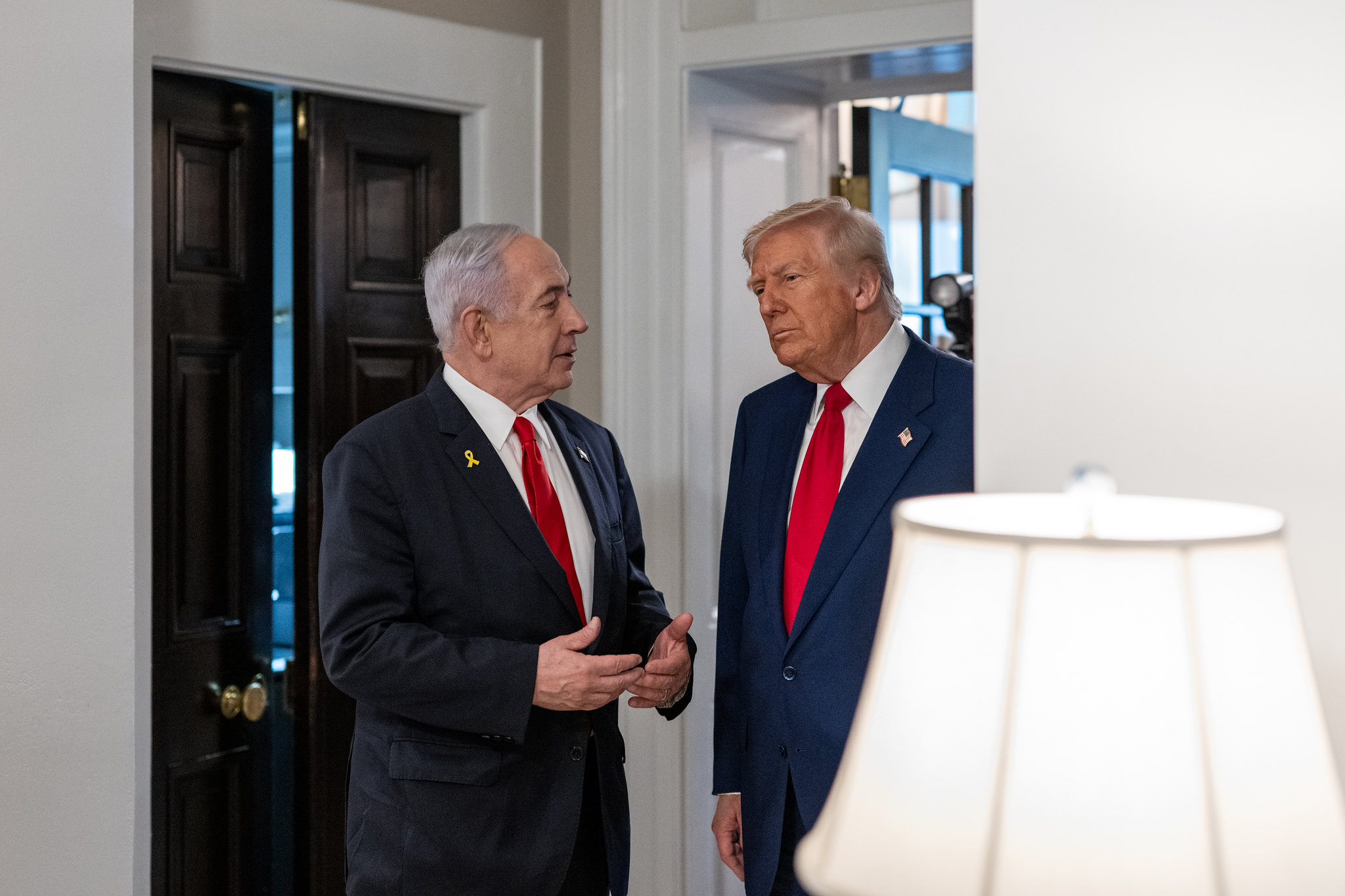
A crucial relationship: Israeli PM Netanyahu and US President Trump (Image: Whitehouse.gov/ Flickr)
The Americans have huge problems in other areas of the world. And as Australians… you are closer than us to those problems.
If they want [to do] what they are calling “pivoting to the East,” they need stabilisation in the Middle East.
And the only real anchor of stability in the Middle East around which they can build for future stability is the State of Israel.
So no question the relations with America are crucial for Israel. No question that the good relations with our neighbours are very important for the future of Israel.
But when you look at it from Washington, I think that many people there understand that it is also [in] the interest of the US that around a strong Israel will be built a system which will stabilise the Middle East. They are calling it the Abraham Accords, but it is more than the Abraham Accords… It’s about stabilisation in the area.
Many Arab leaders understand it, even if they don’t say it publicly… What we hear from many leaders in the Middle East is “you should not stop. You have to destroy Hamas. You have to continue to destroy Iran.”
If both the Muslim Brotherhood [of which Hamas is a key party] and Iran will not be a threat to the regimes in the Middle East, the Middle East would be… in a much better situation…
And when you hear what the Saudis and the Emirates have to say about the Muslim Brotherhood, you understand that we are doing the job for them in the Middle East. It’s for us, first of all, but it is as well for them.
Joel Burnie: So the final question… in terms of expansion, in terms of what everyone hopes for, in terms of normalisation with lots of countries… in the past couple of weeks, [Saudi Crown Prince Mohammed Bin Salman] MBS had a big meeting with President Trump, [was promised] the sale of F-35s to the Saudis plus extras… [Given] what the Saudis were able to get from the United States without confirming that they were going to participate in a normalisation process, are you concerned about Trump’s relationship with MBS, or… do you think it’s a good thing that the Americans are dealing in earnest with the Saudis in the hope that they will ultimately normalise in the next couple of years?
Amidror: We have to look at the relations inside the Middle East as part of the overall international relations and rivalry between China and America.
And for us as Israelis, the more Arab countries will be related to America and not to the other axis, the better.
It’s not an alliance of democracies, it is an alliance which is led by the United States of America and versus the other axis, which is led by China, Russia, Iran, North Korea. The more the Arab countries will be related to the first group, the better for Israel.
I remember a dialogue with [former Saudi Ambassador to the US] Prince Turki Al-Faisal in Washington a few years ago. And it was about the Palestinian issue. And he said, ”General, with our money and you with your money and our mind, we can change the Middle East.”
And I told him that I agree… we can change the Middle East, but the key is not to give the Palestinians the key [to] the future of the Middle East. If the Saudis continue to demand that the Palestinian issue will be solved, blah, blah, blah, blah, blah, the meaning of it is they are giving the key [to] the future of the Middle East to the Palestinians, and the Palestinians will ask for… a huge price that Israel is not going to pay.
And then the future of the Middle East will be determined by the refusal of the Palestinians to be more flexible and to agree to something that Israel can give.
So in the end, the Arab states will have to make a decision…
What we have with the Emirates and Bahrain and Morocco is fantastic. I think it’s very good for them, as well. Otherwise, it could not survive all the pressure of the last two years…
But the Saudis and others will have to make a decision. Do they give the key for the future to the Palestinians?…
If the Arab States decide that they are not giving [the ability] to determine the future of the Middle East [to] the Palestinians, everything can happen… and we can build a new Middle East in which everyone will flourish. If they give the future of the Middle East to the Palestinians, it will be only negative results.
Tags: Abraham Accords, Hamas, IDF, Iran, Israel, Middle East, Palestinians
RELATED ARTICLES