Australia/Israel Review
Indispensable?
Dec 19, 2025 | Asaf Romirowsky
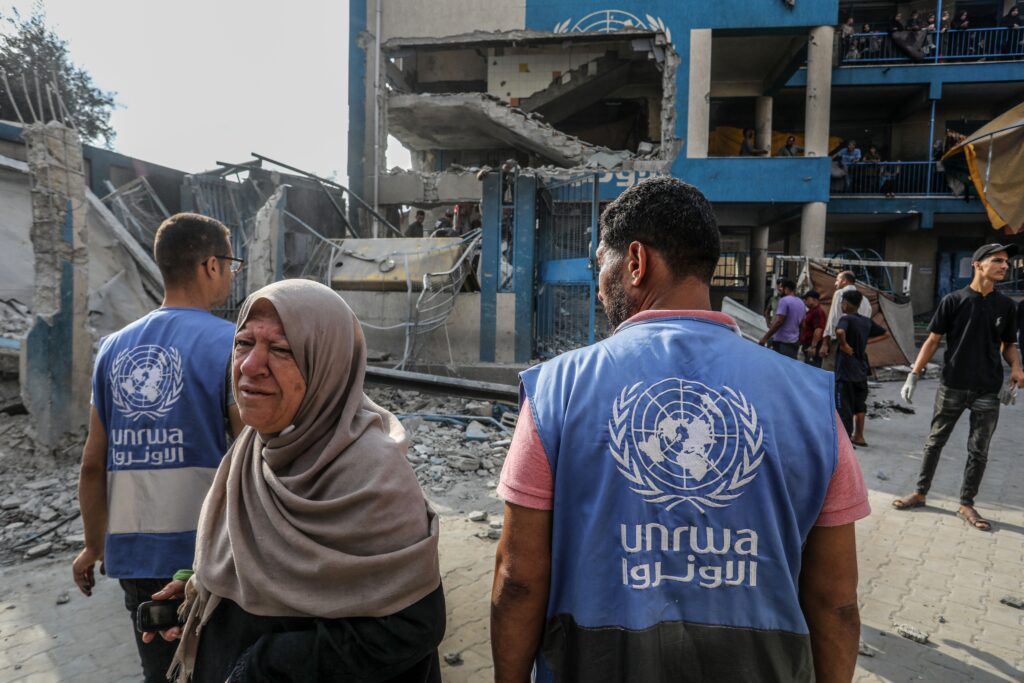
UNRWA after the Gaza conflict
What is a refugee? The 1951 UN Refugee Convention says it is someone outside their country of nationality with a ‘well-founded fear of being persecuted’ for reasons of race, religion, nationality, social group membership, or political opinion. Yet beyond this legalistic criteria, all definitions include the sense that it is a temporary and undesirable status. The notion that refugees would wish to end their presumed displacement is taken as axiomatic. Yet this is not so for Palestinians, for whom the word “refugee” marks a critical part of their national identity.
The refugees’ narrative, which became an integral part of the Palestinian national storyline as a whole, was completely crystallised less than 18 months after the start of their “exile” in 1947-48: They bore no responsibility whatsoever for their unfortunate fate; their own political processes and decisions, and those of their leaders, were not seen as at all relevant.
The Arab states bore significant responsibility for the situation, having encouraged and facilitated the refugees’ flight. But the ultimate villain in this Palestinian narrative was none other than the United Nations, which had passed the November 1947 partition resolution that supposedly set in motion the chain of events leading to the Palestinian Arab catastrophe, or the Nakba. As such, it has an obligation to maintain the refugees until the state of affairs is resolved in their favour by complete and total repatriation, along with compensation.
The United Nations’ initial policy towards the refugees of resettlement and reintegration, which once held such promise, was quickly superceded – replaced by the intractable and legally-baseless insistence on a “right of return”, a demand which remains the ultimate obstacle to any durable solution to the Israeli-Palestinian issue.
The international institution charged with aiding the refugees, the UN Relief and Works Agency for Palestine Refugees in the Near East (UNRWA), has worked for decades against their resettlement in the Arab countries where Palestinians are located.
UNRWA has done this by moving from refugee relief to an education and healthcare mission, by devising its own redefinitions of who a refugee is and by greatly expanding its legal mandates to “protect” and represent refugees.
As a result, the Palestinian clients of UNRWA have gradually taken over the organisation and have undermined what was originally an international relief effort, created in naïve good faith. And they have done this with the complicity of the UN General Assembly. From a temporary relief and works program, UNRWA has, by its own admission, proudly evolved into a broad social welfare organisation for Palestinian society. It has succeeded to such an extent that, according to UNRWA itself, “there is little or no significant difference between the standard of living of refugees and non-refugees in the WBGS [West Bank and Gaza Strip], Jordan, or Syria.” And it has become a facilitator and ideological driver of Palestinian rejectionism and terrorist violence.
UNRWA & October 7
Following the October 7 massacre in southern Israel, UNRWA’s ties to terrorism were exposed. Of the 12,521 UNRWA employees in the Gaza Strip, at least 1,462, or 12%, are bona fide members of either Hamas or other groups designated as terrorist organisations by the US.
Several of these employees, such as Faisal Ali Mussalem Al-Naami, participated in the October 7 massacre. A social worker on UNRWA’s full-time payroll, Naami is was also a member of Hamas’ Nuseirat battalion. Security camera footage clearly shows him entering Israel’s Kibbutz Be’eri, slaughtering innocent civilians and kidnapping others.
Mohammad Abu Itiwi, an UNRWA employee since 2022, is seen chasing down survivors of the Supernova music festival and attacking a group of young adults, killing 16 and kidnapping four.
The list goes on, and it goes all the way to the top. While there is no record that Hamas leader and October 7 mastermind Yahya Sinwar was employed by UNRWA, the passport of UNRWA teacher Hani Zourob, who was in Egypt at the time of Sinwar’s death, was found near the Hamas leader’s body. There was no better get out of jail free card for a terrorist, as Sinwar clearly understood, than to hide under the all-too-welcoming wings of UNRWA.
Traditionally, one of the few constants in American foreign policy had been deference to UNRWA, at least up until the first Trump Administration. Now, in the context of the Trump Administration’s 20-point peace plan, there is concern that UNRWA will try to weasel itself back in and resume its previous destructive role in Gaza.
Trump’s peace place plan does permit UN agencies to participate in humanitarian aid activity and does not specifically forbid a role to UNRWA. Positively, US Secretary of State Marco Rubio has made it clear that UNRWA must not play a role in post-war Gaza. In addition, Ambassador Jeff Bartos, the US Representative for UN Management and Reform, recently confirmed that “the United States opposes the renewal of the UNRWA mandate.”
Moreover, the US Inspector-General has initiated a probe titled “Operation Stop the Carousel”, which is designed to guarantee that UNRWA employees cannot recycle and repurpose themselves to work for other UN agencies. If Hamas-linked UNRWA employees are found, the Inspector-General will report them to federal officials and potentially hand them over to the Department of Justice for criminal action.
The above policies are necessary and long overdue. In the past, the US followed the international community in placing UNRWA in a different and higher category, with untouchable funding, unvettable employees and senior managers who illegally lobby in the US for support. The hope is that now under the Trump Administration, this impunity is ending.
The US has defined Hamas as a Foreign Terrorist Organisation since Oct. 8, 1997, but American lawmakers have focused on UNRWA’s relationship with terrorism since the 1960s. Section 301(c) of the 1961 Foreign Assistance Act stated, “No contributions by the United States shall be made to the United Nations Relief and Works Agency for Palestine Refugees in the Near East except on the condition that the United Nations Relief and Works Agency take all possible measures to assure that no part of the United States contribution shall be used to furnish assistance to any refugee who is receiving military training as a member of the so-called Palestine Liberation Army or any other guerrilla type organisation or who has engaged in any act of terrorism.”
Under the Biden Administration, the DOJ decided to ignore the will of Congress and follow Europe and re-fund UNRWA.
Lines about UNRWA’s indispensability were repeated during the Biden years. Biden’s National Security Council spokesperson John Kirby claimed that “in light of the fact that there is still an ongoing crisis in Gaza and the essential role that UNRWA does play in the distribution of life-saving assistance, we continue to support funding for UNRWA, with appropriate safeguards.”
However, UNRWA’s ties to terror go back decades, as do its denials. Despite wiring running through the floor of UNRWA’s main Gaza headquarters to power a Hamas server farm below the building, and the 2014 incident in which the parking lot of that same headquarters collapsed as a result of Hamas’ underground construction, UNRWA’s Commissioner-General Philippe Lazzarini claimed to be unaware that Hamas was responsible for any of it. After such incidents, UNRWA simply “unequivocally” condemns the unnamed “group or groups responsible for this flagrant violation of the inviolability of its premises under international law” and carries on turning a blind eye to them.
Worse yet, UN Secretary-General Antonio Guterres vexingly admitted, “Of course there are tunnels below the premises of UNRWA” – seeming to think that was perfectly fine.
Everyone in UNRWA knew and lied, just as everyone in Gaza knew that Hamas was constructing a 500-kilometre tunnel network that diverted construction materials and goods from international aid. The international community, through UNRWA, funded a vast portion of Hamas operations and also freed it to focus on terrorism rather than health and education.
Built-in corruption
Lies and corruption were built into UNRWA from the very beginning. The organisation’s ever-expanding missions revolved around the slippery term “rehabilitation”, and its unilateral redefinition of “refugee” to include almost all Palestinians and their descendants always meant that it was going to be corrupted for local gain and would play along for its survival. It thus kept Palestinians in stasis, while inculcating a perpetual victimhood mentality.
Back in February 2024, Israeli security documents showed that at least 440 of UNRWA’s 13,000 employees in Gaza were Hamas terrorists. An additional 2,000 were registered Hamas operatives, and more than 7,000 had immediate family members who are active in Hamas.
Despite being provided with overwhelming evidence of the organisation’s complicity in the murder and kidnapping of innocent Israelis on October 7, the United Nations stonewalled the investigation, only admitting timidly that it had identified nine UNRWA employees who “may have” been involved in the massacre.
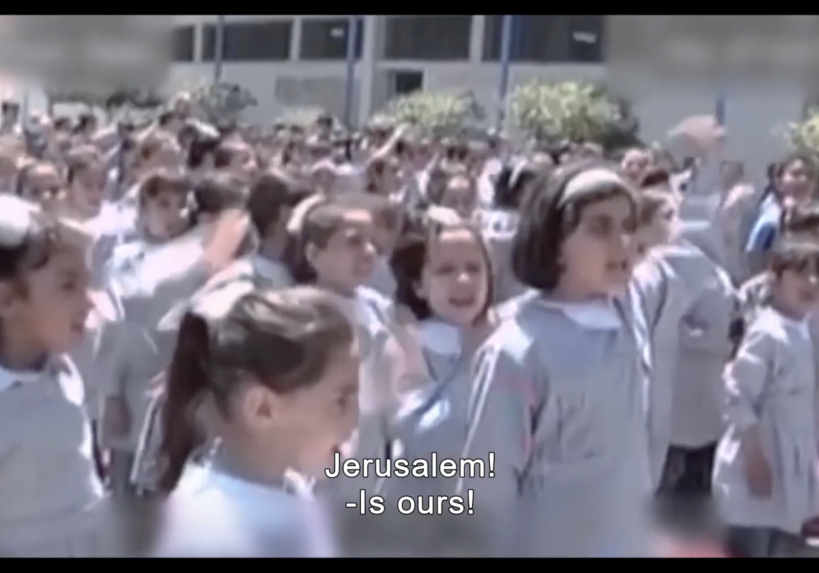
They admitted nothing regarding UNRWA’s schools, which have repeatedly been shown to be hotbeds of incitement and indoctrination, teaching young Gazans to hate Jews and plan to harm them. UNRWA’s schools have literally gone so far as to disseminate educational materials praising Adolf Hitler.
Learning from past mistakes
Now is the time to learn from the mistakes of the past and not repeat the ignorance and arrogance of the Biden White House that signed onto a “statement of shared commitments” that affirmed US support for the agency.
As the conversation has now moved into what comes the day after in Gaza, UNRWA absolutely cannot be a part of the solution. UNRWA’s ethos of entitlement and the Palestinian identity as permanent refugees – pending the destruction of Israel – cannot continue if there is to be any hope of future peaceful coexistence. A concrete step to ending the current war in Gaza, rather than merely pausing it until Hamas rebuilds and rearms, is to end UNRWA.
UNRWA should have died decades ago.
UNRWA has been dedicated to perpetuating the Palestinian refugees forever, thus ensuring that the conflict will never end. What’s more, UNRWA, now in its 75th year, is clearly a shadow-state-like organisation that obviates the need for Palestinians to build accountable institutions.
Anyone committed to ending the war in Gaza should demand, first and foremost, an end to UNRWA as well.
Asaf Romirowsky is the Executive Director of Scholars for Peace in the Middle East (SPME) & the Association for the Study of the Middle East and Africa (ASMEA).
Tags: Gaza, Hamas, October 7, Palestinians, UNRWA, United Nations
RELATED ARTICLES