Australia/Israel Review
The final battle?
Mar 18, 2026 | Janatan Sayeh
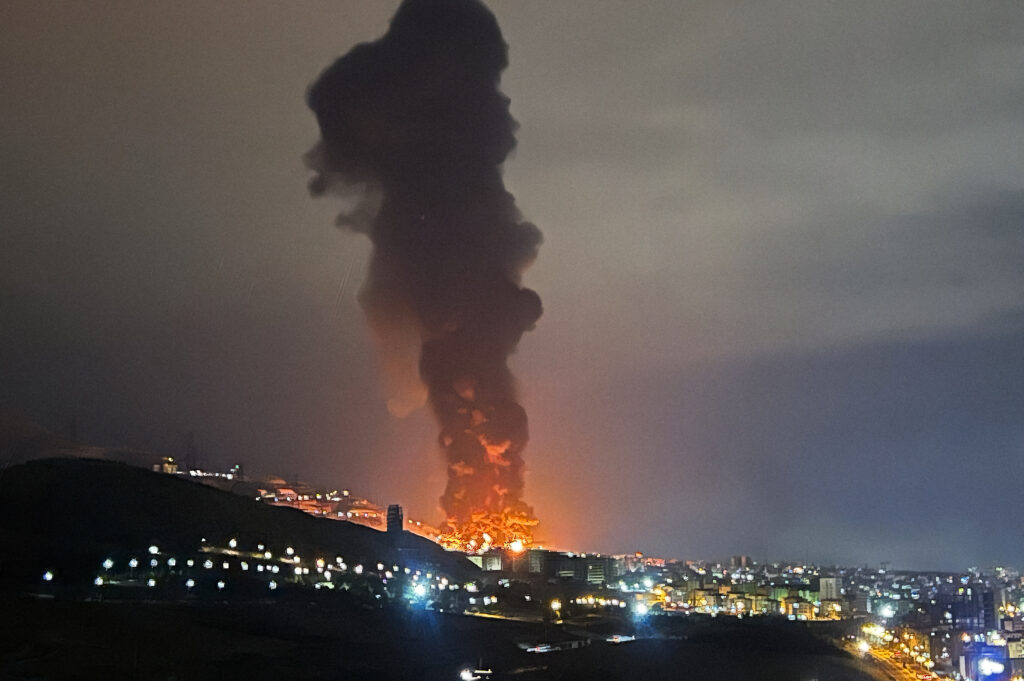
War with Iran was inevitable, but it can’t end now
Moments that can reshape the globe rarely arrive, but this may be one of them. Days after the United States and Israel turned the tables on the world’s largest state sponsor of terrorism, US President Donald Trump declared that he would accept nothing short of the Islamic Republic’s “unconditional surrender”. Militarily, the early results of the joint campaign are historic, but battlefield success alone is not the endgame. The true measure of victory will be the emergence of a government in Teheran that represents the Iranian people’s interests and integrates into the democratic world order.
Iranian Supreme Leader Ali Khamenei, Teheran’s chief theocrat, is dead, the regime’s military has been severely degraded, and its repression apparatus has taken a major blow. Yet the Islamic Republic still stands, with Khamenei’s son Mojtaba now inheriting the mantle. The greatest strategic mistake now would be to halt the campaign before conditions allow the Iranian people to deliver the final blow and shape their own destiny.
Few conflicts this century have presented a clearer justification for US military action. For decades, the Islamic Republic pursued nuclear weaponisation, cultivated a vast global terror network, developed the Middle East’s largest ballistic missile arsenal threatening Israel and Europe, and killed tens of thousands of its own citizens. Neutralising such a spectrum of threats through coordinated military action is a significant achievement, but declaring victory prematurely would risk squandering those achievements.
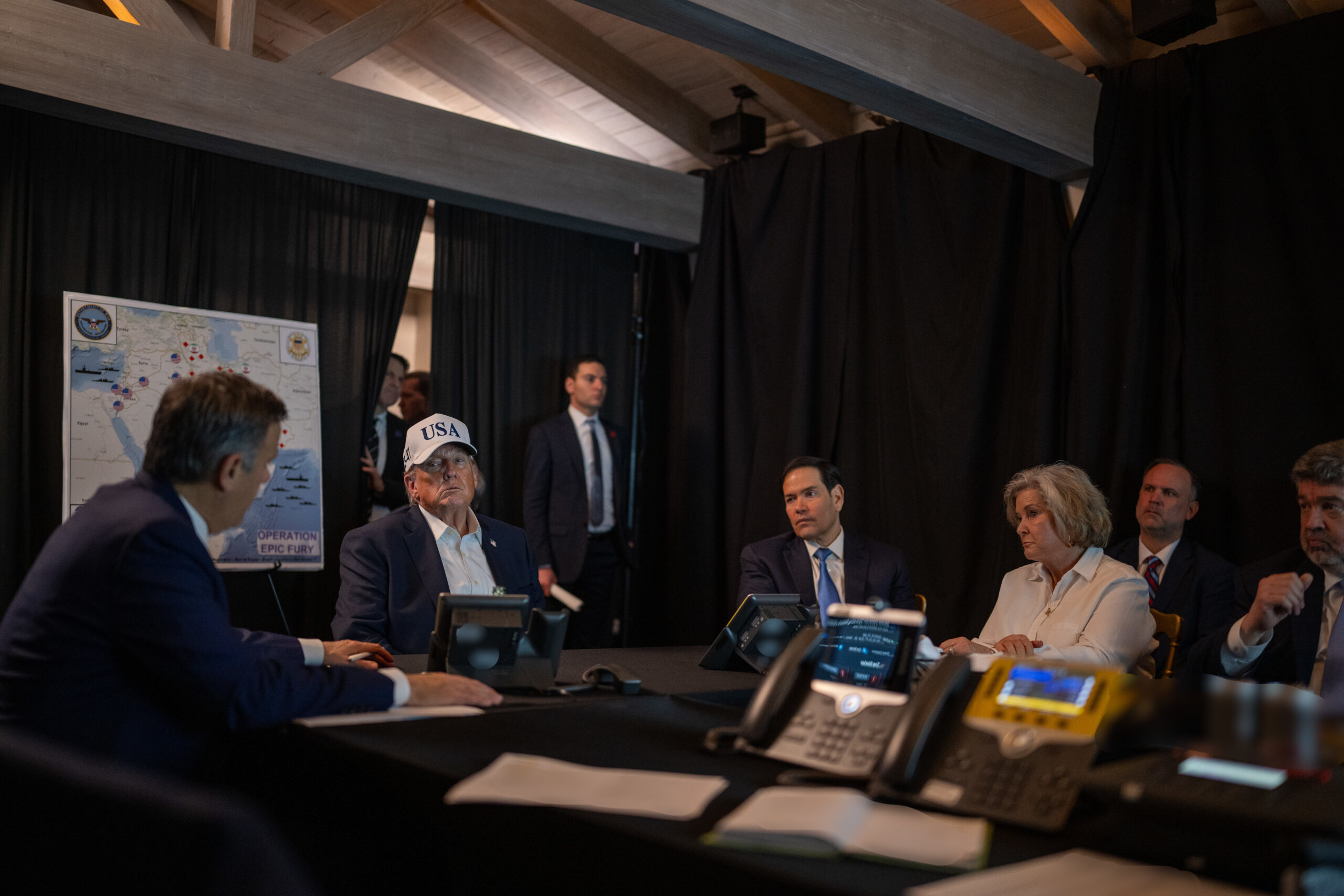
US President Donald Trump with Secretary of State Marco Rubio and other officials in the Situation Room during the military offensive against Iran (Image: Whitehouse.gov/ Flickr)
What made Teheran’s nuclear program so dangerous was the combination of intent and capability. By 2025, the IAEA had lost confidence in its ability to certify the program as peaceful. That mattered because Iran had already moved into territory no other non-nuclear weapons state occupied, enriching uranium to 60% purity and positioning itself within rapid reach of a bomb’s core ingredient. The danger was compounded by a long record of undeclared nuclear activity, evidence of weapons-related research, and intelligence indicating that such work had not truly stopped. Although Operation Midnight Hammer in June of last year devastated the regime’s enrichment capabilities, Teheran still retained a substantial quantity of highly enriched uranium after the 12-Day War and overtly threatened nuclear weaponisation. The June 2025 targeted bombing campaign temporarily eliminated capabilities, but couldn’t remove the intent.
The regime’s ballistic missile program was inseparable from its nuclear ambitions, as many of its systems were capable of carrying a nuclear warhead. Lacking a modern navy or air force, Teheran relied on this vast missile arsenal as its primary instrument of military leverage. The regime launched hundreds of these missiles at Israeli civilian infrastructure in two separate attacks in 2024 and again during the 12-Day War, killing dozens of Israelis and wounding thousands. Several of these systems already had ranges capable of reaching parts of Europe from Iran, even as Iranian variants are already striking the continent in Russia’s war against Ukraine. The Islamic Republic’s advancing space program pointed toward an eventual pathway to intercontinental missiles capable of striking the United States.
Beyond conventional military capabilities, the regime’s Islamist ideology sustained a transnational network of terrorist groups across the region. Teheran funded, armed and trained organisations ranging from Hezbollah in Lebanon and Shi’ite militias in Iraq, and the Houthis – a tribal Shi’a faction in Yemen, to Palestinian Islamic Jihad, while also maintaining strong ties with Sunni jihadist actors such as Hamas in Gaza, al-Qaeda and the Afghan Taliban. This ecosystem of proxies amplified the regime’s reach far beyond its borders. Iranian backing played a role in enabling Hamas’ October 7 mass terror attack on Israel and has been linked to the deaths of hundreds of US personnel across the Middle East over the past decades.
Teheran’s malign network also reached into criminal underworlds in Europe and the Americas. It orchestrated terror attacks against Jewish targets in Australia and Argentina. The regime used the Hells Angels biker gang to target Jewish sites in Germany and to assist in assassination plots tied to US soil. It leveraged Sweden’s Foxtrot criminal gang to target Israeli diplomatic sites in Western Europe and even maintained contacts with a Mexican cartel in a plot to assassinate the Saudi ambassador in Washington.
The regime’s harshest brutality was reserved for its own people. Iran records the highest executions per capita in the world and ranks second only to China in total executions. The state maintains a network of prisons dedicated to torturing and executing political detainees, some jailed for acts as minor as a social media post. The regime has violently suppressed every major wave of unrest, from the 1999 student protests and the 2009 Green Movement to the nationwide uprisings in 2017, the bloody crackdown of November 2019, the 2021 environmental demonstrations, and the 2022 Women, Life, Freedom movement. The most extreme episode came in January 2026, when the regime deployed thousands of foreign terrorist militias to kill roughly 40,000 unarmed Iranians within two days.
None of the regime’s four core threats – nuclear development, ballistic missiles, terrorism, and repression – have proven amenable to negotiation. Teheran refused to abandon uranium enrichment and would not even entertain talks over its missile arsenal or support for proxy militias. Neither pressure nor accommodation altered this posture. Successive US approaches, from the first Trump Administration’s maximum pressure campaign to the Biden Administration’s reduced enforcement of sanctions, failed to produce meaningful concessions. Even the shock of the 12-Day War did not shift the regime’s course. The ideological character of the Islamic Republic left little room for reform or behavioural change.
The current joint campaign has sharply degraded the regime’s ballistic missile threat, not only by striking missile silos but, more importantly, by destroying the launchers and launch sites that make those weapons operational. Iranian naval assets and much of its air force have also been largely neutralised. Beyond infrastructure, the strikes have eliminated senior military leadership, disrupting the regime’s command structure and its ability to coordinate military operations.
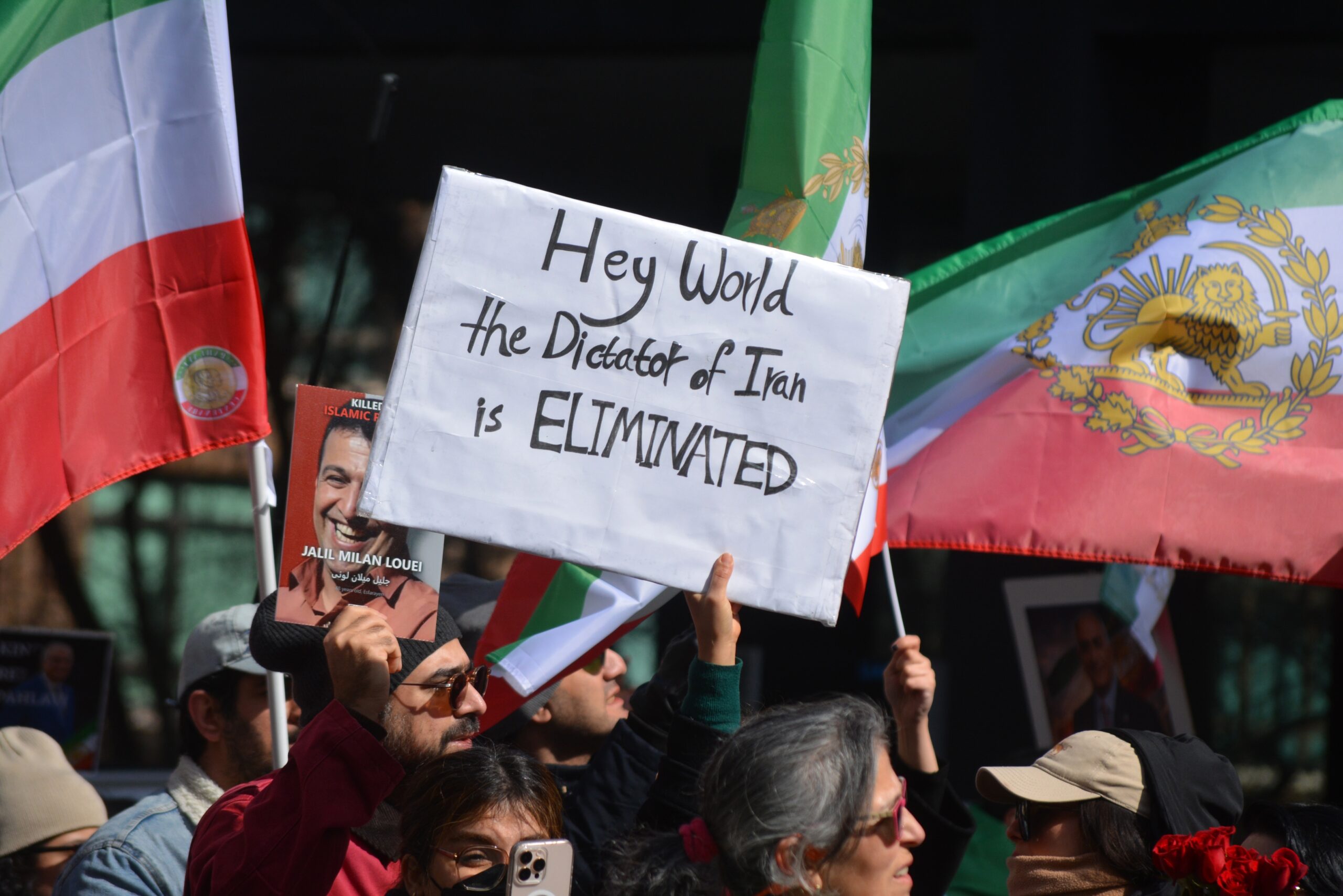
Celebrating the death of Ayatollah Ali Khamenei in New York City (Image: Christopher Penler/ Shutterstock)
Even more consequential have been the targeted strikes against the regime’s extensive repression apparatus, including bases belonging to the Islamic Revolutionary Guard Corps (IRGC) and its subordinate Basij militia. Dozens of these sites were hit, particularly in Teheran but also across multiple provinces. These strikes are more than symbolic gestures for an Iranian population that has long called for international humanitarian intervention. They represent an initial step toward weakening the regime’s internal control mechanisms and enabling Iranians themselves to challenge the system that has ruled them for decades.
Although much of the repression infrastructure has been damaged, the regime’s security forces have not disappeared. Increasingly, they are using civilian infrastructure as cover to deter further strikes. Since the start of the war, militia units have taken positions in schools and hospitals, tactics long used by groups like Hamas. These forces still patrol neighbourhoods, intimidate civilians, and even open fire on residential buildings where residents chant anti-regime slogans from rooftops.
Following directives by Trump and Iranian opposition leader-in-exile Crown Prince Reza Pahlavi, many Iranians have refrained from taking to the streets while the bombing campaign continues. But the country’s anti-regime movement remains intact and is waiting for the right moment to act. The momentum has not vanished. Many Iranians view this as a rare revolutionary opening, one that may not return for generations if it is lost. Having repeatedly risked their lives in past uprisings, they remain prepared to do so again.
For that reason, the military campaign must continue and move into its next phase. Neither this war nor the earlier 12-Day War pushed the Iranian public closer to the regime, despite long-standing warnings from many supposed experts that this would be the likely outcome of any military action targeting Iran. On the contrary, the clear message that this campaign targets the regime rather than the Iranian nation has resonated with many inside the country. Maintaining that distinction will be critical. Any strategy that seeks to exploit separatist or ethnically driven movements that threaten Iran’s territorial integrity risks alienating one of the most pro-American and pro-Israel populations in the Middle East.
Janatan Sayeh is an Iran analyst at the Foundation for Defense of Democracies in Washington, DC, and focuses on Iranian domestic affairs and the Islamic Republic’s regional malign influence. Previously, he held various research roles at the International Republican Institute, Washington Institute for Near East Policy, and the American Enterprise Institute. Born and raised in Teheran’s Jewish community, he studied Hebrew and Arabic at the Hebrew University of Jerusalem and received his BA in political science from the University of California, Berkeley.
Tags: Iran, Israel, Middle East, United States
RELATED ARTICLES