Australia/Israel Review
Lebanons’ second chance
Mar 18, 2026 | Hussain Abdul-Hussain
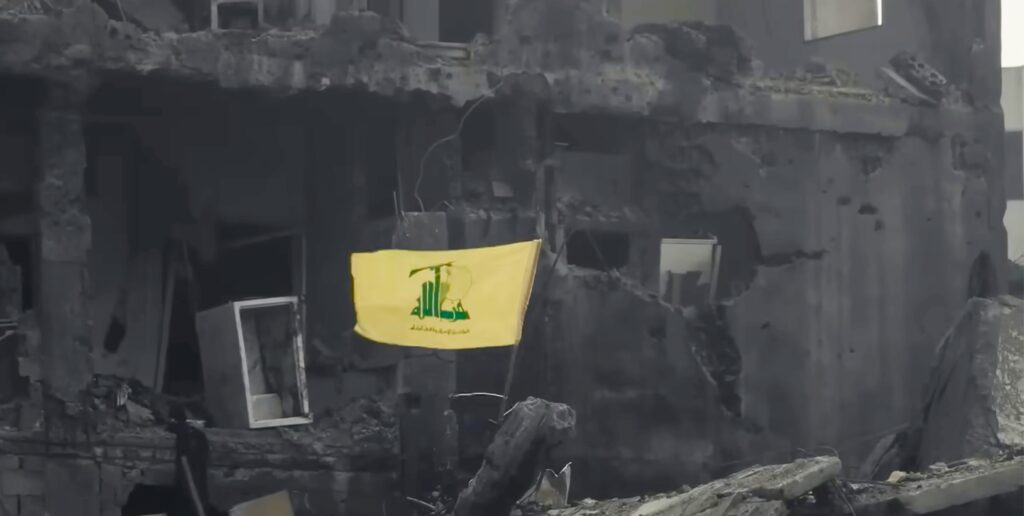
This conflict could finally free Beirut from Hezbollah
When Hezbollah launched attacks on northern Israel on October 8, 2023, ostensibly in solidarity with Hamas, Israel initially considered confronting its stronger northern adversary first before shifting focus south to take on Hamas in Gaza. The Biden Administration vetoed this approach, warning of potential regional or global escalation. Israel therefore prioritised operations in Gaza while engaging in tit-for-tat exchanges with Hezbollah.
As fighting in Gaza wound down, Israel turned its attention north. Washington pushed for a diplomatic resolution, and Israel agreed to an immediate ceasefire. In a televised speech, Hezbollah leader Hassan Nasrallah rejected the proposal, conditioning acceptance on a simultaneous Gaza ceasefire. Days later, on Sept. 27, 2024, Israel assassinated Nasrallah, and launched a campaign which demolished much of Hezbollah’s military infrastructure.
Following Nasrallah’s death, his Shi’ite ally, Lebanese Parliament Speaker Nabih Berri, claimed the late leader had privately sought an unconditional ceasefire, presumably shortly after his public rejection. This time, Israel dictated the terms: hostilities would end only if Lebanon disarmed Hezbollah as required by UN Security Council Resolution 1701, which ended the 2006 war.
Bruised by the conflict, Beirut agreed. Under the November 2024 Cessation of Hostilities Agreement, Israel would halt its operations against Hezbollah and withdraw from some small buffer zones inside Lebanon once the militia was disarmed, thereby keeping it at arm’s length from northern Israeli communities.
The weak Lebanese Government soon backtracked, unable – or unwilling – to disarm Hezbollah. It reversed the agreed sequence, demanding that Israel withdraw and cease operations first, with disarmament to follow. Meanwhile, Beirut declared “restoration of state sovereignty,” in line with the constitution, was only possible through the state achieving “monopoly of arms” through “disarmament of all militias.” Lebanon even invited journalists to take pictures of a few truckloads of arms hauled away from Palestinian refugee camps.
Yet, over the past year or so, Lebanon never uttered the words “disarming Hezbollah”. When others demanded that Beirut do so, President Joseph Aoun and Prime Minister Nawaf Salam said that Israel must first stop its ongoing strikes on Hezbollah targets, designed to take out weapons caches and manufacturing facilities Lebanese forces were ignoring. They also argued that forcefully disarming Hezbollah would lead to a civil war and alienate Lebanon’s Shiites.
In early 2026, Beirut even announced that it had disarmed Hezbollah in the area between the Lebanese–Israeli border and the Litani River, 32 kilometres to its north. Lebanon pretended that the area was cleared of Hezbollah and had become operationally under the fully control of the Lebanese Armed Forces (LAF).
Israel largely ignored this Lebanese posturing until March 1, 2026, the day after the assassination of Iranian Supreme Leader Ali Khamenei on Feb. 28, when Hezbollah fired six rockets into Israel, apparently testing Israel’s response amid the broader US-Israeli campaign against Iran. Already on edge, Israel retaliated with overwhelming force.
Beirut’s failure became undeniable. The Hezbollah rocket fire demonstrated that the zone south of the Litani River was far from cleared, proving Lebanon was either unwilling or unable to enforce disarmament. Fifteen months after the November 2024 agreement, Beirut had failed to deliver.
Rushing to address the embarrassment, the Lebanese cabinet met on March 2 and voted to instruct the LAF to compel Hezbollah’s disarmament, explicitly and unprecedently naming the pro-Iranian militia for the first time.
Yet the LAF did not act. Days later, its commander, Gen. Rodolphe Haykal, met with top generals and declared that preserving national unity – i.e., avoiding confrontation with Hezbollah – took priority, along with countering “Israeli aggression”. The army was clearly defying the cabinet.
The 15-month “cessation” had exposed Beirut as an unreliable partner. Jerusalem concluded it must neutralise Hezbollah itself, a formidable task. Israel had already significantly weakened the militia in 2024, but fully disbanding it would require a prolonged ground war, something which may now be underway.
Meanwhile, the Lebanese state has sought another pause in hostilities, this time dangling the prospect of face-to-face civilian talks with Israel – something Washington has long demanded as steps toward peace and normalisation – as bait to lure Israel into another truce.
However, as Lebanese President Joseph Aoun has clarified, these talks would not aim at permanent peace but merely at restoring the ceasefire.
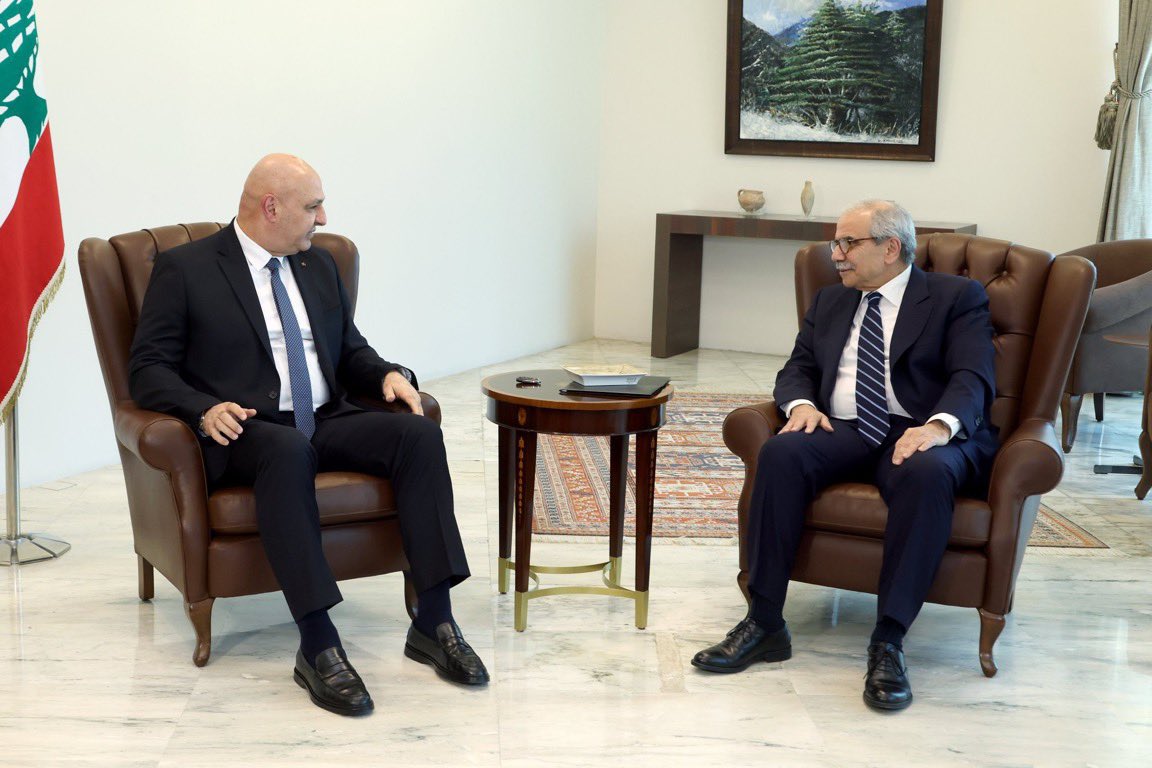
Lebanese President Joseph Aoun (left) with PM Nawaf Salam in Beirut (Image: Lebanon National News Agency)
Israel, understandably, has no interest in simply repeating the 2024 Cessation of Hostilities. Lebanon had its chance to disarm Hezbollah and squandered it. The Jewish state must now finish the job alone.
Is it feasible? Completely eliminating Hezbollah would demand major ground incursions into Lebanon, involving village-to-village, and potentially house-to-house, searches for weaponry. This would expose Israeli forces to booby-trapped homes, ambushes, and high casualties. Even then, drawing from the Gaza experience, full and complete disarmament would be near impossible without genuine Lebanese cooperation.
A more viable path might mirror Israel’s 1982 invasion of Lebanon, which succeeded in expelling Palestinian militias and forcing Yasser Arafat to relocate to Tunisia. That outcome required enormous military pressure combined with a domestic Lebanese and regional consensus that the militias must go.
Many of these elements now again exist. The Lebanese Government, previously unable to deliver on disarmament promises, has adopted a stance unimaginable before the latest escalation. For the first time, Beirut has explicitly singled out Hezbollah for disarmament by name, resolving that the militia should be disbanded and its military activities banned.
This shift went further than ever before. Even Hezbollah ally Nabih Berri allowed his ministers to vote for the decision. Berri, attuned to the Shi’ite community, appears to recognise that the pro-Iran militia has lost substantial popular support by dragging Lebanon, and especially its battered Shi’ite population, into another devastating war with Israel.
Arab consensus could further bolster Beirut’s position. The Arab League, often dismissed as ineffective, met on March 8 to address the broader US–Israel–Iran conflict. Its final statement endorsed the Lebanese cabinet’s vote to disband Hezbollah’s “military wing”, allowing the group to exist only as a political party.
For Jerusalem and Washington to consider halting the war and grant Lebanon another chance, they should impose stricter conditions than before.
First, Washington should demand a full overhaul of the LAF, including vetting and reshuffling officers. Following the end of the civil war in 1991, Syrian forces under Assad routinely handpicked anti-Israel, anti-US LAF generals. After the Syrian withdrawal in 2005, Hezbollah influenced promotions and battalion formations to keep the army aligned with its interests. LAF Commander Haykal’s rise likely stemmed from loyalty to the pro-Iran militia.
Once reformed, with its doctrine restored to pre-1991 Lebanese patriotism, the LAF could seriously pursue disarming Hezbollah, thus allowing Beirut to sue not only for a ceasefire but a full peace agreement with Israel.
Unlike the Palestinians or Syrians, Lebanon has no major unresolved issues with Israel. Before October 7, 2023, the two countries demarcated their contentious (and potentially gas-rich) maritime border. Only 13 minor land border points remain disputed – these are literal points, not vast territories. With Hezbollah’s disarmament and Israel’s release of some Lebanese it had taken as prisoners of war in 2024, the path to peace would become wide open.
A caveat persists: Lebanon’s weak Government and economy remain dependent on Gulf aid, particularly from Saudi Arabia, which has dominated Beirut’s decision. Riyadh has conditioned its own normalisation with Israel on Palestinian statehood. After October 7, the two-state solution has lost traction across Israel’s political spectrum. Tying Lebanon’s peace to Saudi Arabia’s, itself linked to a stalled process with the Palestinians, is a familiar Arab tactic for rejecting normalisation while appearing to demand it.
Lebanon appears out of ideas. After failing to uphold its 2024 commitments, and with the LAF ignoring the March 2 cabinet directive to disarm Hezbollah, President Aoun has floated a last-ditch proposal: Israel pauses first and cedes the border hilltops it held before the war; the international community arms and equips the LAF; Lebanon then disarms Hezbollah; and only afterward do the sides discuss border demarcation and a permanent ceasefire “on the way to peace.”
Lebanon still fails to grasp the sequence of cause and effect, or the realities it faces. Therefore, Israel will likely continue disarming Hezbollah unilaterally through overflights, targeted operations, and retention of strategic buffer zones (such as hilltops) until Beirut demonstrates a genuine commitment to ending perpetual conflict and embracing the rewards of bilateral peace with the Jewish state. If it wants to stop the war, Lebanon is not likely to get a break from Israel. However, it will certainly be welcomed if agrees to join the Jewish state in finishing off the pro-Iran militia.
Lebanese-born Hussain Abdul-Hussain is the author of The Arab Case for Israel (Wicked Son, Feb. 2026) and a research fellow at the Foundation for the Defense of Democracies (FDD).
Tags: Hezbollah, Iran, Israel, Lebanon, Middle East
RELATED ARTICLES