Australia/Israel Review
Editorial: Disarmament blues
Dec 19, 2025 | Colin Rubenstein
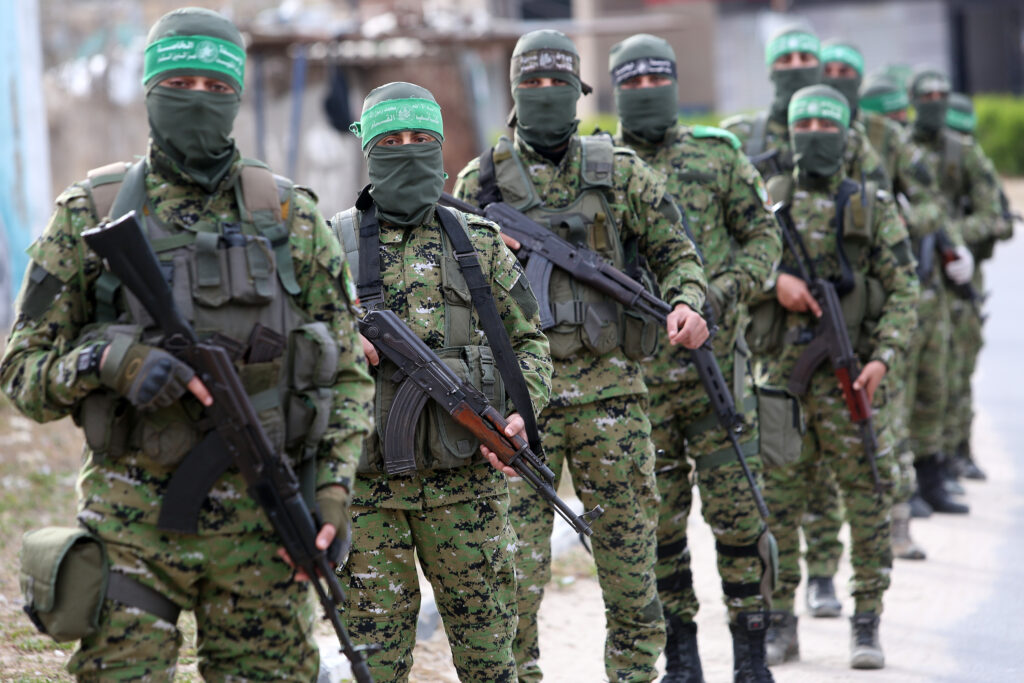
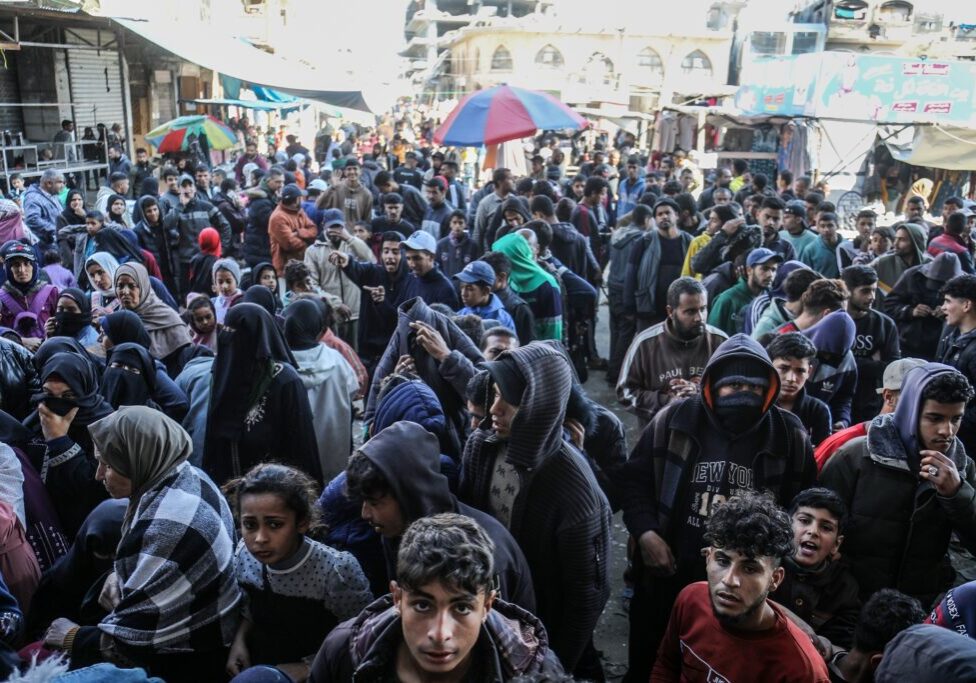
For the first time in two years, Israel’s northern and southern fronts are relatively quiet, but no one should mistake this lull for genuine peace. On both borders, the core problem remains: two heavily armed Islamist armies – Hezbollah in Lebanon and Hamas in Gaza – still exist, still aspire to Israel’s destruction, and still enjoy financial and military support from powerful foreign patrons.
The Trump Administration’s 20-point plan for Gaza, now endorsed by a UN Security Council resolution, at least names the problem clearly. It speaks of full Hamas disarmament, and an International Stabilisation Force (ISF) and reformed Palestinian security forces taking over governance while Gaza is rebuilt. On paper, it fully realises Israel’s two indispensable aims from the Gaza war – getting the hostages released, and ending Hamas rule over Gaza and the military threat it explicitly poses to the Jewish state.
As we go to print, all but one murdered hostage are now out, and that is a great achievement. But the other aims are at least as important. And sadly, there is little sign that the international community is willing to do what the words of the peace plan actually require in this respect.
Hamas is re-entrenching in the areas from which the IDF has withdrawn, and the group is openly rearming and reasserting control.
What’s more, Hamas leader Khaled Meshaal, in a public address in Istanbul on December 5, not only made it clear that the goal remains to destroy Israel, but specifically rejected both disarmament and any international oversight of Gaza.
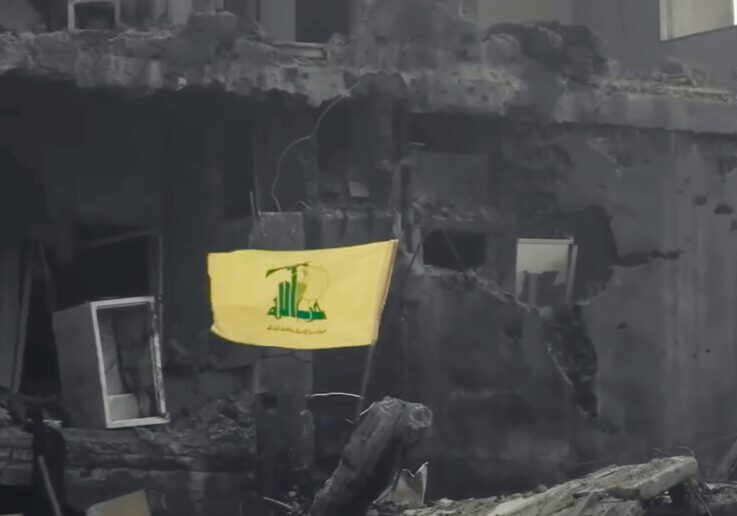
In the face of this reality, Lebanon provides a salutary lesson. Despite the UN Security Council passing a series of binding resolutions over decades demanding the disarmament of all armed groups in Lebanon and insisting that only the Lebanese Armed Forces (LAF) and UNIFIL operate south of the Litani River, Hezbollah was allowed to simply ignore these demands. It rebuilt its arsenal under UNIFIL’s nose, dug attack tunnels into Israel, and imported and produced tens of thousands of rockets and precision-guided missiles.
UNIFIL was never given the capabilities, rules of engagement or political backing needed to confront Hezbollah. Ultimately, UNIFIL didn’t merely fail to disarm Hezbollah, it acted (sometimes, apparently intentionally) as its shield.
Israel dramatically weakened Hezbollah in October and November last year but, a year on, Hezbollah is rearming fast, and both the LAF and the international community are still prioritising avoiding any confrontation with Hezbollah.
Lebanon is therefore a cautionary tale for Gaza. The ISF, if ever deployed, faces the real risk of becoming UNIFIL 2.0. The force remains largely notional: no agreed size, no clear command structure, and – crucially – no states eager to contribute troops who might have to confront armed militants in crowded Palestinian cities.
If Western and Arab governments insist their soldiers must not directly face Hamas gunmen, then the ISF will, by design, avoid the very areas where Hamas maintains control. That is not disarmament; it is partition – and a guarantee of renewed conflict once Hamas has recovered.
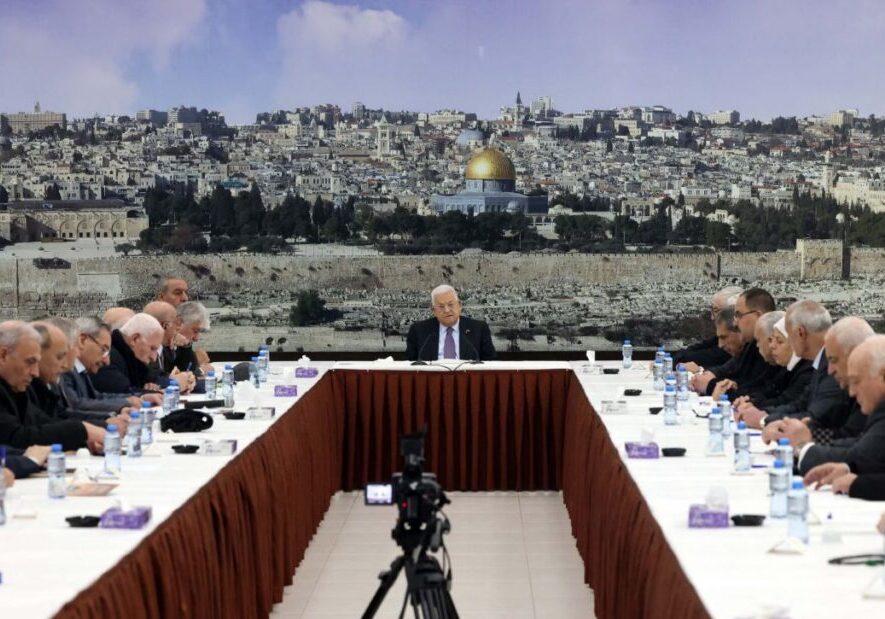
The parallel plan to hand day-to-day policing to a newly trained Palestinian force faces similar problems. Many of the officers being trained are former PA policemen from Gaza who have been on the Palestinian Authority’s payroll since Hamas’ 2007 coup. But PA security forces – often corrupt or sympathetic to “resistance” – are the same ones that have lost control of most of the northern West Bank in recent years, allowing cities likes Jenin and Nablus to become citadels of Hamas-linked terror gangs.
Meanwhile, the external enablers of Hamas and Hezbollah remain largely untouched and determined to rebuild them. Iran is already moving to rebuild Hezbollah’s depleted ranks and arsenals, and transferring funds to Hamas via Turkey.
In Gaza, Qatar continues to position itself as indispensable – funding reconstruction, hosting Hamas’ leadership, and providing the movement with media, diplomatic and financial lifelines. Another Hamas ally, Turkey, is also seeking to play a major role.
Under these conditions, Israel simply cannot, on its own, “solve” the problem of Hamas and Hezbollah. It can continue to degrade their military capabilities, kill key commanders, and impose real costs on their Iranian sponsors. But both groups draw legitimacy from societal milieus that largely accept their maximalist goal of replacing Israel with Palestine (see Bren Carlill’s piece on Palestinian public opinion), and material support from regional patrons for whom they are valuable strategic assets.
That does not mean disarmament is impossible. However, it does mean it will only happen if the democratic world finally treats the existence of these parallel Islamist armies as intolerable – not just for Israel, but for any hope of regional stability.
Instead of issuing endless statements instructing Israel how and when to fight, and treating the disarmament of Hamas and Hezbollah as an afterthought, Western leaders must put the onus squarely where it belongs: on the terrorist movements, their state sponsors, and the governments that shield them.
Reconstruction funding, diplomatic recognition and, in Lebanon’s case, IMF rescue packages, should all be explicitly conditional on concrete, verifiable steps to dismantle illegal armed forces and asserting state monopolies on violence.
For Gaza, that means an ISF with a clear mandate to confront any armed group outside a reconstituted, reformed Palestinian security structure; a genuinely vetted local police; and a long-term international effort to overhaul an education and media environment that has taught hatred and glorified “resistance” and martyrdom for decades.
Instead of constantly screaming “stop” at Israeli attempts to forcibly disarm Hamas, it should be made clear that a renewed Israeli Gaza offensive, with full international backing, would be the inevitable consequence of continued Hamas rejection of central aspects of a peace plan that it ostensibly agreed to.
Australia, as a close ally of the United States and a respected middle power, has a voice in shaping this debate. Canberra should use that voice in Washington, New York and European capitals to insist that any talk of ceasefires, stability or “two-state solutions” be anchored in the hard but unavoidable reality that terror armies cannot be wished away, contained indefinitely, or integrated into political processes.
Any genuine hope for peace for both Israel and the Palestinians begins – and either succeeds or fails – with the disarmament of these terror groups.
*****
AIJAC mourns David Pryce-Jones
We at AIJAC were greatly saddened to hear of the passing of author, journalist and historian David Pryce-Jones, a long-standing friend and colleague, who died on November 17, aged 89. David was a wonderful writer, speaker and analyst, and a genuinely delightful and highly principled person.
He was a passionate Zionist and critic of antisemitism, and wrote regularly and incisively on those two subjects. He authored numerous books, both fiction and non-fiction, worked for many years as a special correspondent for the UK’s Daily Telegraph, had stints at the Financial Times and Spectator, and was also a long-time senior editor for the US magazine, National Review.
We were pleased to often republish his works – which were always elegantly written, keenly perceptive and infused with his firm moral outlook.
We were also privileged to host him in Australia on a number of occasions. His presentations were always thoughtful, highly articulate, stimulating and enjoyed by all. His most invaluable contribution was in providing his unique perspective, whether addressing audiences of influential listeners such as MPs and journalists, or to our supporters or media outlets.
We send our deepest condolences to David’s family. He will be greatly missed.
RELATED ARTICLES