Australia/Israel Review
Cinefile: The Unraveling
Mar 18, 2026 | Justin Amler
A forensic examination of international failure
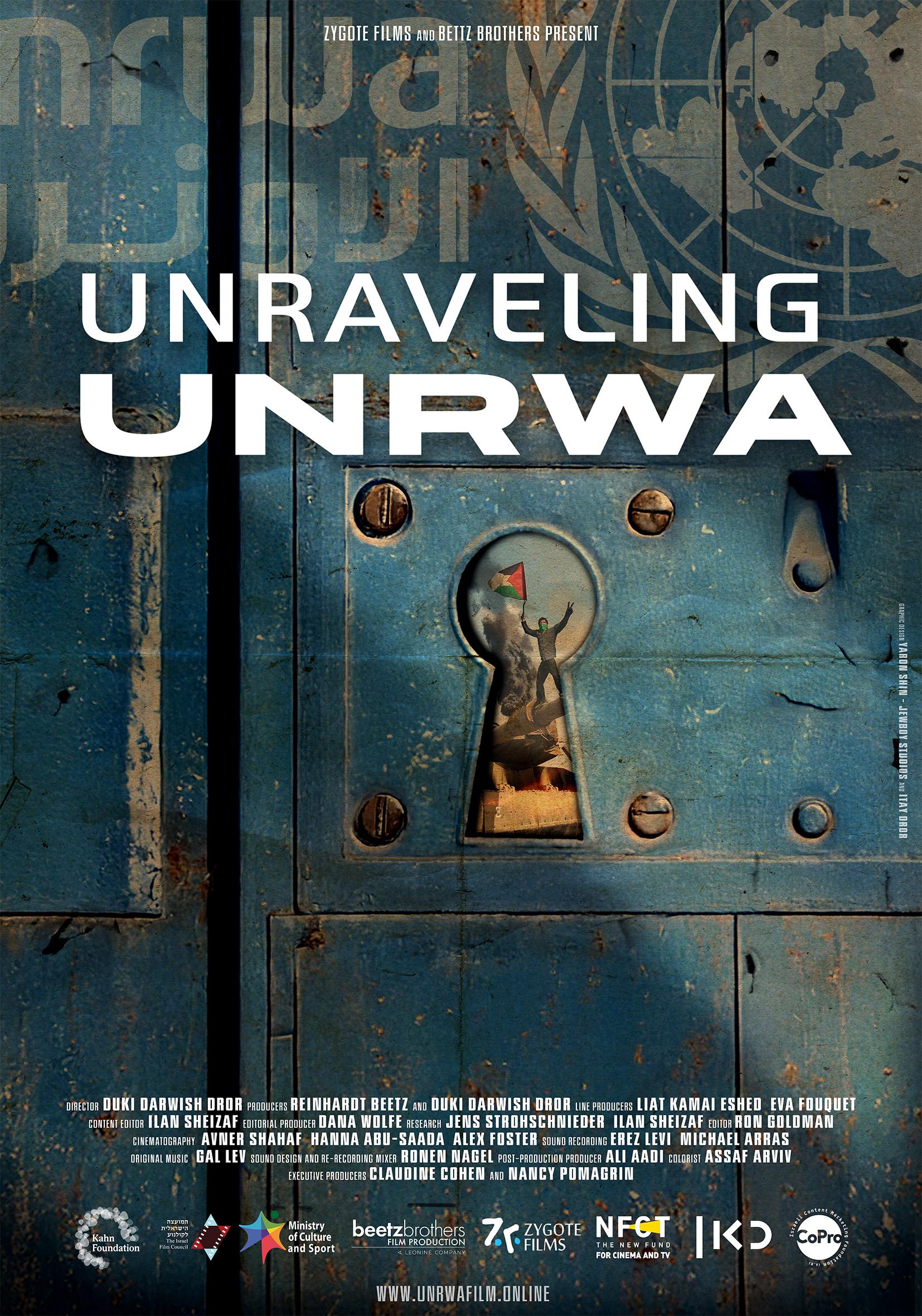 Unraveling UNRWA
Directed by Duki Dror, Writers: Duki Dror, Galia Engelmayer-Dror, Ilan Sheizaf
Winner of the Investigative Documentary Award at the Haifa International Film Festival 2025
Since October 7, the word “Hamas” has become synonymous with the terror inflicted on Israel on that disastrous day. But another emergent word has received a new symbolism since then; “UNRWA” should now be regarded as synonymous with international failure and humanitarianism gone bad.
For decades, the United Nations Relief and Works Agency for Near East Refugees (UNRWA) has enjoyed a protected status in the global imagination, cloaked in the blue-and-white sanctity of the UN logo. But, as the documentary Unraveling UNRWA demonstrates with devastating precision, what that cloak was covering was not only failure and corruption, but a case study in how supposedly humanitarian agencies can come to do actual harm.
What makes this film unique is that it takes the viewer on a historical journey to the very beginning of the troubled agency. It is, in effect, an “origin story”. At its inception, in the wake of the 1948-49 war, the agency’s intentions appeared noble – to be a temporary humanitarian bridge to help victims of war recover and build new lives. However, the film meticulously tracks how this mission underwent a metamorphosis into something very different. It illustrates how a relief agency lost its own identity as it found itself subject to the conflicting political forces in the Middle East, turning what should have been an 18-month mission into one now lasting over 75 years with no end in sight.
Using archival material, director Duki Dror takes us on a fascinating journey through history, showing UNRWA’s deeply flawed institutional evolution. From humble beginnings, UNRWA evolved into a mechanism that rewards permanent victimhood and punishes integration, including through its education system. UNRWA has steered generations of Palestinians towards endless conflict.
The documentary’s most vital contribution is its exposure of the UNRWA “refugee” anomaly. While every other refugee group on the planet falls under the mandate of the United Nations High Commissioner for Refugees (UNHCR) – which has a clear goal of resettlement – UNRWA operates on a unique, self-serving logic, both in terms of who it regards as a refugee and what it is supposed to do for them.
Zlatko Zigic, a former director of the UN Migration Agency, highlights the absurdity of this logic in a very effective interview. Working in the former Yugoslavia, he recounts how, between 1992 and 1995, one million Bosnians were expelled from their homes, effectively becoming refugees. Yet today there are none. So, he questions how a population of refugees of about 700,000 in 1949 could have increased over 77 years to a population of 6 million today. Zigic mentions UNRWA’s particular mandate, allowing refugee status to be passed down through generations like an inheritance. How is this possible, he asks? “There is a political agenda behind this,” he concludes.
Zigic goes on to explain why UNRWA is such a major problem; because it promotes the concept of an “endless struggle”, while the “right of return” it supports and promotes “has become a tool to perpetuate the conflict.” Most Israelis understand clearly that granting an unfettered “right of return” would demographically mean the end of the Jewish state.
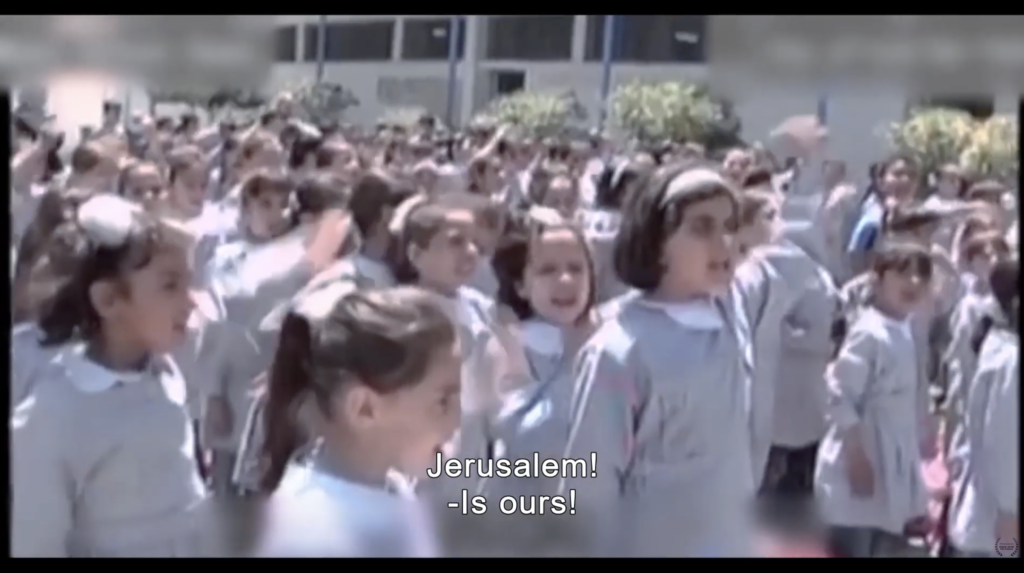
Perhaps the most harrowing parts of the film take us inside UNRWA classrooms. For those who have long warned about the incitement inherent in Palestinian textbooks, the hidden-camera footage is a “smoking gun”. We see children being taught that their identity is inseparable from “liberation” through radical jihadism. What is particularly disturbing is how the Palestinian Authority rewrote all the textbooks in 2016 for every subject and grade, eliminating all mentions of peace, effectively re-educating children for a more violent future.
This should serve as a warning bell for those who still believe the Palestinian Authority is a voice of moderation.
The documentary captures teachers – paid by Western tax dollars – glorifying terrorists as “martyrs”, radicalising children instead of educating them. The film argues persuasively that, by funding this curriculum rather than building the foundations of a future state, the international community is instead subsidising the foot soldiers of the next conflict.
It should come as no surprise then, as the film suggests, that many of the terrorists on October 7 were educated in UNRWA-run schools.
A particularly insightful aspect and “nice touch” in the film is the behind-the-scenes look at Israeli representative Danny Danon at the UN. These moments provide a window into the uphill diplomatic struggle of presenting facts and evidence to a body that doesn’t want to hear them – preferring the comfort of the status quo over the moral clarity required for reform.
The film brings in UNRWA expert Dr Einat Wilf to offer a devastating comparison between UNRWA and UNKRA, the international agency set up for Korean refugees that operated during roughly the same period as when UNRWA came into being. More than three million Korean refugees were able to be resettled within four years by UNKRA, with just a third of UNRWA’s budget. She also notes how Palestinians remain designated as refugees by UNRWA even when they gain citizenship in other countries – showing a deliberate political decision NOT to solve the refugee problem.
In the wake of the recent Gaza war, which was as much about ideas as firepower, Unraveling UNRWA should be an essential tool in the ongoing fight. It brings a deeper understanding of UNRWA to those who might know of recent controversies but not the full history, showing how an institution set up to do good can be corrupted into actively making things worse.
The film makes it clear that there can be no peaceful future with UNRWA around; it is an organisation too tainted in radicalism and terror.
In a refreshing moment of candour in the film, Scott Anderson, head of UNRWA operations in Gaza from 2023 to 2025, admits UNRWA was “never meant to be around this long.” It’s a “flawed agency”, he says, “born a failure”.
Unraveling UNRWA demonstrates that if the international community continues to refuse to address that failure, then a future of Israeli-Palestinian peace will remain a pipe dream, to the detriment of everyone – not least the Palestinians who UNRWA is ostensibly supposed to be helping.
Stream Unraveling UNRWA for A$15.14 at https://www.unrwafilm.online/ or https://vimeo.com/ondemand/unravelingunrwa.
Tags: Israel, Palestinians, UNRWA, United Nations
RELATED ARTICLES