Australia/Israel Review
Cine File: The day Israel stopped breathing
Dec 19, 2025 | Justin Amler

What October 7 unleashed
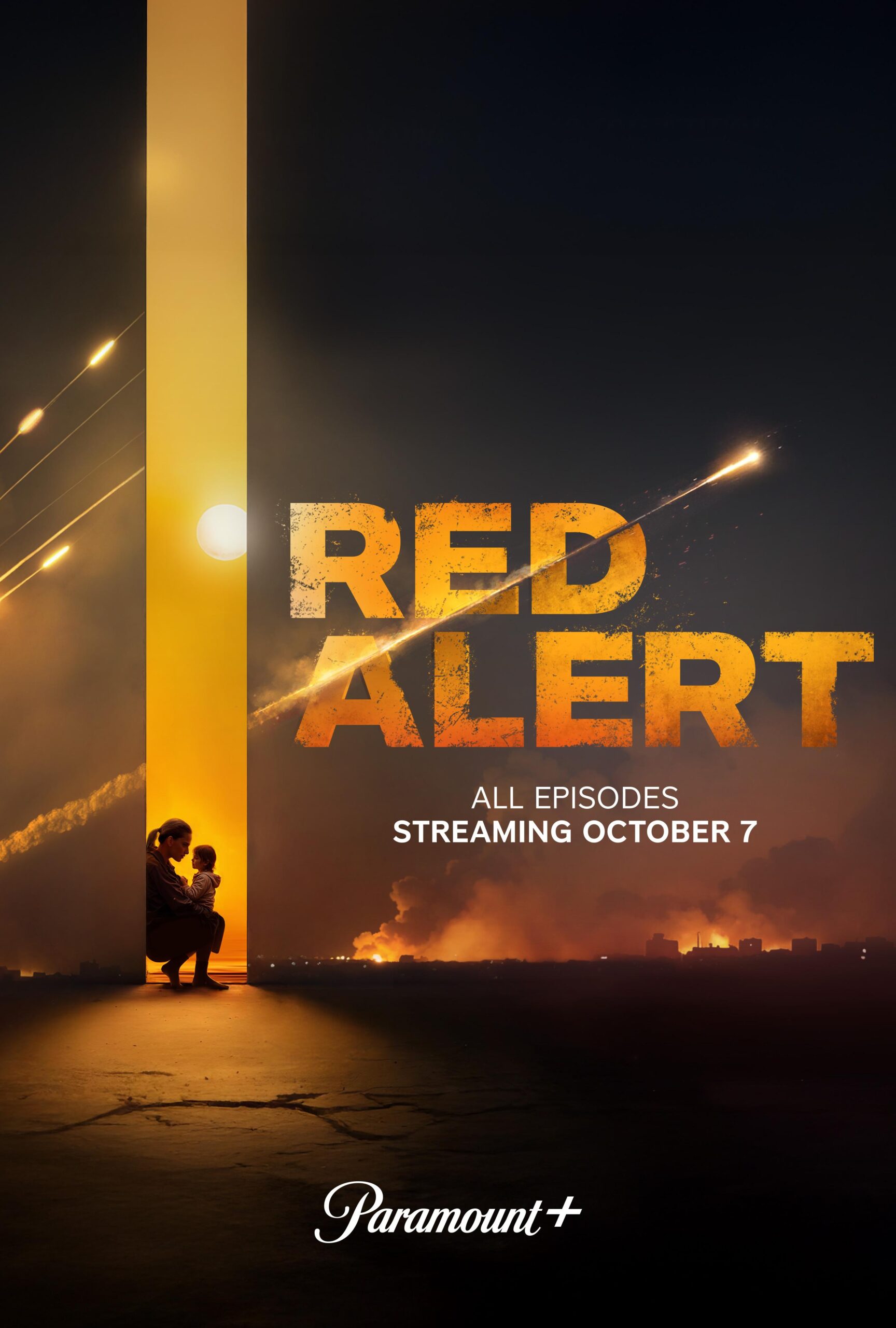 Red Alert
Directed and co-written by Lior Chefetz and Ruth Efroni
Keshet Media Group, Australian release thru Paramount+, 4 episodes
October 7, 2023, was the darkest day in Israel’s history. Hamas’ barbaric assault killed 1,200 people, many of them tortured or raped first, with 251 more kidnapped. Turning such an atrocity into a fictionalised TV series was always going to be a monumental challenge. Yet co-creators Ruth Efroni and Lior Chefetz have crafted a show that captures, even if only partially, the human essence of that day – the chaos, confusion, and courage. And they did it without forgoing authenticity or respect.
Rather than attempting a sweeping, panoramic retelling – which would be nearly impossible – Red Alert focuses on ordinary people and the terror they endured: festivalgoers, police officers, kibbutz families, and citizens whose lives changed in an instant. Told across four episodes, the series follows four intertwining stories – the Yahalomi family, police officer Kobi and his wife Nofar, middle-aged mother Tali Hadad, and Ayoub, a Palestinian labourer trying to return home to Gaza. Through their eyes, viewers relive that horrifying day, feeling their disbelief, horror, and bewilderment.
The show unfolds almost in real time, immersing us in the frantic uncertainty of October 7. Although scripted, characters are based on real people, or an amalgamation of them. Director Lior Chefetz heightens authenticity by seamlessly weaving actual footage from that day into the narrative, blurring the line between fiction and reality.
Each episode begins in a deceptively peaceful moment – hours, sometimes minutes, before the massacre begins. We see Kobi and Nofar at a barbecue with friends; Ayoub chatting with his wife about opening a business; and Ohad Yahalomi letting his young daughter steer his car near their kibbutz. These quiet domestic scenes feel painfully ordinary – until the wail of the first red alert sirens, from which the show derives its name.
For Israelis living near Gaza, rushing to bomb shelters has long been routine. The series does a good job of capturing how such terror has been normalised over years of rocket fire – a detail likely to shock international audiences unfamiliar with Israel’s daily reality. Viewers are left to ask themselves: if this were happening in our own towns, would we accept it? How would or should our governments respond?
But soon, the characters realise this attack is different. The rockets don’t stop. The chaos intensifies. We watch Ohad frantically scroll through his kibbutz’s WhatsApp group, learning that terrorists have infiltrated the area. As the danger closes in, he makes the agonising decision to guard his family’s shelter with only a handgun – knowing full well what that might mean for him.
Elsewhere, Kobi’s wife Nofar, also a police officer, is at the Nova music festival, helping panicked partygoers flee through the fields of Re’im as gunfire erupts around them. Kobi, who had just left the festival after an earlier drug bust, soon finds himself battling terrorists in the streets of Ofakim. In another storyline, Tali watches her off-duty soldier son grab his weapon and run toward danger. She becomes a lioness herself – ferrying the wounded to the hospital amid the carnage. Meanwhile, Ayoub hides with his baby in a small hut after his car is attacked, with real footage from that moment woven hauntingly into the episode.
The Yahalomi family’s story is perhaps the most heart-wrenching: Batsheva Yahalomi escapes an abduction attempt barefoot and in pyjamas, clutching her baby and small daughter, while her 12-year-old son is kidnapped into Gaza. Her desperate need to save her son and still protect her two small children illustrates the impossible choice facing her. This is not unique. Each family faces impossible choices, and the show captures their fear and resolve with painful honesty.
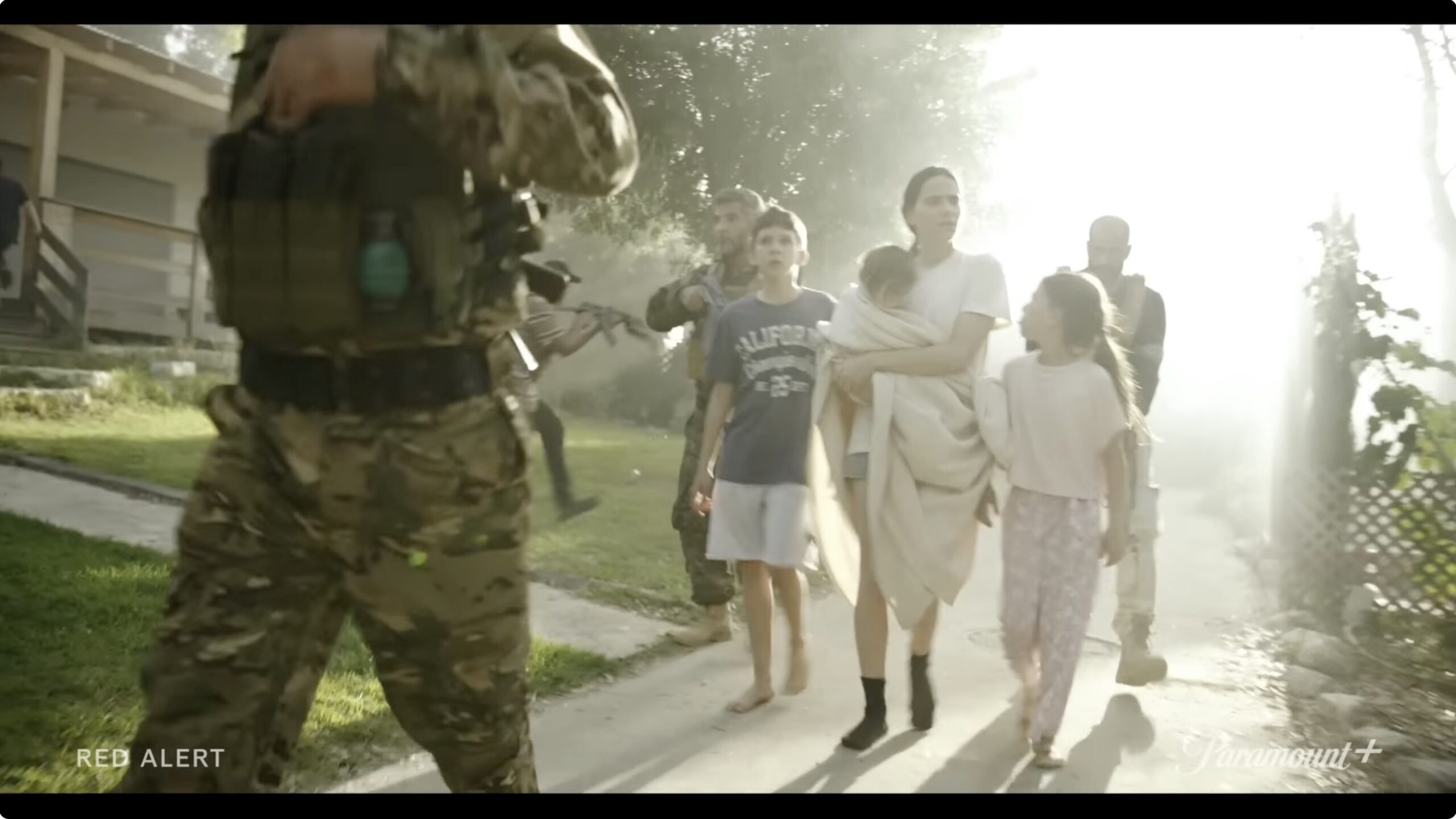
Rotem Sela plays Batsheva Yahalomi, who faces impossible choices as she struggles to save her three children (Screenshot)
Unlike many dramatisations that sensationalise real events, Red Alert does the opposite. It deliberately avoids showing the most graphic horrors – the sexual assaults, the torture, the burning of families. This is not to sanitise them, but because the real events were far worse than fiction could ever depict. What it does show is the human cost of these horrors, as well as the panic, the confusion, the heroism.
The handheld camera work, tight framing, and muted colour palette amplify the claustrophobia and chaos. The editing, particularly the integration of real footage, provides the documentary realism that makes the series so haunting.
The performances are raw and authentic. One can only imagine how difficult and personal this would be for the actors, and this is captured in each of their performances. Sara Vino Elad is particularly effective as Tali Hadad, the no-nonsense Jewish mother who, difficult as it is, puts aside her personal needs, becoming a fierce warrior woman ferrying the wounded to hospital as terrorists continue to fire around her. She embodies the best of the Israeli spirit of that day – putting aside personal risk and safety to protect her community. She ended up saving 12 lives that day – one of many acts of selfless courage that define this series. Amid such unimaginable horror, countless true heroes emerged.
Red Alert is not an easy show to watch. Nor is it a comfortable one. For Israelis, it would doubtless reopen wounds that have barely begun to heal. But it is must-see viewing nevertheless – because it captures, even if imperfectly, the essence of the worst day in Israel’s modern history. While the series avoids politics or assigning blame for the failures of that day, it powerfully illustrates what it means to live beside an enemy devoted entirely to your country’s destruction. Its emotional finale – blending grief with courage – reminds us what true bravery looks like.
At a time when antisemitism is rising and denial of October 7 has become disturbingly common, Red Alert serves as both a memorial and a warning. It’s a small but vital window into the horrors that so many would rather forget – or deny.
Stream and watch here – https://www.paramountplus.com/au/shows/red-alert/
RELATED ARTICLES