Australia/Israel Review
Legally blind
Mar 18, 2026 | Arsen Ostrovsky
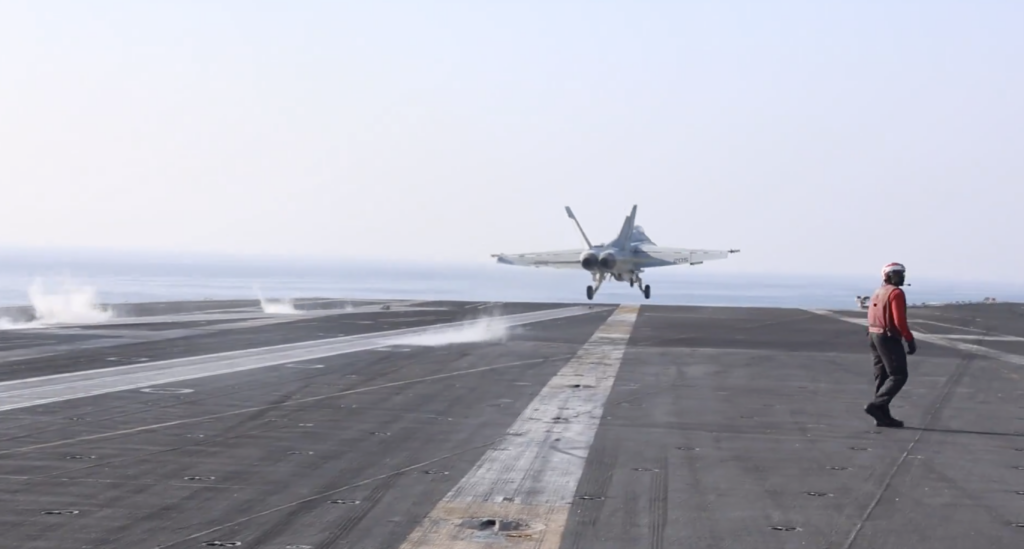
The US and Israel were justified under international law in striking Iran
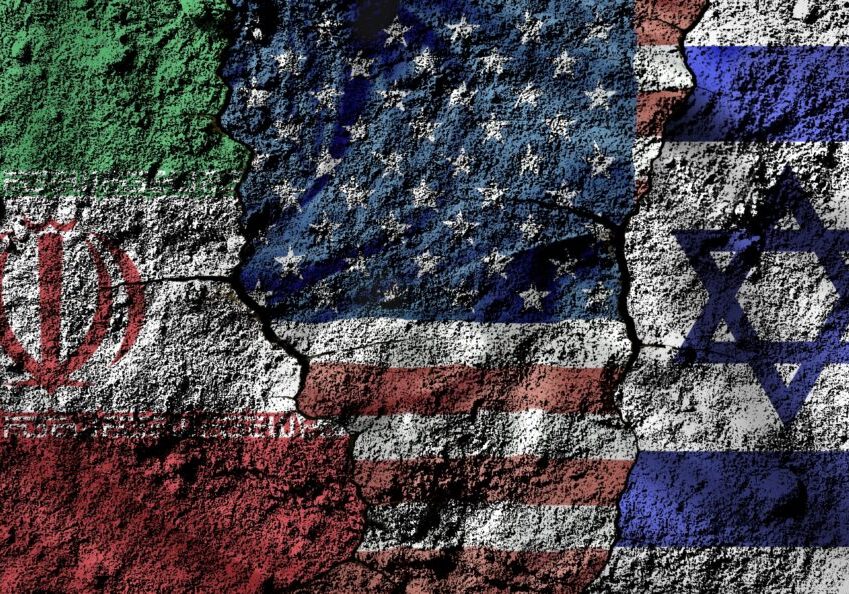
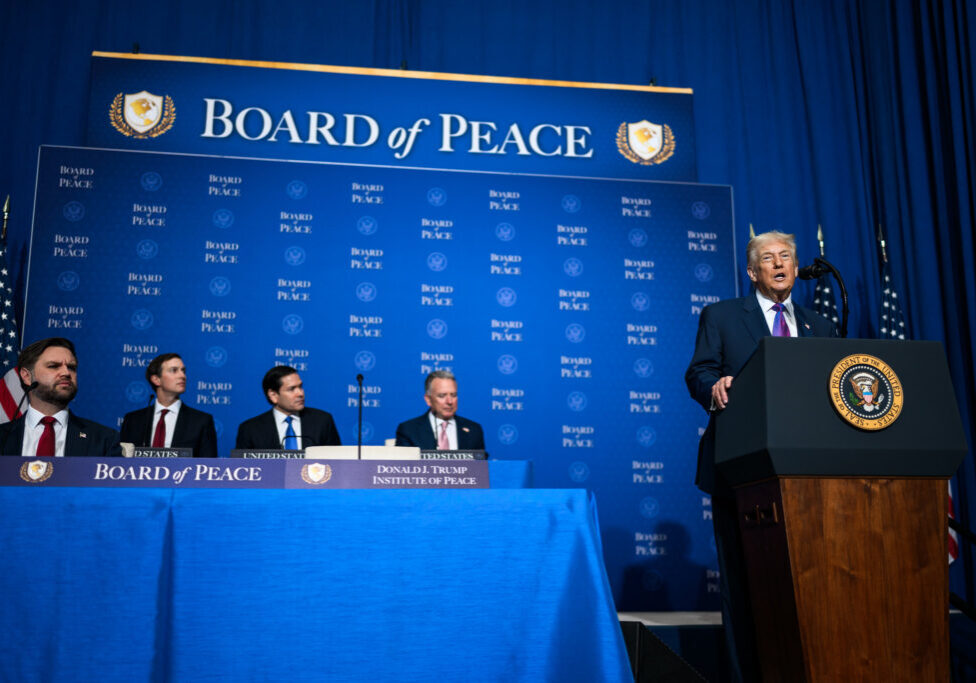
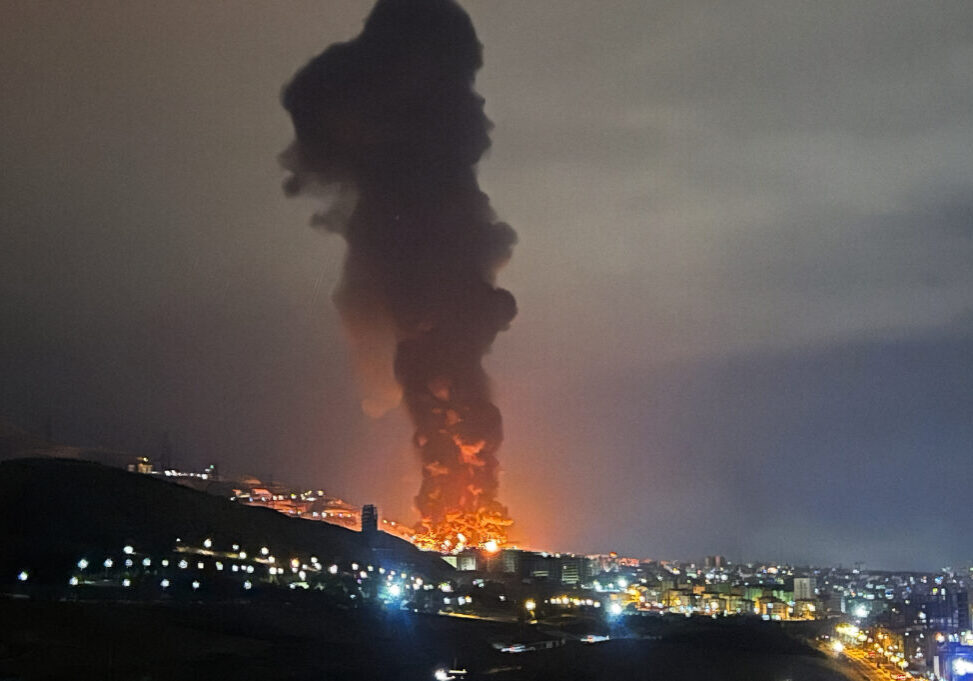
No sooner had US President Donald Trump ordered a joint military strike with Israel against Iran’s nuclear infrastructure and ballistic missile program, as well as against Supreme Leader Ayatollah Ali Khamenei, than a predictable chorus of condemnation followed across much of the international community, including Australia.
Critics quickly alleged that the United States and Israel had acted recklessly, destabilised the region, and violated international law. Yet such claims rest on a fundamental misunderstanding of the legal framework governing the use of force. When examined through the proper lens of the Laws of Armed Conflict, the joint US-Israeli action against the Iranian regime was not only lawful, but entirely justified.
The central legal point is this: the United States and Israel were not initiating a new war with Iran. Rather, they were acting within the context of a long-running armed conflict that Iran itself initiated and has sustained through decades of direct attacks and proxy warfare.
Once that reality is acknowledged, the legal analysis changes dramatically.
An ongoing armed conflict
For nearly five decades, the Iranian regime, led since 1989 by Ayatollah Khamenei, waged an unrelenting campaign of terror against the United States and its allies, chanting “Death to America”, whilst plotting, preparing and initiating attacks on US troops, officials, and civilians, including even Trump himself.
From the 1983 Marine barracks bombing in Beirut that killed 241 Americans, to attacks on the USS Cole, and the October 7 massacre by Hamas, Iran’s record is a litany of deliberate assaults on American lives. Its proxies across the region have continued to wage this war across the Middle East, from Hezbollah in Lebanon to Hamas in Gaza, from the Houthis in Yemen to terror networks operating in South America and Southeast Asia.
The threat to the US was thus real, imminent, and growing by the day.
Intelligence confirmed that Iran was developing intercontinental ballistic missiles capable of reaching the continental United States. At the same time, it was rebuilding its nuclear weapons program. Trump made it plain: “They’ve rejected every opportunity to renounce their nuclear ambitions, and we can’t take it anymore.”
Iran has also repeatedly threatened Israel with annihilation and, given its attempt to rebuild its illicit nuclear weapons and long-range missile program, forcing the Jewish state’s hand in joining this military operation with the United States.
The reality is that, notwithstanding the best efforts of the US Administration, diplomacy had failed, with President Trump saying that the Iranians were not negotiating in good faith, despite repeated warnings.
Taken together, Iran’s actions constitute a sustained armed conflict that has persisted for decades.
The recent joint US-Israeli operation must therefore be understood within that broader context. It was not the beginning of a war, but rather part of an ongoing one.
The laws of armed conflict
Once an armed conflict exists between parties, the conduct of hostilities is governed by the international law of armed conflict, also known as international humanitarian law.
Under this framework, parties to a conflict may lawfully target military objectives, provided they comply with the core principles of distinction, military necessity and proportionality.
A military objective is defined as any object or person that by its nature, location, purpose or use makes an effective contribution to military action and whose destruction offers a definite military advantage.
Iran’s nuclear weapons program, ballistic missile infrastructure and associated military facilities clearly fall within this definition. These capabilities form the backbone of Iran’s ability to project power, threaten its adversaries and support its network of proxy forces across the region.
Neutralising such infrastructure directly degrades Iran’s capacity to conduct further attacks.
Statements by senior US officials make clear that this was precisely the objective of the operation. US Secretary of War Pete Hegseth described the strikes as a targeted effort to eliminate capabilities that posed a “clear and growing threat” to American forces, allies and global stability.
Similarly, US Secretary of State Marco Rubio emphasised that the operation was directed specifically at the infrastructure enabling Iran’s nuclear and missile programs, the very capabilities that have underpinned the regime’s strategy of aggression across the region.
Under the laws of armed conflict, targeting such military objectives during an ongoing conflict is entirely lawful.
Targeting leadership in armed conflict
Some critics have also questioned the legality of targeting senior Iranian leadership, including the regime’s Supreme Leader Ali Khamenei.
Yet international humanitarian law is clear on this point as well.
Individuals who exercise command authority over military operations may constitute lawful military objectives during an armed conflict. Under Iran’s own constitutional system, the Supreme Leader serves as commander-in-chief of the armed forces and exercises ultimate authority over the country’s military and security apparatus.
In that role, Khamenei has overseen the development of Iran’s nuclear and missile programs, as well as the strategic coordination of its proxy forces throughout the Middle East.
Neutralising such leadership, as well as the senior Iranian command echelon in the armed forces, including the Islamic Revolutionary Guard Corps (IRGC), therefore provides a concrete and direct military advantage by disrupting the enemy’s command structure and reducing its capacity to plan and execute attacks.
International law is not a suicide pact
Perhaps the most troubling aspect of the criticism directed at the United States and Israel is the underlying suggestion that international law somehow requires states to remain passive in the face of existential threats.
International law was never intended to function as a suicide pact.
Consider, for a moment, what Australia would do in a similar situation. What if a hostile regime openly called for Australia’s destruction while simultaneously developing nuclear weapons and long-range ballistic missiles capable of striking Australian cities, and attacking Australia twice with massive missile barrages to demonstrate the regime’s abilities? What if that same regime was also arming proxy terrorist groups to carry out attacks against Australians at home and abroad?
Would Canberra simply wait until those weapons were launched? Would it sit idle while those proxy groups carried out repeated attacks, insisting that nothing could be done until catastrophe had already occurred?
Of course not.
No responsible government would allow such a threat to mature unchecked. Faced with a regime openly pursuing the capability to inflict catastrophic harm, Australia – like any other nation – would act decisively to neutralise that threat before it materialised.
In fact, last August, Australia already recognised the grave national security threat posed by the Iranian regime, with Canberra designating the IRGC as a terrorist organisation and expelling the Iranian Ambassador after irrefutable evidence emerged of Iranian-directed terror attacks on Australian soil.
The first duty of any government is the protection of its citizens.
International law recognises that fundamental reality. Interpreting it in a way that prevents states from defending themselves would not strengthen the international legal order, but would entirely undermine and erode it.
Such an interpretation would reward regimes that exploit terrorism, proxy warfare, and weapons of mass destruction while hiding behind international law.
View this post on Instagram
The additional context of self-defence
Although the primary legal basis for the operation lies in the existence of an ongoing armed conflict governed by the laws of armed conflict, the strikes are also reinforced by the inherent right of self-defence recognised under the United Nations Charter.
Article 51 preserves the right of states to defend themselves against armed attacks.
Given Iran’s decades-long campaign of violence against both Israel and the United States, that threshold has long been satisfied.
Moreover, as noted above, intelligence assessments indicated that Iran was rapidly advancing its nuclear weapons program while continuing to develop ballistic missiles capable of delivering those weapons over long distances.
Trump made clear that diplomacy had been exhausted and that Iran had repeatedly rejected opportunities to abandon its nuclear ambitions. Allowing such capabilities to mature further would only increase the threat posed to millions of people.
While this self-defence argument reinforces the legality of the operation, the central legal point remains unchanged: the strikes occurred within the context of an existing armed conflict and were directed at lawful military objectives.
Conclusion
When viewed through the proper legal framework, the joint US–Israeli strike against Iran was entirely justified under international law, given both countries were already involved in a long-standing state of armed conflict with Iran.
For decades, the Iranian regime has directed a relentless campaign of violence against both countries through direct attacks – including two direct attacks on Israel in 2024 involving hundreds of missiles and UAVs – and by proxy forces. Iran has also waged an unrelenting campaign of terror around the world, including Europe, South-East Asia, South America and on Australian soil as well.
The Australian Government explicitly acknowledged this, noting that the necessity of this military action did not arise in a vacuum, before offering its support to the ongoing campaign by the United States and Israel.
In striking Iran’s nuclear weapons and ballistic missile program, Trump stated, “Our objective is to defend the American people by eliminating imminent threats from the Iranian regime.”However, in doing so, the United States and Israel are also making the entire world, including Australia, safer.
Tags: Iran, Israel, Middle East, United States
RELATED ARTICLES