Australia/Israel Review
The Interview: From Iran to Gaza
Mar 18, 2026 | AIJAC staff
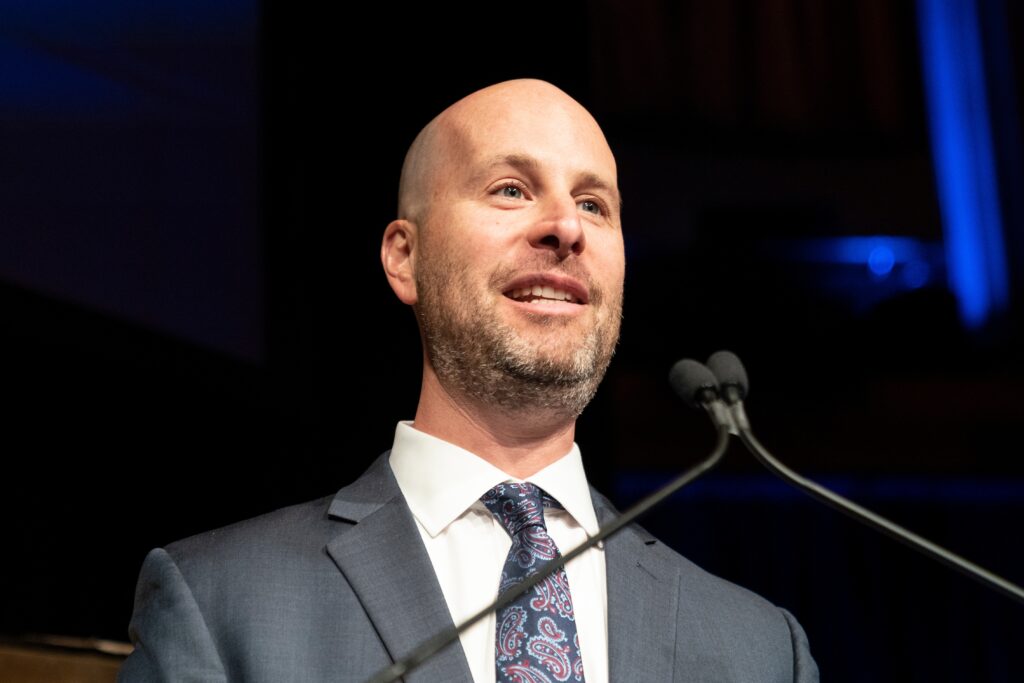
An interview with senior Israeli journalist and author Yaakov Katz
Yaakov Katz is one Israel’s foremost strategic affairs journalists and author of four books, including, most recently, the bestseller While Israel Slept: How Hamas Surprised the Most Powerful Military in the Middle East, which he coauthored with Amir Bohbot (St. Martin’s Press, Sept. 2025). Between 2016 and 2023, he was editor-in-chief of the Jerusalem Post, where he continues to write a popular weekly column. Prior to that, he served as a senior policy adviser to Naftali Bennett during his tenure as Israel’s Minister of Economics and Minister of Diaspora Affairs.
Katz is currently a senior fellow at the Jewish People Policy Institute (JPPI). He spoke with AIJAC’s Joel Burnie in early March, just as the current escalation with Iran was erupting.
Joel Burnie: So, I’ll start with the obvious situation… the war with Iran has started. The United States and Israel are currently doing their thing in Iran. And, unfortunately, the citizens not only of Israel [are] having to run to shelter, but the whole region has been gripped by war.
What are your initial assessments as to the beginning of the operation by the Israelis and the United States? And can you give our audience an idea of what you think the goals of Israel are specifically and whether or not you think they’ll be successful in achieving them?
Yaakov Katz: Well, the operation was launched with the purpose of trying to remove or change, essentially, the leadership… in Iran, to try to install a moderate government, one that can free the Iranian people and give those brave Iranians, hundreds of thousands, who took to the streets, the reins of power in their country… And the way the operation began showed exactly that type of strategy. The initial assault was aimed at the decapitation of the Iranian leadership, taking out not only the Supreme Leader Ali Khamenei, who had ruled the country for pretty much 37 years, but also the commanders of the IRGC, the Defence Minister and other top aides and advisers and officials…
Then the sequence went to eliminating, of course, Iran’s radar systems, air to ground missiles, air defence systems, and [degrading] their ballistic missile capability…
What we see in this operation, in contrast to the 12-day war in June, was that, then, the focus was the nuclear sites. This time around, nuclear is secondary, right? Those targets are still relevant… to… cause even more damage, to make it more difficult for Iran to one day rebuild. But that’s not the main objective here. And this loose objective of giving the Iranian people the opportunity to seize power, it’s not something that is going to be very easy… we’ll have to wait to see if it’s even possible…
…I’m not even sure exactly who it is inside the country that is leading the opposition, that has the greatest opportunity to potentially grab… control of it. I want to believe, and I have reason to believe, that the covert or intelligence agencies of Israel, the United States, and maybe others in Europe have been working on this for a number of years and identifying who are these opposition figures, giving them resources and supplies and equipment so that, when the day comes, like we’re seeing playing out, they have the best chance to stand up. Now, this is a big leap of faith, and we can’t ignore that…
I think everyone who’s looking at this maturely… understands that regime change is not something that’s easily achieved at all, even with boots on the ground, but even more so when this is just a standoff operation from the air.
The best example of where something similar did happen was back in Libya, when, after the so-called Arab Spring, the people of Libya rose up against their regime, then led by Muammar Gaddafi. Barack Obama, who was then the President, together with European allies, launched a 70-day operation against the Libyan military… Gaddafi eventually was captured, was killed, and Libya was freed to an extent, but then splintered into so many different offshoots and became a country that I don’t think anyone can call a success. So that’s the last thing anyone would want to see happen in Iran.
Let’s not forget that Iran does have not just enriched uranium still somewhere in the country, but a significant and sizable, powerful military. We would not want to see that fractured and start to proliferate throughout the region into the hands of even, let’s say, more dangerous actors… But I hope and I believe that there is planning to try to [make] the best effort possible to make something like [regime change] possible.
Joel Burnie: You noted firstly, Libya… a 70-day campaign from the Obama Administration. So, one easy question is, do you think that the United States has 70 days in them, if the campaign requires it…?
And I guess the second question is, in terms of the surprises that that President Trump can, you know, throw up… one that’s been discussed is the potential for him to find a current regime member to negotiate terms with… someone who’s currently within the structures of the current regime. Is there potential for President Trump to make a deal with someone like that?
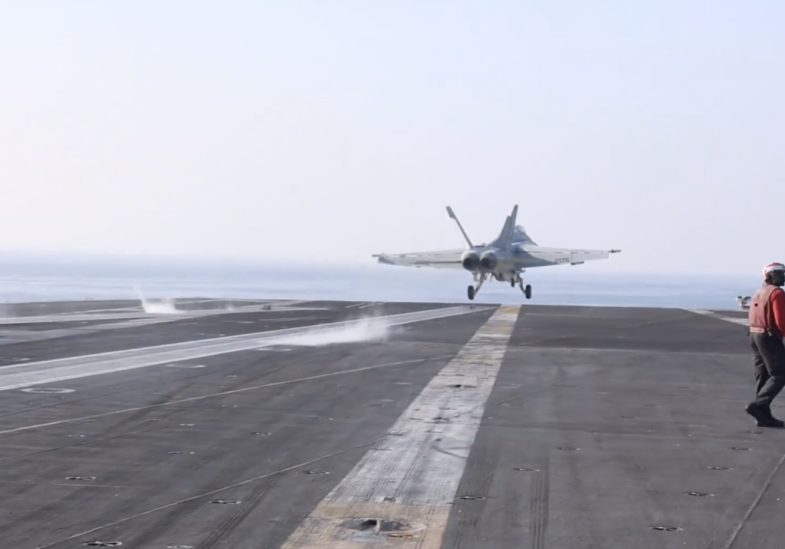
Yaakov Katz: I do not believe that this Administration has a 70-day operation in it. Not at all. I think that if we’re looking at the initial comments that have been made by the President himself in various interviews, he speaks about, you know, in classic Trump fashion, four weeks or less. Right. So you don’t really get much out of that. But I don’t… anticipate that they have the bandwidth and the attention to sustain a long-term operation. Let’s also not forget, from just from a pure military perspective,… this operation is eating up a great deal of the United States military’s capabilities… with two aircraft carrier strike groups in the region… with the squadrons that have been deployed here, the Air Force capabilities and also the missile defence capabilities. This is a big chunk of what America has to… deploy anywhere. And… you in Australia can definitely appreciate this… everyone is definitely concerned with China, a Chinese aggression. Potentially, if China wanted to go into Taiwan right now, there’s not really a US military that can easily come to the Pacific or to Southeast Asia and try to help… So… I don’t see it taking that long.
With that said, we also have to recognise… the Venezuela operation. Donald Trump sent the Delta Force into Caracas and took out… Maduro, the President, and his wife and brought them to… the United States to stand trial. There wasn’t a regime change in the sense of what we thought. The people who remain in power now in Venezuela, the Vice President and all the other people who were already there, they’ve now elevated themselves and the Trump Administration is working with them.
So if we apply that model here… I don’t think… it would work here, although I do hear Administration officials talk about the Venezuela model and applying it to Iran.
You know, you remove Khamenei, there’s no less evil a guy waiting in the wings…
Now, does Trump think that maybe he can work with someone? Maybe there’s somebody there a little more moderate? Maybe there’s somebody there that they already have access to that they’ve been speaking with that maybe they’ve been prepping for this day. One hundred percent possible that we just don’t know that yet.
But it is hard to imagine the Venezuela model being applied here in Iran… I would not bank on that. I would actually argue that we need to remove all these people. And I think for the people of Iran…what they have wanted is a new beginning with real democratic leadership, with real liberties that you and I, Joel, take for granted…
This began not because of nuclear uranium enrichment and not because of the ranges of ballistic missiles. This began because of brave Iranians who took to the streets to fight for freedom. And…I think, in a principled world, they should not be forgotten.
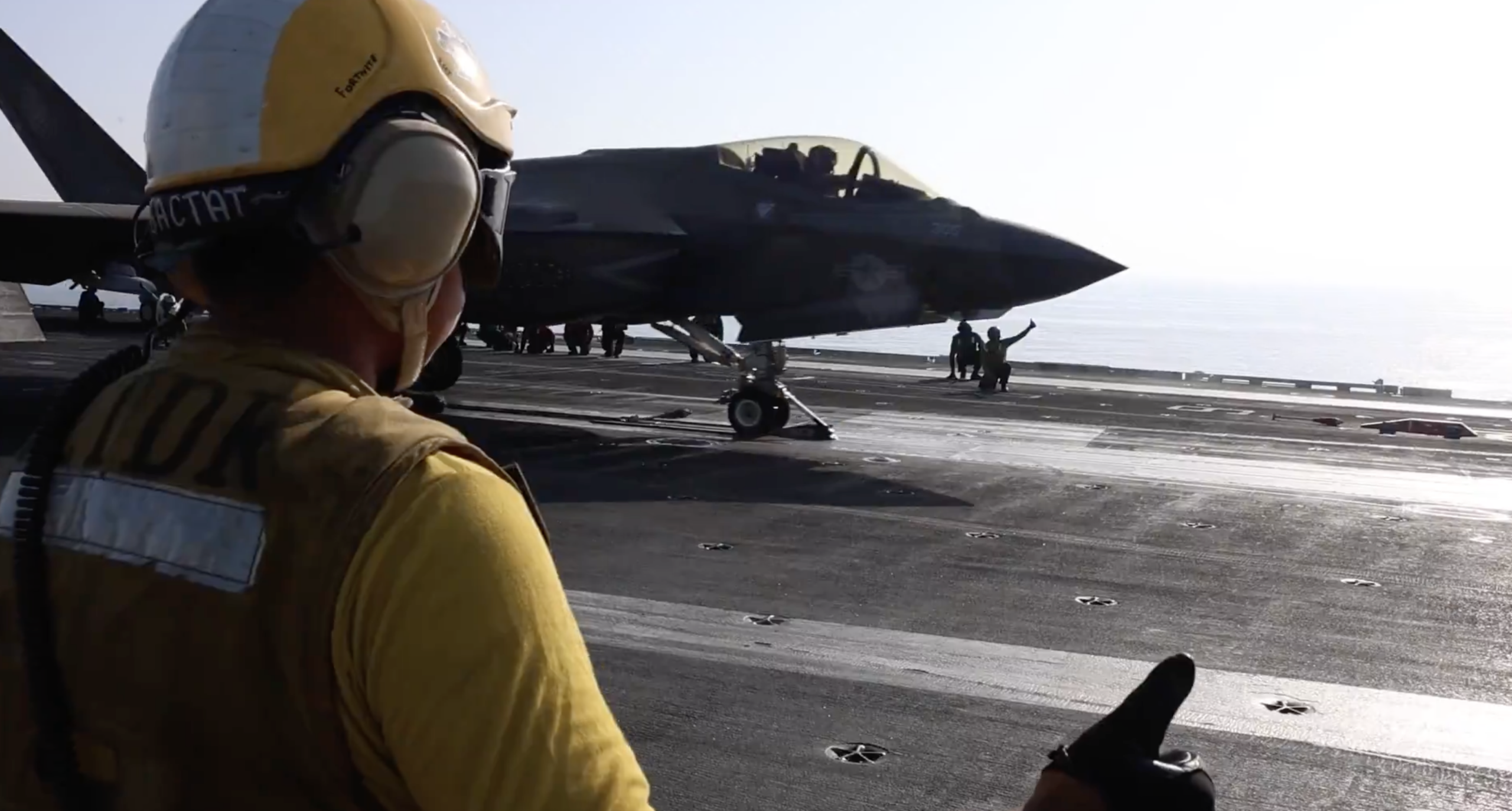
Operations in Iran are eating up a great deal of the US’s military capabilities, suggesting it will have to be a relatively short war, Katz suggests (Image: CENTCOM)
A region transformed?
Joel Burnie: Before we move on to other issues, this is definitely a regional conflict… there is no doubt about that. We’ve seen, you know, the Iranians target multiple cities in the region, Kuwait, Dubai, Abu Dhabi, Cyprus, Bahrain and many others. But we’ve also seen again, not the first time, but again, another example of Israel and Arab, Sunni Arab allies and Gulf allies, working hand in hand with the United States to [meet] the threats coming from Iran.
Is this an illustration of where the region is at now that countries that were formerly foes or potentially still are, at least in public rhetoric, are able to come together, work under CENTCOM with the United States to defeat a threat?
Yaakov Katz: Well, where we are right now is not yet what I think we would all want to see. And that is a united region of Israel, the United States, [and] the Arab states that are under attack. I mean… they’re attacking Saudi Arabia and the UAE and Bahrain and Oman and Kuwait and Iraq and Jordan. They’re attacking everywhere.
Imagine a reality where all these countries were flying together with America and with Israel to attack and to weaken and to topple the oppressive regime of the ayatollahs and Iran. I mean, is that not what I think all of us would… pray for, would want to see happening here in the Middle East?
I think that this is the perfect example, an illustration, of how for decades we heard that Israel is the great source of instability in the Middle East, that it’s Israel’s colonialistic so-called ambitions, it’s the conflict with the Palestinians, it’s the so-called occupation, as people like to refer to. It’s the expansion of the communities, what people call the settlements, in Judea and Samaria, in the West Bank.
That’s nonsense. Those are issues that, of course, have to be dealt with. I’m not trying to sweep them under the rug. But there is a source of instability that we’re now seeing playing out before our eyes. And that’s… the Islamic regime of Iran, which is attacking everywhere. And they are the enemy of everyone. And as long as they are there, and as long as they are in control of their country, this will not change.
And I think that this is a new era because for once we are seeing that Israel is not alone in this… As we’re recording this, on a day… I had to go down to the bomb shelter because there were missile sirens in Jerusalem… at the same time, there were explosions in Dubai and in Bahrain.
They are attacking all of us together. So, if, in a normal reality, we would stand as one. Now, there’s a lot of suspicion and there’s a lot of history and a lot of issues that have to be dealt with within this region. Not a simple place. But I think that if there’s ever been a moment for people to look at this reality and to look at the Middle East and say, okay, we get it now. This is about changing the future trajectory of an entire region, which will have implications for the entire world. And the way to do that is to remove Iran, because the moment Iran is out of the picture, the moment Iran is in different hands… Think of the ripple effect this has. Think of what you can do. There’s no Hamas anymore. I mean, there’s still Hamas, but not with the support it had. There’s no Hezbollah anymore. Lebanon becomes free.
Syria no longer has to worry about Iranian intervention. The whole region is now going to be able to align itself in a different way…
I try not to give too many predictions. I’m not a gambling man. But if the [Iranian] regime were to fall and there would be a democratic, free government in Iran, within a year, you would see normalisation of Israel’s ties with probably almost the entire Middle East.
Back into Gaza?
Joel Burnie: So obviously, before this conflict with Iran, one of the major issues that Israel was grappling with was the situation in Gaza. So, we have Stage I [of the Gaza peace plan] complete, where Binyamin Netanyahu has been able to achieve something that I didn’t think he would be able to achieve – that is the repatriation of all living and dead hostages.
And now we are in this Stage II, where the clear objectives of the Trump Administration not only are yet [to start] to happen, but I don’t see a clear pathway for Hamas to give up their weapons and also give up… the area of Gaza that they currently control. So how do you see the events in Iran playing out directly in terms of the implementation of Stage II in Gaza?
Yaakov Katz: Hamas is not going to easily give up its weapons, and it’s not going to easily change its ways just because Donald Trump has asked them nicely to do so. This is the great challenge of what’s happening in Gaza.
I would believe that while they do seem to be two very different arenas, they are connected. If Hamas sees the Iranian regime toppled, if it sees a determined American military and political leadership willing to go the distance to get the job done… that would make the Hamas leadership, whether in Gaza or Doha, think twice about defying the President. I think that this is definitely going to be a calculation.
Hamas, its gamble has been, and so far they’ve been proven right, that they can hold on to 50% of Gaza, pretty much 47% to be exact, and keep their weapons and replenish their ranks. They don’t yet have the same capabilities they had prior to October 7, 2023, but they’re getting there.
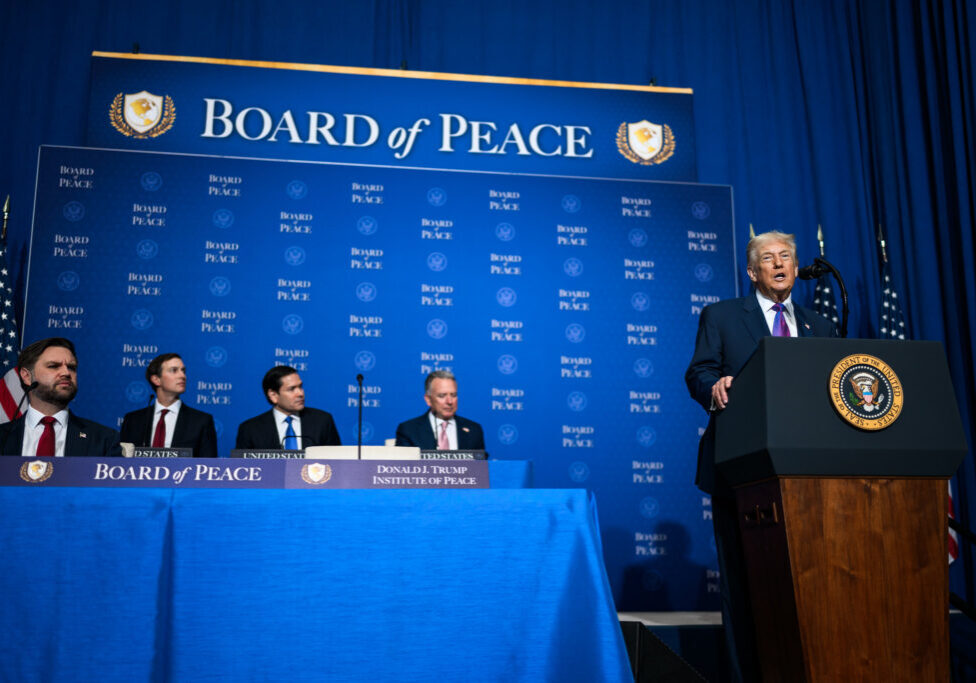
And Israel will be in control of the other half of Gaza. But if things stay quiet, eventually pressure will build on Israel to pull out of those areas. So that’s Hamas’ kind of gamble at the moment. I think that for the time being, this is going to be a real tense situation. It’s not going to be easily solved. And here’s one thing that gives me some confidence, is that when you talk to members of the Board of Peace and within the Administration… they’re [not of] two minds… there’s an unequivocal position. And that is that for this to advance, for reconstruction to advance, Hamas has to disarm. And I think that’s the linchpin. Thank God they understand that, because if Hamas is able to hold on to its weapons, then we will be back at where we were on October 6, 2023.
Joel Burnie: So, given Israel’s very noticeable and very clear change of posture post-October 7, meaning they will not allow threats to be maintained anywhere near their borders, and they are significantly more aggressive in nullifying those threats… in the Gaza context, if Hamas doesn’t choose to give up their weapons, do you think Israel will go back into… the enclave to disarm Hamas themselves?
Yaakov Katz: I think eventually, yes… I don’t think it’s something that we’ll see in the immediate future. But ultimately, over time, Israel will not allow this situation to fester. The lesson of October 7 is that you cannot contain your enemy, and you cannot allow your enemy to grow. Because… if you do allow that to happen, it will grow to monstrous proportions and will eventually explode on your borders and invade your territory. And therefore, the understanding I think across the Israeli political and military leadership is that if Hamas does not disarm, and if they don’t give up their weapons, and they don’t somehow integrate into a new Gaza, then Israel will have to go into it.
And no one’s going to do it for Israel. No international stabilisation force… as is supposed to be deployed there under the 20-point Trump plan. The United States is not going to do it. The Arab countries are not going to do it. It’s going to have to be Israel.
Israel would prefer not to… Israel agreed to the ceasefire not only to get back the hostages, the living and the deceased, but also to end the conflict, to give the people of this country an opportunity to heal, to recover from two long years of war. We’re still not there, right? We’re talking as rockets are landing in Israel, as Israeli pilots are risking their lives in Iran, as now Hezbollah has opened and joined the fray…
But I think that if this is to work, it needs to see Hamas disarm and if it doesn’t… there’s no question in my mind that, no matter who is the leader of Israel, they will know what they have to do. And that is to send the IDF back into Gaza.
Israel’s upcoming elections
Joel Burnie: Now, you co-authored a book called While Israel Slept. It’s an incredible investigation to what Israel’s position was before the events of October 7 and goes into some pretty intense details as to what happened on the day and the military and intelligence failures that allowed it to happen. Your book is a phenomenal piece of research. However… it’s been published at a time where the Government is yet to confirm the operation of its own commission of inquiry into the events that led up to… October 7, 2023. So, given the fact that it’s an election year… what’s the impact of that on the Israeli voting public?
Yaakov Katz: You know, Israelis, for better or for worse, they vote based on security. They vote for the person that they feel can keep them safe. We have economic issues. We have major social issues. One of them, for example, is the issue of the draft of the ultra-Orthodox who continue to not serve in the military. That is a real lightning rod…
I think that unfortunately we’re still stuck in a reality where Israelis are going to vote on whether they want to see Benjamin Netanyahu continue as prime minister or they want to finally see him removed from office. That’s going to be the big question. The second question is definitely going to be, who do they feel will keep them safer and more secure?
And of course, there will be those other issues. The ultra-Orthodox issue is going to be up there, but maybe number three… economics even lower.
Now, it’s still early. Elections won’t be held until at the earliest in June, at the latest in October, but it’s very possible we’ll have new leaders emerge, new candidates, new parties.
But for the time being… we’re still a bit stuck politically. And if you look at the polling numbers… now, there’s no clear winner and there’s no clear government. And… if I had to gamble right now… I would say the most likely scenario is that there’s no winner and we roll again to another election.
Joel Burnie: On that point of security being the major motivating preference, I agree with you on that. But, in the context of Prime Minister Netanyahu, you have obviously clear and immediate security successes, including in its current mission in Iran, but that comes off the backdrop of what was Israel’s greatest military and intelligence failure and security failure… October 7. So, do you think that Prime Minister Netanyahu has done a good job politically to reconcile that dichotomy with the voting electorate?
Yaakov Katz: Look, you mentioned my book While Israel Slept. Netanyahu, as the prime minister, bears the most responsibility for the failures that led to October 7, especially considering that he was prime minister pretty much for 14 years uninterrupted, except for a year and a half, from 2009 up until October 7. It was his policies that were in place, those that he created and installed and set.
But, at the same time, I recognise that he is also the person who deserves the credit for the re-engineering of the Middle East and for everything that we spoke about until now. The taking on of Iran, the weakening and degradation of Hamas, of Hezbollah, the return of the hostages, the toppling of Bashar al-Assad in Syria, and so much more. So, can we ignore that? No. Can we look at him through both prisms? 100%. And that is what Israelis are going to have to do… when that election day comes – look at the complexity of the situation and try to make a decision of what is best for them as they move forward.
I wish and hope and pray that there will be a state commission of inquiry because I think that is existential for Israel. I think we need to investigate, we need to study and learn to make the corrections and repairs and reforms so this does not happen again. But… if Netanyahu is re-elected and he does not want a commission of inquiry, as he has made plain and very clear, then this is the decision that the Israeli people are making.
Joel Burnie: Final question…the Israeli public has gone through a very, very tough time over the past two-and-a-half years. War is very difficult on any nation, but Israel is a small country of just… over ten million people with a reservist army, and the burden that is on that society to fight such a long war is very, very difficult. But given that we are in election year and given that, as you’ve noted, there has been a complete realignment in the region, what is your feeling [about] the future of the people of Israel and the State of Israel?
Yaakov Katz: I’m very hopeful. I’m hopeful because I recognise and I believe in the Israeli people… I look at the straight-up reality that we’re at in right now. We are more safe. We are more secure than we were two-and-a-half years ago… This is a dangerous region, but Israel is strong. It is powerful. We’re watching,… as we speak, the perfect illustration of the close intimate alliance between Israel and the United States. Hundreds of jets from both countries flying together, refuelling one another, sharing intelligence with each other, carrying out combat raids together. This is power. This is the strength and the resilience of the Israeli people… If we have to stay in the bomb shelters to free Iran, to give the Iranian people a better future that will also be a better future for us, we’ll stay… a week, two weeks, three weeks, we’ll stay, because we want to see them get freedom. We want to see ourselves live in a more secure reality. So, this is… resilience.
[That] spirit gives me a lot of hope. I hope that that can also translate into the deep change that we require within society as well.
Tags: Gaza, Iran, Israel, Israeli politics, Middle East
RELATED ARTICLES