Australia/Israel Review
Asia Watch: An uphill battle
Jan 29, 2025 | Michael Shannon
The growing prevalence worldwide of antisemitic and anti-Israel sentiment has been impossible to ignore in recent years, particularly in the wake of the October 7 atrocities and the ensuing war in Gaza. The release in January of the Anti-Defamation League’s latest report, the ADL Global 100 survey, makes for unsettling reading.
More than 58,000 adults from 103 countries, along with the Palestinian territories of the West Bank and Gaza, were posed a series of questions related to common antisemitic tropes, as well as the Holocaust, Israel, the Palestinians and Hamas.
Where Asia is concerned, minimal Jewish presence in the region has not prevented the widespread adoption of antisemitic beliefs, although there is significant variation by country due to historical, political and cultural factors.
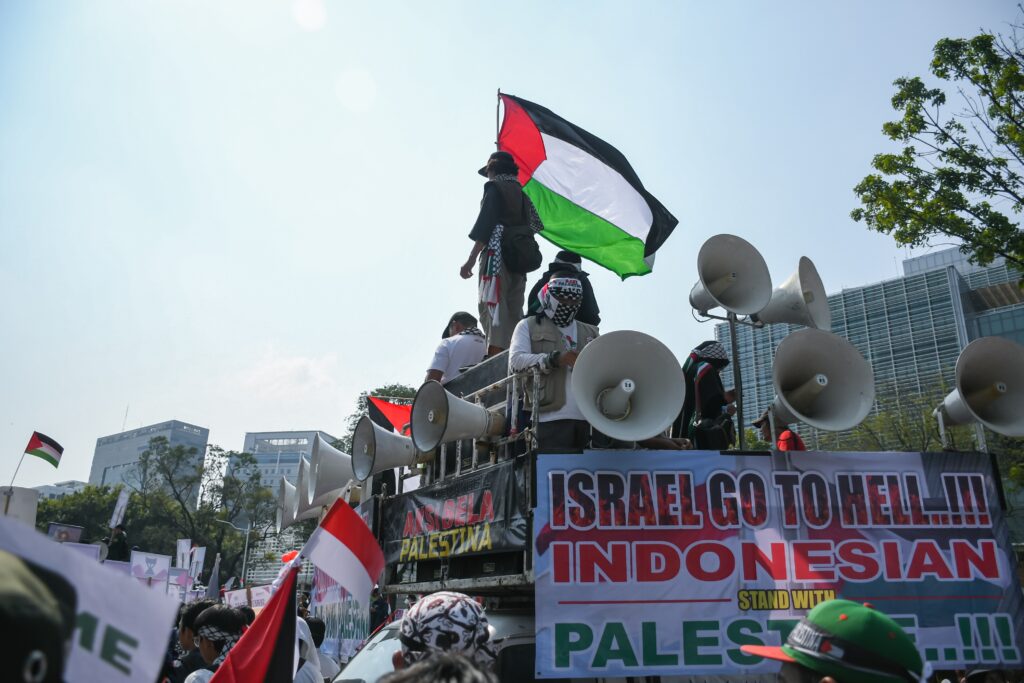
Indonesia has earned the dishonour of being ranked 101st out of 103, with 96% of respondents answering “definitely true” or “probably true” to statements including “Jews have too much control over the media” (89%), “Jews’ loyalty is only to Israel” (92%), “Jews don’t care what happens to anyone but their own kind” (95%).
Most Indonesians (92%) hold unfavourable views of Israel, while a large majority have favourable views of both Palestine (96%) and Hamas (76%) – significantly higher than the shares across Asia and around most of the world. Only 5% believe that Indonesia should welcome tourists or have diplomatic relations with Israel, and most (87%) believe that Indonesia should boycott Israeli products and businesses.
Malaysia had an index score of 75% overall and a high level of agreement (75%) with propositions that Jews have too much control over global affairs and mass media, compared with the Asian average of 48%. This is particularly interesting, given the propensity of Malaysian politicians to invoke Jewish or Israel-related conspiracy theories for domestic political purposes.
A plurality of Malaysians (41%) say they have not heard of the Holocaust, while those that have are split on whether it has been accurately described by history (48%) or exaggerated (45%). A majority (62%) believe that Jews still talk too much about the Holocaust.
The vast majority (82%) feel unfavourable toward Israel and a similar number feel favourable toward Palestine; while over half of Malaysians feel the same about Hamas (58%), particularly among 18-34 years old, those with right-wing attitudes or unfavourable views of Jews.
As the main Muslim-majority nations in the region, the results for Indonesia and Malaysia are not surprising, given their historic identification with the Palestinian cause, framing it as a struggle against colonialism and oppression. This, in turn, frequently blurs the line between political criticism of Israel and antisemitic tropes.
In countries like China and Japan, views on Jews and Israel are more complex, although imported stereotypes and conspiracy theories retain influence via translations of texts like The Protocols of the Elders of Zion.
In China, there is a mix of fascination with Jewish culture and stereotypes of Jewish success, alongside official government criticism of Israel due to China’s ties with the Arab world. The survey gave China an index score of 58%, and fewer than one-third say they view Jews favourably. Furthermore, two-thirds (67%) believe that “Jews have too much power in the business world” – a view particularly pronounced in men (73%) and those aged 18-49 (76%).
Separately, just over a quarter of Chinese feel favourable toward Israel (27%), while more are favourable toward Palestine (58%), and one in five feel the same about Hamas. Yet, most (82%) believe China should maintain diplomatic relations with Israel.
Japan has limited historical interaction with Jews, but antisemitic stereotypes have infiltrated fringe publications. With a survey index score of 26%, Japanese respondents were less likely to believe that “a small group [Jews] secretly control world events” and fewer than half (39%) believe that “Jews have too much power in the business world.”
Additionally, most Japanese adults (54%) believe that the Holocaust is described accurately (compared to the regional average of 32%), although one in five say they have not heard about the Holocaust. Favourability ratings toward Jews (30%), Israel (16%), Palestine (26%), and Hamas (7%) are lower than the regional average, primarily due to higher-than-average “don’t know” responses.
Among other Asian countries, the Philippines’ (index score 42%) respondents were split in their opinions of Jews, and more than half of Filipino adults agree that “Jews have a lot of irritating faults” (52% vs 45% of Asia). However, a majority (57%) feel favourable toward Israel. In Vietnam (index score 27%), the most widely believed trope (around half) is that “Jews’ loyalty is only to Israel,” yet nearly nine in ten (88%) think Vietnam should welcome Israeli tourists, including large majorities of those who feel unfavourable towards Israel or Jews.
Honourable mention goes to Singapore, top rated in the region with an index score of 20%. For local comparison, Australia was also rated at 20%, while New Zealand was scored at 16%.
Tags: Antisemitism, Asia, Israel
RELATED ARTICLES