Australia/Israel Review
AIR New Zealand: The aftermath of Bondi
Mar 18, 2026 | Miriam Bell
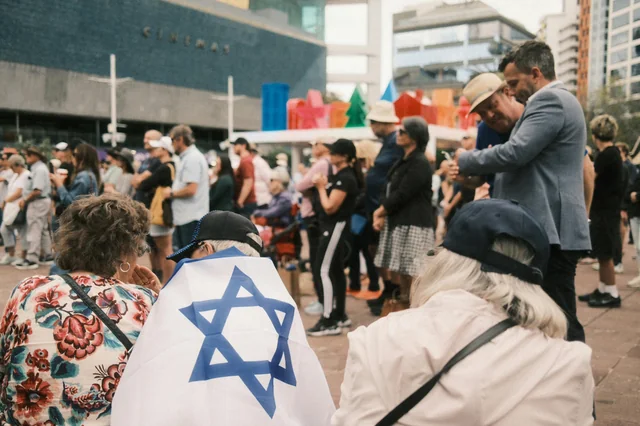
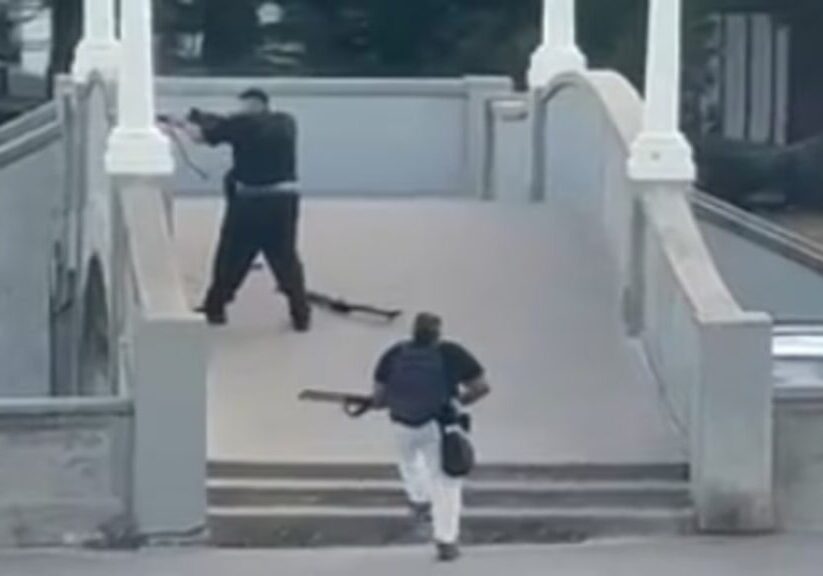
News of the horrific antisemitic terror attack at a Chanukah celebration at Bondi Beach in Sydney on December 14 left the New Zealand Jewish community reeling and deeply sorrowful, but not surprised.
By contrast, the broader community in New Zealand did seem to find the fatal attack at Bondi a major shock. That is despite repeated warnings from Jewish communities around the world, including New Zealand’s local community, about the sharp rise in antisemitism since October 7.
As has been the case elsewhere, those warnings largely fell on deaf ears. Instead, antisemitism was dismissed, denied, normalised and even justified by too many.
Yet, following the Bondi attack, there was an outpouring of support and sympathy for the Jewish community from community leaders, politicians and the general public.
The New Zealand Jewish Council said at the time, “It reassures Jewish New Zealanders that we are not alone, and that our safety and belonging are taken seriously.”
The Jewish Council also commended the “clear and ongoing commitment from the Government and security and law enforcement agencies to protect communities here at home.”
Prime Minister Christopher Luxon met with Jewish community leaders privately the day after the attack, and then attended a vigil in Auckland, along with Deputy Prime Minister David Seymour, and Minister for Ethnic Communities and Police Mark Mitchell.
Luxon said the Government stood in solidarity with people of the Jewish faith in Australia, New Zealand and all around the world.
“Terrorism and hate have no place in our societies: violence of any kind is unacceptable whether it is targeted at people of Jewish or any other faith. We all need to call out intolerance where we see it.”
The police were working with Jewish communities, and there would be additional police presence at sites of significant Jewish worship around the country, he said.
Later in the week, more than 30 MPs from across the political spectrum attended a Chanukah candle lighting outside Parliament in Wellington. There was also a Parliamentary session featuring speeches from each political party leader addressing the Bondi attack.
All the speakers condemned antisemitism, along with violence and hate, but there was a divergence in approach, as Radio New Zealand noted.
“In a left-right divide, all three left-leaning party leaders from Labour, Green and Te Pāti Māori specifically mentioned the 15 March mosque attacks [in Canterbury in 2019], but no-one from the governing coalition parties did.” There was also divergence in the messages of the four smaller parties.
Green Party co-leader Chlöe Swarbrick and Te Pāti Māori co-leader Debbie Ngarewa-Packer spoke about wider human rights and injustice, while ACT Party leader David Seymour “broadened into a paean to libertarian values” and New Zealand First leader Winston Peters stuck to a focus on antisemitism.
Both Seymour and Peters also discussed the antisemitism and intolerance which the New Zealand Jewish community had experienced since October 7.
Peters referenced rhetoric from “some politicians” which had encouraged antisemitism, and had “raised the temperature and caused division.” “That was wrong before and it is wrong now,” he said. Seymour made some similar points.
Swarbrick and Ngarewa-Packer, along with some other MPs, have been aggressively pro-Palestinian – regularly accusing Israel of genocide, apartheid and colonialism, and calling for sanctions and the expulsion of the Israeli Ambassador.
Last year Swarbrick, who regularly sports a keffiyeh, was suspended from Parliament after a series of heated exchanges during a debate over recognising Palestinian statehood. In 2023, the Jewish community raised concerns about her use of the slogan “From the river to the sea” at a rally.
Following the Parliamentary session, Greg Bouwer of the Israel Institute of New Zealand wrote a piece critical of Swarbrick’s speech.
She had diluted Jewish particularity, the reason those attacked at Bondi were targeted, into universalised suffering, he said. “The massacre of Jews celebrating a distinctly Jewish festival is reframed as a moment to reflect on human rights and interfaith solidarity more broadly.”
Her response highlighted a recurring problem, he said. “Jewish identity is often acknowledged only to be dissolved. Jewish suffering is valid only if repurposed for universal lessons.”
The weekend after the Bondi attacks saw well-attended rallies around the country. At the Auckland March Against Antisemitism, speakers, Jewish and non-Jewish alike, once again issued warnings about the rise in antisemitism. There was also criticism of academics, politicians, union leaders, the media, and the Government for their inaction in response.
The Auckland event’s non-Jewish organiser, Lucy Rogers, told the rally that Bondi did not happen in a vacuum. “It is not antisemitic to criticise Israeli policies, but much of the reaction of certain sections of the population to Israel over the past two years is deeply problematic.”
Rogers pointed to a string of examples of that intellectual dishonesty, including one from the Palestinian Solidarity Network Aotearoa in the days after the Bondi attack.
On the group’s Facebook page, someone shared an article titled “Bondi attack the bitter fruit of genocide in Gaza.” The person who shared it said, “It is the scale of Israel’s own crimes in Gaza over the past two years, and the complicity of the Australian government, that breeds terrorism.”
That was victim blaming, but it was apparently considered OK when it came to Jews, Rogers said.
Other examples of post-Bondi victim-blaming Rogers referred to could be seen in letters to local media, in comments on articles and on social media.
Jewish Council President Juliet Moses explored this in an opinion piece on Stuff, noting it took less than 24 hours after the Bondi massacre for “the now-familiar discourse to emerge that Jews were responsible for their own murders, erasing the agency of the perpetrators.”
“In New Zealand it has been advanced by scholars and other academics, politicians, commentators and prominent members of civil society who, after clearing their throats to condemn the attack, either explicitly or implicitly claim that the Jews brought it on themselves.”
Moses said she had phoned a friend in Sydney to check on him after the attack, and he had said, “I think Australia is lost to its Jews.” New Zealand was not lost to its Jews, she wrote – but “it requires self-reflection, education and change to ensure it stays that way.”
Tags: Antisemitism, Australia, Bondi, New Zealand
RELATED ARTICLES