Australia/Israel Review
Resentful in Ramallah
Mar 18, 2026 | Ahron Shapiro
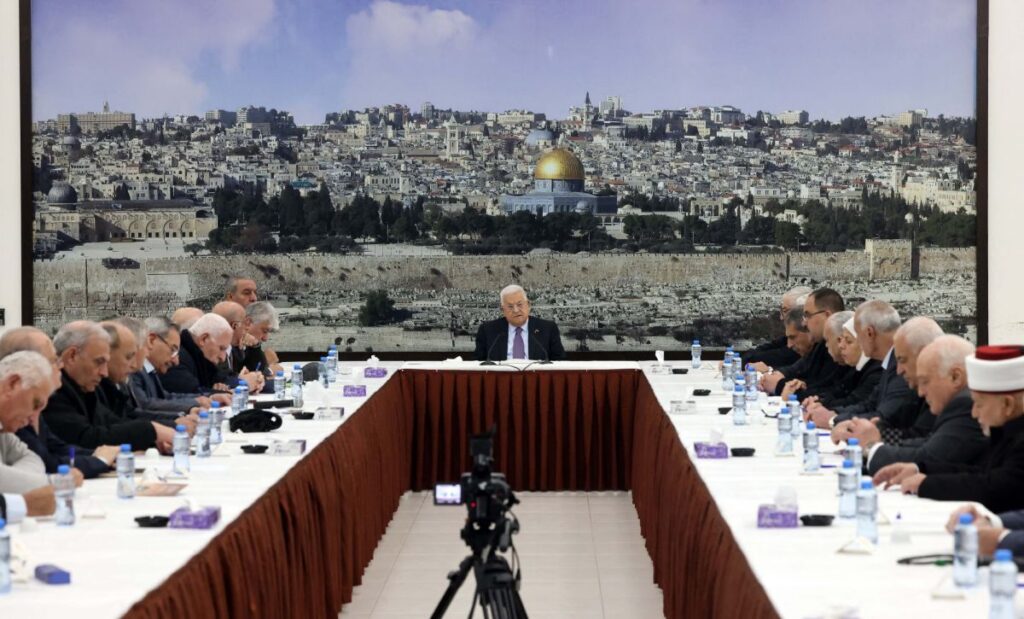
What the Palestinian Authority seeks in Gaza
The US-brokered ceasefire agreed between Israel and Hamas that went into effect on October 10, 2025, and apparently ushered the two-year Gaza War into a closing stage, has thrust the Palestinian Authority (PA) back into discussions about the Gaza Strip’s future. This is in spite of the fact that the multi-phased ceasefire agreement itself actually bypassed the PA.
Predictably, the PA insists it’s entitled to the territory and should be simply handed it back gift-wrapped, 19 years after losing it to Hamas in a bloody coup. Israel maintains doing that would reward Palestinians for the October 7 massacre, and give the PA – an entity still fundamentally unwilling to call an end to the Palestinian conflict with Israel’s existence, even if it uses different means than Hamas – strategic advantages that could potentially lead to the imposition of an enemy state created on Israel’s doorstep. These are legitimate concerns, even if some Israelis raising them may be seeking political advantage in doing so.
The PA’s response to the ceasefire and its post-war strategies vis-à-vis Hamas and Gaza are worth a closer look. However, before delving more deeply into the PA and its Gaza hopes, the current context should be established – namely, that the ceasefire has only been partially successful.
From active combat to attrition
Crucially, Hamas’ continuing refusal to disarm or yield power, along with its repeated violations of the ceasefire, have led to a low-intensity war of attrition. Nevertheless, US President Donald Trump and his newly created Board of Peace (BOP) are pushing forward with their 20-point plan. This involves, in part, bringing in foreign troops – called the International Stabilisation Force (ISF) – to gradually replace IDF soldiers in forward positions and move ahead with an IDF withdrawal from most of the Gaza Strip.
The possibility of Hamas reneging on its ambiguous verbal promises and failing to disarm or relinquish power was anticipated and implicitly factored into the plan. Washington seems to have imagined that, if this occurred, Israel would still be expected to gradually withdraw and yield territorial control to foreign forces in areas of the Gaza Strip it currently occupies, while Hamas would be left to rule over a rump Strip without the means to rebuild or rearm.
The Israeli Government, as well as the heads of Israel’s security agencies, doesn’t see how foreign forces would risk their own lives to prevent Hamas from recapturing any area vacated by the IDF. They therefore insist the IDF must remain in place, with complete freedom of action, until disarmament proceeds.
For the time being, it remains a moot issue. Trump’s BOP has only rounded up five countries to send forces to the ISF so far – Indonesia, Morocco, Kazakhstan, Kosovo, and Albania. None of them are interested in anything riskier than peacekeeping duties. It took until Feb. 19 to even convene the first meeting of the BOP. The entire process is moving very slowly, so it’s unlikely Israel will feel much pressure for Gaza withdrawals anytime soon.
How is the PA responding to all this?
Officially, the PA endorses the Trump ceasefire and accepts the BOP’s role in managing the reconstruction of Gaza as a fait accompli. This goes against the grain for the Palestinian nationalist PA, but to rationalise its stance, Ramallah emphasises the BOP’s control over Gaza as a temporary but necessary evil to stop the bloodshed, with a silver lining of further “internationalising” the conflict. Even so, in live interviews, PA pundits and more than a few officials often trash the ISF and BOP roles as neo-colonialism which obstructs the rightful unification of the West Bank and Gaza under PA control.
PA officials are also openly resentful towards Hamas for agreeing to a ceasefire deal that placed them on the margins of the future of Gaza. To make matters worse, on Feb. 8, Fatah leaders in northern Gaza were summoned for interrogations by Hamas – in case they had forgotten who’s really in charge.
The PA leadership’s post-ceasefire messaging has rested on three major themes, which emanate from its various different political organs, including the Palestine Liberation Organisation (PLO), Fatah and the PA.
What are the differences between these groups?
The PLO is a body that claims to represent the whole Palestinian people. It was created in 1964 – before Israel’s defensive war of 1967 that led to the West Bank and the Gaza Strip being captured from Jordan and Egypt, respectively. Fatah is the PLO’s dominant faction. The PA is a PLO-dominated governing structure for Palestinian self-rule areas, created through the 1993-1995 Oslo Accords. Palestinian Authority President Mahmoud Abbas heads all three of these bodies.
Palestinian leadership’s post-Gaza messaging
1. Renewed efforts to get Hamas to join the PLO: On Feb. 22, Egyptian media reported that PLO Executive Committee Secretary Azzam al-Ahmad had met with emissaries from Hamas and Palestinian Islamic Jihad to discuss having these groups join the PLO. The overture is nothing new – Palestinian “unity” talks were practically an annual ritual before October 7 and they always led nowhere. The fundamental problem is that Hamas is only willing to join on terms that will facilitate it eventually coming to dominate and control the PLO, while Fatah is determined to prevent this.
In October 2025, around the time of the ceasefire, Abbas’ senior adviser Mahmoud al-Habbash invited Hamas to join the PLO on the condition it disarmed. On Feb. 23, 2026 – in an interview with Egypt’s Shorouk News’ Mohammed Khayal, al-Ahmad went further.
“All talk about disarming Hamas and it being a terror organisation is unacceptable to us, because Hamas is not a terror organisation,” al-Ahmad told Khayal.
“You mean clearly that you in the PLO do not view Hamas as a terror organisation?” Khayal pressed, to which al-Ahmad responded, “We have never viewed it as a terror organisation, and we always oppose when a decision is made by any international institution or any government classifying them as a terror organisation, because they are part of the Palestinian national fabric.”
The February push followed statements by Mahmoud al-Habbash in October 2025, who said that “our hands are extended, and our hearts are open to rapprochement with Hamas.” Similarly, in November 2025, Fatah Central Committee Secretary Jibril Rajoub called on Egypt to help “bridge the gaps” that were preventing the PLO and Hamas from reconciling.
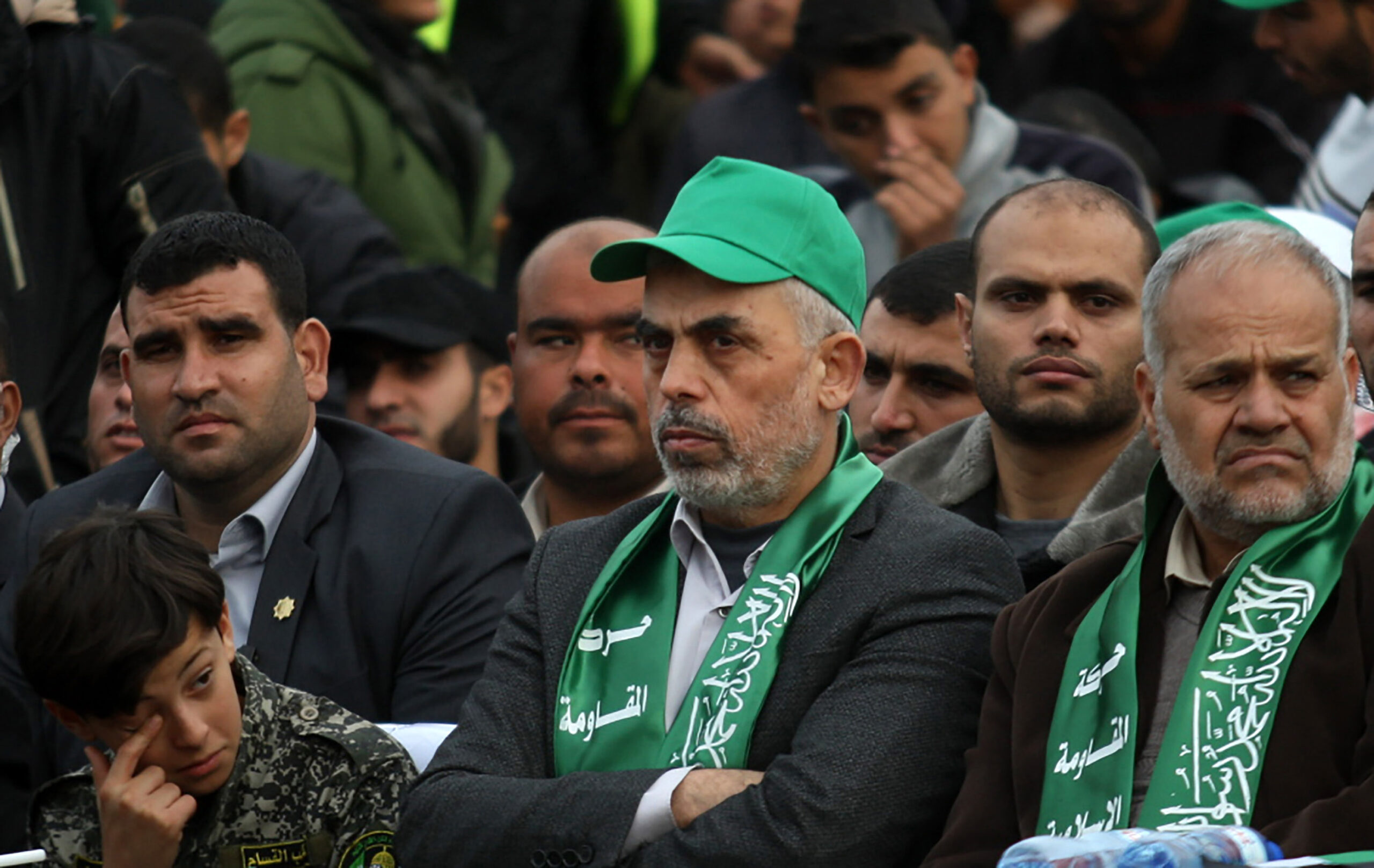
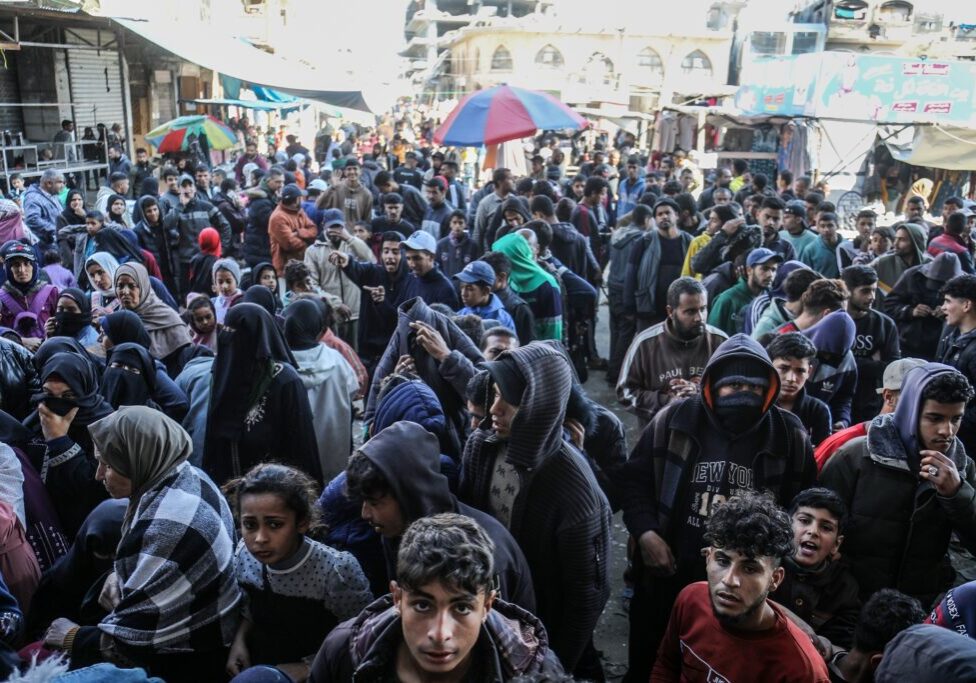
PA figures have criticised Hamas’ October 7 attack as a strategic blunder (Image: Anas Mohammed/ Shutterstock)
2. Outbursts against Hamas – not for October 7 – but for mishandling the war: Even while some in Fatah have been wooing Hamas, others have also been criticising it. This bipolar behaviour can be attributed to Fatah’s Achilles heel – that it still has security cooperation with Israel and PA forces don’t challenge the IDF in the West Bank, which hurts their legitimacy on the Palestinian street. So, to save face, it blames Hamas for giving Israel a pretext to continue a war that has led to so many inevitable civilian casualties.
Fatah’s spokesman in Gaza, Mundhir al-Hayek, told Fatah Radio on Jan. 6, 2026,
“I described the Hamas leadership as failing, especially after October 7… I’m not talking about the operation itself [i.e., the massacre], but rather about what happened after October 7. There should have been Palestinian logic and sense to rescue our people… It was possible to accept any proposal [from the Israelis] in the first six months [of the war].”
Al-Hayek continued, “The Gaza Strip before October 7 was a paradise. The situation was very good. But Hamas exploited this and took over all the economic areas and collected taxes, and, unfortunately, the result was moving towards the uncalculated October 7. We needed 10% of October 7 to [capture the world’s attention]. But the political leadership [Hamas] failed.”
Fatah criticisms of Hamas are usually relatively restrained, but in a six-minute YouTube editorial for Fatah Lebanon’s news site Falastinuna TV on Feb. 2, titled “Blood is not an achievement,” the Fatah-affiliated presenter Zainab Abu Daher didn’t hold back.
“With the beginning of the Flood – meaning October 7 – they said that the operation came to ‘whiten’ [i.e. empty] the prisons. Well, beautiful words. Okay, the number of prisoners on October 7 was approximately 5,200 prisoners. The number after the Flood reached more than 12,000 prisoners.”
On the civilian losses, Abu Daher said, “Yes, Israel is the one doing the wiping out, but the Divine Movement [Hamas] provided it with a pretext on a golden platter – no, not a golden platter, a diamond platter even. And which is more important to you: a foreigner raising the Palestinian flag, or a Palestinian child remaining alive?”
To be sure, Abu Daher’s self-righteous indignation was cynical. Fatah also glorifies martyrdom, exploits children through the Fatah “Shebab” youth and “scouts” and indoctrinates them with murderous hatred of Jews and Israelis. But in the continuous struggle to gain an upper hand in Palestinian politics, hypocrisy comes with the territory.
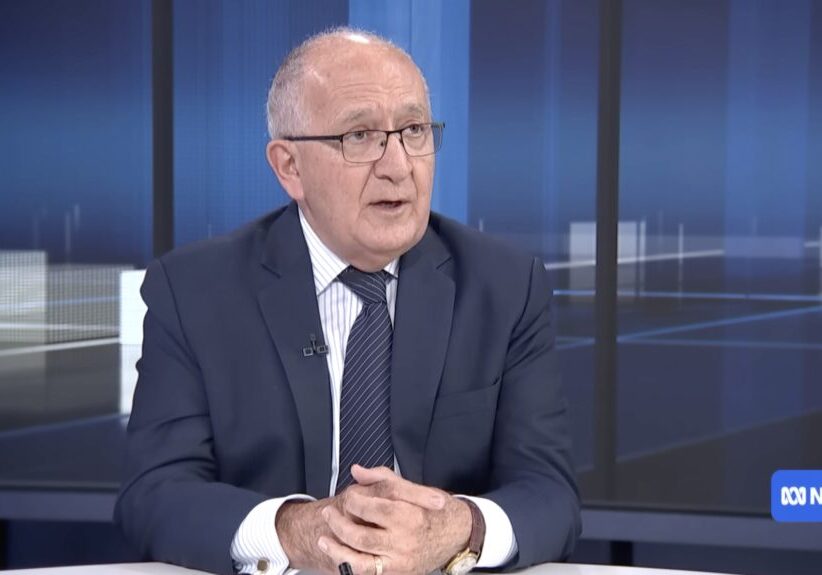
3. Appropriating Gazan hardships: This messaging should be obvious to just about everyone by now. We’ve all seen it in Australia, going back to the very beginning. Even on the afternoon of October 7, 2023, when ABC NewsRadio’s Glen Bartholomew asked the PLO-appointed Palestinian representative to the UK Husam Zomlot what “the PA’s position on the events unfolding today” was.
“Well, first of all, we must understand the context,” Zomlot said. “What we are seeing today is a direct consequence of decades of occupation, of the denial of Palestinian rights, and the lack of a political horizon.”
In other words: never mind that Abbas was completely surprised by the Hamas attack and Hamas couldn’t have cared less about “political horizons” when it launched the massacre. Let’s make everything happening all about the PA, the PLO and the failure to follow their agenda.
Since the ceasefire, this reappropriation has ramped up tenfold. Daily PA news programs crank out story after story about Gazan hardships, stories that almost never mention Hamas or the real reason why Gazans are living in tents. They simply, shamelessly milk the situation for political gain daily.
What’s ahead?
The Palestinian leadership’s strategy for the months ahead is beginning to take shape. At the beginning of February, the Palestine Institute for National Security Research (PINSR) – a policy advisory body related to the PA’s Security Forces, held a conference, “Palestine 2026: Where to?… Realising the State.”
While recordings of the sessions were not made public, PINSR Director-General Habis al-Shrouf told Fatah Radio about a number of outcomes. Those included “No state in Gaza and no state without Gaza” – meaning, bringing about the end of the Hamas de facto state in Gaza and incorporating the territory into the PA’s own statehood ambitions. The way to achieve this, he said, would be through unity under the umbrella of the PLO.
Sound familiar?
Al-Shrouf stressed the PA’s planned (local) elections later this year and the creation of a PA constitution as the means to persuade the world that PA has “reformed” and deserves to be recognised as a fully-fledged state.
Agreeing to a peace deal with Israel was not even discussed as an option. What we are witnessing, in the words of the Israeli Middle East expert Ehud Ya’ari, is a continuation of the Palestinian strategy of obtaining either “runaway statehood” or else “running away from statehood.”
That is, the Palestinian leadership is still pursuing a push towards unconditional statehood – without making any concessions through peace agreements – which they could then use to intensify their conflict with Israel. If they can’t have that, they would rather not accept a state at all.
In this way, then, the PLO’s endgame is not all that different from Hamas’. Neither have come to terms with the permanence of Israel or prioritise the wellbeing of their people over the ideological imperative of continuing the conflict until the outcome of the 1948 war can somehow be reversed. They disagree only on the best way to achieve these goals, and who should call the shots. The PA-Hamas struggle over Gaza’s future reflects these goals and priorities.
Tags: Gaza, Hamas, Palestinian Authority, Palestinians
RELATED ARTICLES