Australia/Israel Review
A historic crossroads for Iran
Dec 19, 2025 | David Menashri
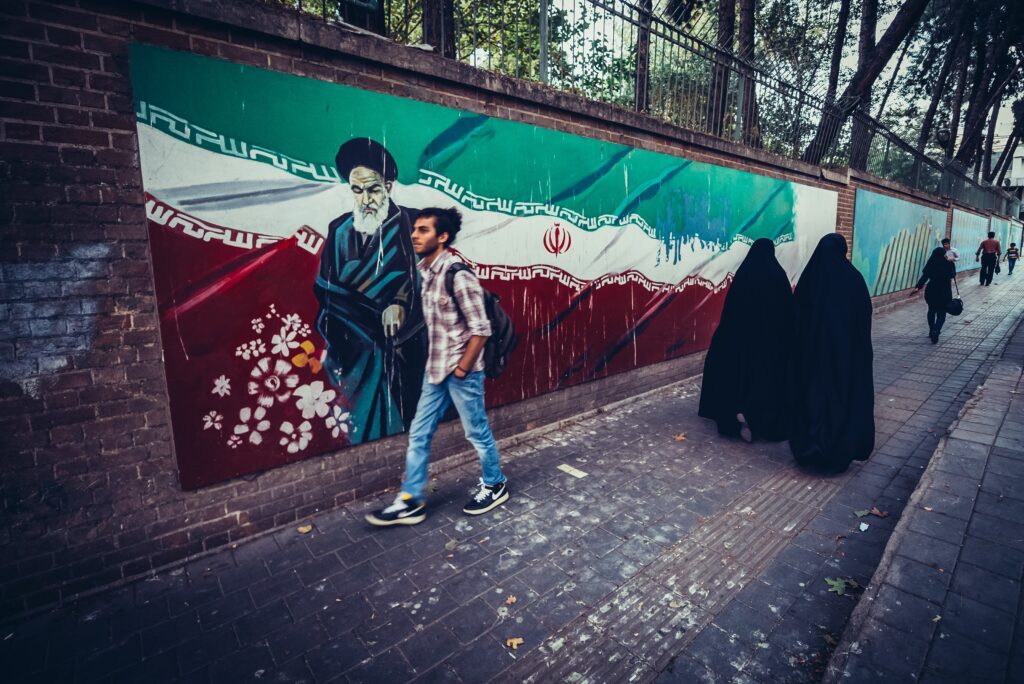
Regime under unprecedented pressure following 12-Day War
The Hamas attack on Israel on October 7, 2023 – followed by war in Gaza as well as with each member of Iran’s “resistance front”, culminating in the “12-Day War” between Israel and Iran in June this year – changed the regional architecture, and carried dramatic consequences for Iran.
Although Iran has been at the centre of worldwide public attention since 1979, it remains an enigma. It is a complex country, wrapped in mystery, and there are still significant unknown elements in resolving its riddles. Even if we accept that interest is the key to understanding Iranian policy, crucial questions remain – whose interest shapes policy: the interests of Islam, Iran, the ruling elite, or the Supreme Leader? Who determines what the interests are at any given time?
This article attempts to shed light on the dramatic changes in Iran. While attention has largely been focused on Iran’s regional ambitions, its nuclear program and animosity to the United States and Israel, this paper will focus on domestic realities and politics, which are essential to understanding the complexities of the Iranian state and society. After all, as famed British photojournalist Don McCullin noted, “It’s all local”.
A Triangular Identity
The historical legacy of Iran is grounded on triangular layers of identity – Persian, imperial and monarchical; medieval, Islamic and Shi’ite; new, modern and Western – which together shaped modern Iran. Vacillating between the three layers of identity resulted in a complex mixture of nationalism, Islam and Western ideas. The first two are anchored in Iran’s sense of exclusiveness, superiority and grandiose aspirations as the first world empire and as the cherished children of Allah. This sense of preeminence is often typified by disdain and arrogance toward neighbours, in addition to a sense of deprivation and victimhood.
Shah Mohammad Reza Pahlavi (who reigned from 1941-1979) tried to minimise the place of religion in the public sphere, to glorify imperial Persian civilisation and westernise Iran. Founder of the current Islamic regime Ayatollah Ruhollah Khomeini (1979-1989) focused on Islamic heritage and worked to suppress Persian heritage and cultivate hatred towards the West. The Shah failed to hide the legacy of Imam Hossein, the founder of Shi’ism, while Khomeini was unable to distance society from the legacy of King Cyrus the Great or ignore the influence of Western science and technology. Ultimately, the weight of each component depends on the position of those in power at any given time.
Like other ideological movements, upon assuming power and facing the complex demands of governance, the Islamic Republic was forced to adapt itself to newly emerging realities. In 1987, Khomeini went as far as sanctioning the authority of the state “to destroy a mosque” or to suspend the practice of the five pillars of Islam, if the state’s interests so required. Moreover, it is unclear how Iran’s assertion that there is no difference between Muslims, either in ethnic or sectarian affiliation, complies with the constitution, which states that only a Shi‘ite of Iranian origin can hold office as president. How can one reconcile rejection of national divisions within the Islamic world with the insistence that the nearby Gulf must be called “Persian”?
At home, while the regime was building on its “successes” in the war with Israel and the US, public fury has increased. Many have opposed Iran’s adventures beyond its borders, and the sacrifices in lives and resources to support allies and proxies, alongside the unfulfilled expectations from the Islamic Revolution in terms of securing freedom and welfare. This led to public disenchantment and fury, which in turn led to protests. While the slogan of the 1979 revolution was “Islam is the solution,” by 2009 many wondered, “Is Islam the solution?” and recently, many concluded that Islam, as practised under Islamic rule, is not the solution. Already in 2015, President Hassan Rouhani had stated that Iran’s “main enemy” is neither the US nor Israel, but unemployment, inflation, drought and ecological crisis. In 2020, former Foreign Minister Mohammad Javad Zarif called for “conceptual remodeling”, “regime innovation” and a “paradigm shift”.
After the 12-Day War, the regime tried and failed to display a façade of “business as usual”. Yet many have distanced themselves from revolutionary ideals and turned to Iranian nationalism.
The regime viewed concessions to the opposition as a recipe for toppling the regime itself. The first reason for this was tactical. Mehdi Bazargan, Iran’s first PM after the 1979 revolution, recalled that when, in the early days of the revolution, he complained about the lack of freedom, Ayatollah Akbar Hashemi Rafsanjani, former President and regime powerbroker, replied, “When the Shah gave us freedom, we drove him out of the country. We shall not repeat his mistake.” More importantly, the 1991 collapse of the Soviet Union made current Supreme Leader Ayatollah Ali Khamenei determined to make sure Iran did not meet a similar fate. However, the new realities since 2024 convinced Khamenei to better heed the popular voice, even while simultaneously suppressing dissident voices far from the public eye.
Despite frustration with the Government, the people stood against foreign aggression – to defend Iran, not the Islamic Republic. Under the circumstances, Khamenei felt obliged to keep the people closer to the Government for the sake of the homeland.
“Baraye” (“for” or “because”), the anthem of the 2022 “Woman, Life, Freedom” protests, captured the hearts of people upon its release. It created national intimacy by citing events that were shared by all. Ayatollah Abdullah Javadi-Amoli said, “If the nation rises up, we have no way to escape.” It’s a perverse paradox for the theocracy, he said: The Islamic Revolution has produced a secularising nemesis. The 2022 movement was secular and demanded change and a guarantee for basic rights – political change, not just reform.
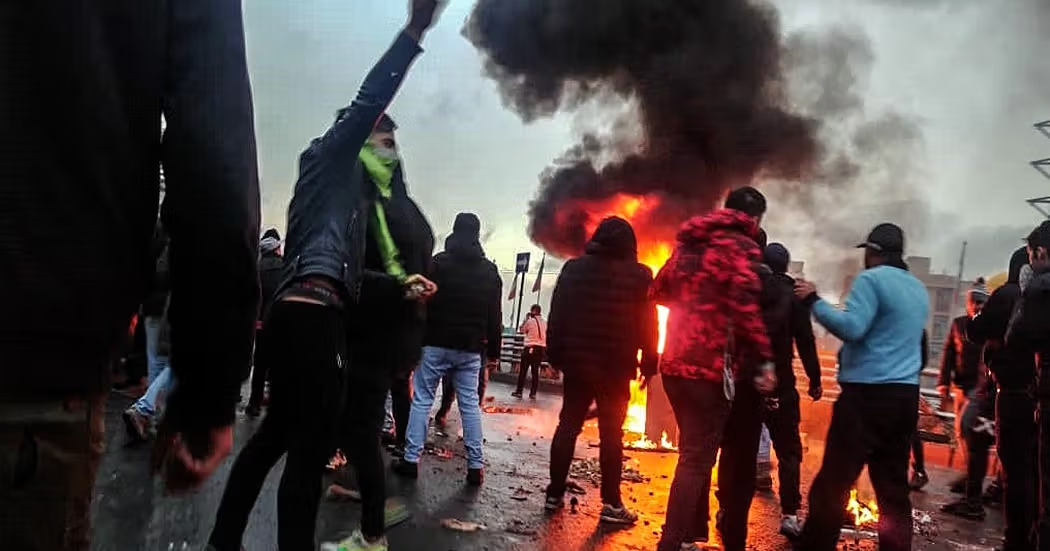
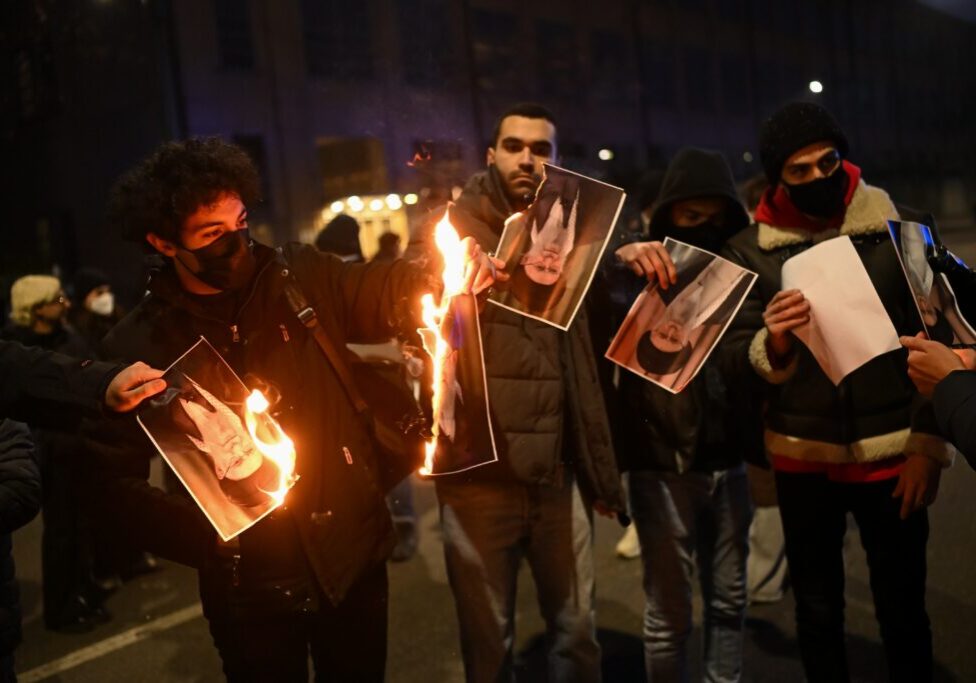
Anti-regime protests in 2022, suppressed, but representing an underlying demand for political change, not just reforms (Image: X)
Khomeini’s great-grandson, Ahmed, gave his eldest daughter the name “Iran”, signalling a preference for names related to the homeland over Islamic names. The nationalism that was viewed as anti-Islamic by the father of the revolution has turned into an ideal for the youth. Ahmed’s father, Hassan, and other descendants of Khomeini, have long condemned the Government’s policy.
Other descendants of the regime’s top officials have also become critical of it. Prof. Hamzeh Safavi, son of the former chief of the Revolutionary Guards Yahya Rahim Safavi, believes that after the 12-Day War, the theocracy must moderate its hardline ideological tenets, even its hostility to the US and Israel. He also supported Saudi Arabia in conditioning recognition of Israel on its acceptance of a two-state solution. Faezeh Hashemi (daughter of Rafsanjani) said that “ideally, Iran should move towards a secular system.” Hassan Younesi, son of a former intelligence minister, while loyal to the system, is critical of its policies.
Sadegh Ziba Kalam, one of the most adamant critics of the regime, accused it of investing a fortune to support proxies, and even stated that he would “recognise Israel”. Iran blames Israel for the October 7 war, he said in a video debate. Yet from its first day, it spent a fortune to combat Israel. True, he concluded, we have missiles and advanced UAVs. But what about life itself? Where are we heading? To which he answered, “Nowhere!”
Yet, they all seem to agree that the real result of these competing visions will come only after Khamenei passes from the scene.
After Khamenei
Today, Khamenei looks weak, pale and desperate – showing signs of age (86), the burden of government responsibilities, the shock of the war and a long time living underground. Regime insiders have turned on each other and even voiced veiled criticism of Khamenei. Two interconnected factors drove the escalating conflict: who will wield power after Khamenei’s death, and how each faction can protect its wealth and power.
As Prof. Mahmood Sariolghalam observed, realpolitik is the underpinning of Iran’s foreign policy, and regime security is the core preoccupation of statecraft. Sharing power is not a Persian tradition. The internal standoff is not about belief systems, but about competing clusters of power seeking to exploit a richly endowed country.
Throughout Iran, especially in the big cities – and even more so in the capital Teheran – there is a greater boldness on the part of young people, especially women, and a laxity in maintaining the rules of modesty, with more freedom in the streets and at public events. Writing about thousands of young men and women, hair uncovered and dressed in jeans and short-sleeved tops, dancing and singing at outdoor pop concerts, observers wonder, “Is this Teheran?” Women and girls keep pushing the boundaries – looser hijab, uncovered hair in public spaces – despite “chastity” campaigns. The public is becoming more open in its disobedience to religious laws – as can be seen at the recent marathon event on the island of Kish (Nov. 29). During the race, some 2,000 women (running separately from the 3,000 men) were pictured competing without the mandatory hijab, and authorities have threatened participants with consequences.
In some instances, the authorities have moved to shutting down events, cancelling concerts or imposing fines on organisers. Khamenei has ordered the Government to bring the youth and women “back in line”. Despite this demand, President Masoud Pezeshkian’s associates say the Government does not plan to “use the failed methods of the past.” Still, political dissent is not tolerated – executions and death sentences are frequent.
Cyrus the Great returns
The most momentous symbols of the imperial past are undoubtedly King Cyrus the Great and the historical monuments associated with him – Persepolis and Cyrus’ Tomb in Pasargadae, near Shiraz. Ayatollah Khalkhali, the first head of the Revolutionary Court, called Cyrus a “Jew boy” and a “sodomite”. Provoked by his call, people in Shiraz started moving towards Persepolis to raze the ruins. In a radio speech, the Governor of Fars cautioned that “To destroy Persepolis you will have to pass over my dead body” (Bahar News, 8 July 2017).
The regime has been particularly sensitive to the events conducted at the foot of Cyrus’ tomb, which is identified with the last Shah, who opened a celebration of the 2,500th anniversary of the monarchy there in 1971. It is also a place of pilgrimage for opponents of the regime, mainly to mark Cyrus’ birthday, on Oct. 29. The regime tries to prevent such gatherings, but the events continue.
Even at the height of the euphoria following the revolution’s victory, the regime did not seek to cancel the Persian New Year or undermine its centrality as a major holiday. On the last Wednesday before Nowruz, Iranians celebrate Chaharshanbe Souri, a Zoroastrian tradition best known for jumping over fire to remove negative energy and evil in life, allowing for a new start. After the revolution, these celebrations were outlawed, but nevertheless could not be prevented. Gradually, they returned to the streets openly and often became a forum for expressing grievances with the regime.
The ritual was rebranded by activists as expressing the people’s willingness to walk through the fire of uprising against the regime.
In recent years, more people celebrate Halloween, another sign of desire to connect with the “global stage”. The Iranian Chamber of Guilds bans the sale of goods related to Halloween as a way to protect the culture and religion. Nevertheless, the parties go on, and the number of participants is growing.
Khamenei has often expressed disdain for Iran’s pre-Islamic past. Yet, just days after the Israeli onslaught against Iran in June, he praised the country’s “ancient civilisation” and its “cultural and civilisational wealth.” A billboard newly installed in Teheran praises an ancient Persian king, while another depicts the mythical figure of Arash the Archer. While the Government has used nationalist themes before, it has never been on quite this scale.
In the aftermath of Iran’s stinging defeat in June, it embarked on a pathetic cognitive engineering campaign to convince the people of its supposed “victories”. A monument unveiled in November 2025 at Enqelab Square depicted the Sasanian King Shapur I on horseback and the Roman Emperor Valerian kneeling before him. Another billboard showed a Shapur-like king standing in triumph, Israeli PM Netanyahu kneeling in front of him, with the promise that “history will repeat itself.”
The dramatic change in the regime attitude to nationalism was most evident in the Ashura ceremony in Imam Khomeini Mosque on June 5. Khamenei asked the famous eulogist Karimi Mamdouh to recite the unofficial nationalist anthem “Ey Iran”, greatly cherished by opposition circles and in the diaspora. Historically, the nationalist anthems and religious laments have been perceived as stylistically and ideologically distinct: the former expressing patriotic fervour, the latter a testament of religious devotion.
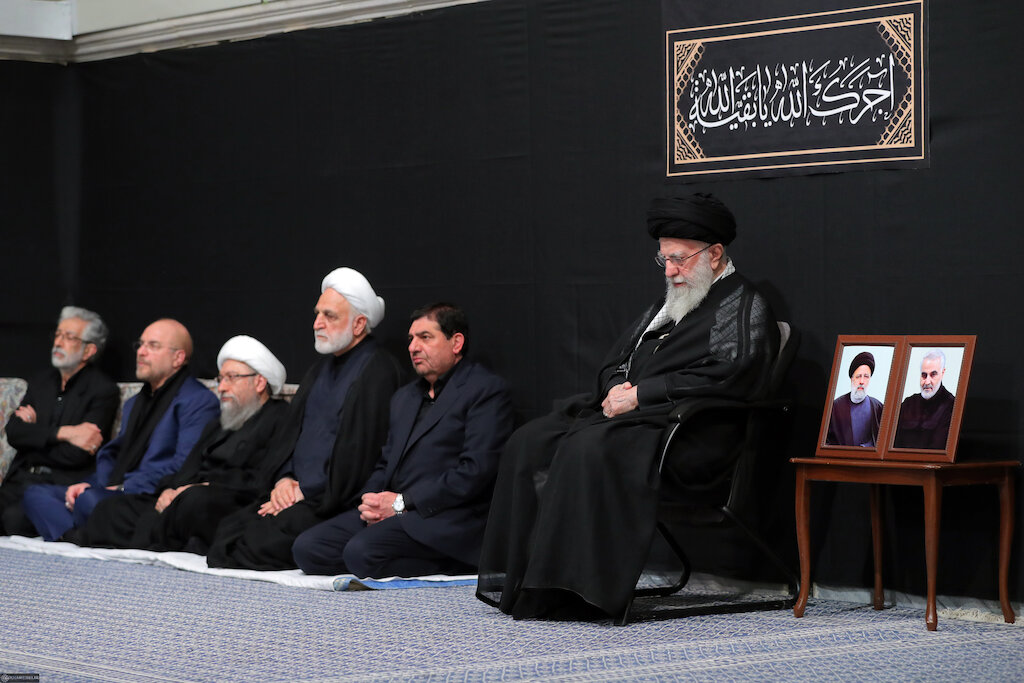
Recent ceremonies led by Supreme Leader Ali Khamenei have featured much more nationalist themes, and fewer religious ones (Image: Khamenei.ir)
The anthem’s warm reception among Iranians signals a symbolic convergence between the two. Khamenei’s speech signalled a turn toward nationalism, and regime outlets vigorously picked up the theme, toning down their references to religion and disseminating ubiquitous images of heroes from the pre-Islamic epic, the Shahnameh. Preference for national identity over religion has also been revealed in the slogans of protests from the last decade: “Neither Islam nor Qur’an, I will sacrifice my life for Iran;” “freedom, independence, Iranian [not Islamic] Republic,” and lastly, “Death to Khamenei”.
Socio-Economic Challenges
Iran has faced numerous challenges in the socio-economic sphere during the past few years. The reinstated sanctions have increased the already high inflation rate, resulting in the currency plummeting. Pezeshkian admitted a year ago that he feared that the economic situation would lead to the collapse of the regime.
Simultaneously, the Iranian water crisis is reaching boiling point, as the authorities have begun to ration water in Teheran. Pezeshkian believes that people might have to evacuate the city, as the country is experiencing the worst drought in six decades. Iran is also currently experiencing some of the most severe land subsidence anywhere in the world. In several regions, especially around Teheran, Karaj and central Iran, the ground is sinking at alarming rates due to overpumping of subterranean water. There is also the threat of sinkholes – ground collapse caused by the loss of support in the soil beneath the surface.
The Islamic Republic is at a historical juncture. Public support for the regime and the status of the clerics has never been at such a low point. The June 2025 war was a turning point, in which they lost all their assets, power and prestige. Yet, the ruling elite are determined to maintain power. They have considerable advantages: they control revolutionary institutions, and they do not shy away from violently suppressing their opponents in the name of religion.
On the other side are the “children of the revolution,” who have seen the first fruits of their struggle and are also determined to win the crucial battle. In many respects they have an advantage: they bring with them new hope to achieve the unfulfilled revolutionary aspirations to promote social justice and political justice – bread and freedom. They have broad public support. The people and history are on their side.
As for the Iranian triangle of identities – Iran, Islam and Western influence – the first currently seems to have the upper hand. The task of the next leadership, whoever it might be, will be to better blend those three heritages, which cannot be separated.
David Menashri, Professor Emeritus at Tel Aviv University, is the Founding Director of the Alliance Center for Iranian Studies and remains a Senior Research Fellow at Tel Aviv University (TAU). He is the author or editor of ten books on modern Iran.
Tags: Iran, Middle East
RELATED ARTICLES
US Middle East strategy amid regional instability: Dana Stroul at the Sydney Institute
There is still time for the United States to save thousands of Iranians from a nightmarish fate