Australia/Israel Review
Scribblings: Mental health issues in the anti-Israel movement?
Mar 18, 2026 | Tzvi Fleischer
Mental health issues in the anti-Israel movement?
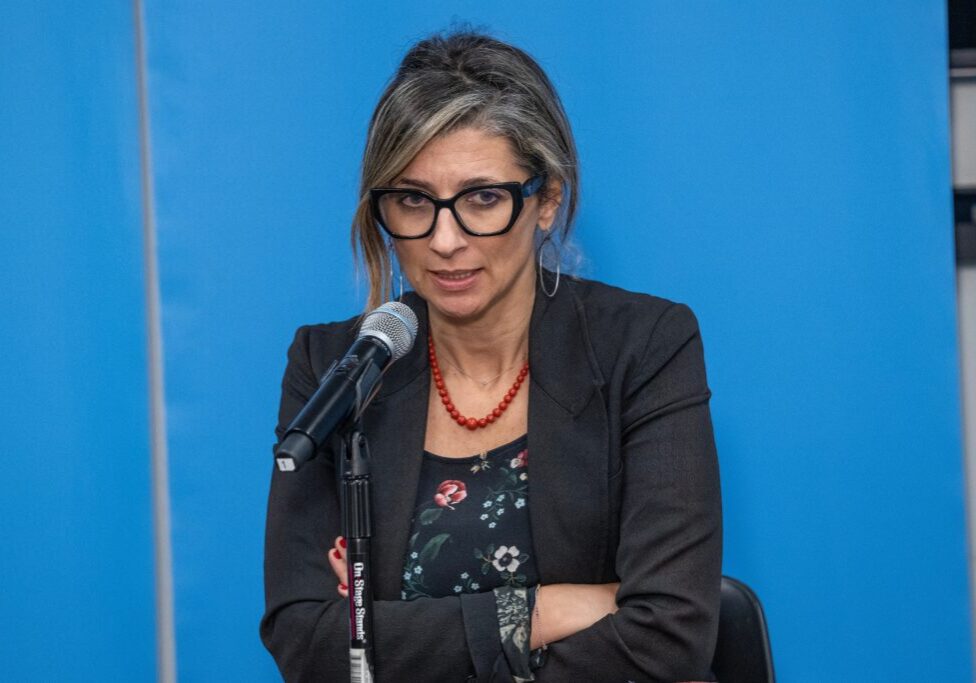
Readers may be aware that Francesca Albanese, the Italian veteran anti-Israel activist given the title of “Special Rapporteur on human rights in the occupied Palestinian territories” by the UN Human Rights Council (UNHRC), gave a speech in February at an Al Jazeera conference in which she appeared to say that Israel is the “common enemy of humanity.”
Her defenders say she actually meant that those who “control vast amounts of financial capital, algorithms or weapons” and support Israel are the “common enemy of humanity.” As if that is better.
Either way, it’s a pretty crazy claim, one showing an unhealthy level of obsession with portraying Israel as the ultimate evil. However, it is actually not that much of an outlier amongst the pro-Palestinian activist community, in which Albanese is a leading light.
On March 7, Irish novelist Sally Rooney told a pro-Palestinian conference in the Netherlands that humanity’s very “future on this earth” depends on pro-Palestinian activism. She argued that the enemies of the Palestinian movement – the United States, Israel, the military industrial complex, corporate finance and Big Tech – are the “same forces” driving “catastrophic climate change” and “destroying the very basis of our shared survival.” So, she argued, “by standing in solidarity with Palestine, we are learning how to fight for life on earth.”
Extraordinarily, she then appeared to admit that this hyperbolic belief system has a psychological basis – it is essential to give her life meaning.
She said of Palestinian solidarity, “What else… can give us a reason to go on, to fend off despair, to live with ourselves, and to fight for our future?” It is the only thing that can “make our lives endurable.”
No wonder people like Albanese and Rooney go bigger and bigger, and crazier and crazier, given the personal priority they place on opposing Israel. As Rooney admits, anti-Israel activism is essential to their lives. Questioning its value and importance would be unthinkable, destroy the whole basis of their ego, self-regard and worldview, causing an extreme existential crisis.
Yet that worldview is absurd and illogical – divorced from reality, impervious to facts and obsessive to a pathological degree. Are we looking at elements of psychopathology amongst the most extreme activists in the pro-Palestinian movement?
Fresh thinking wanted
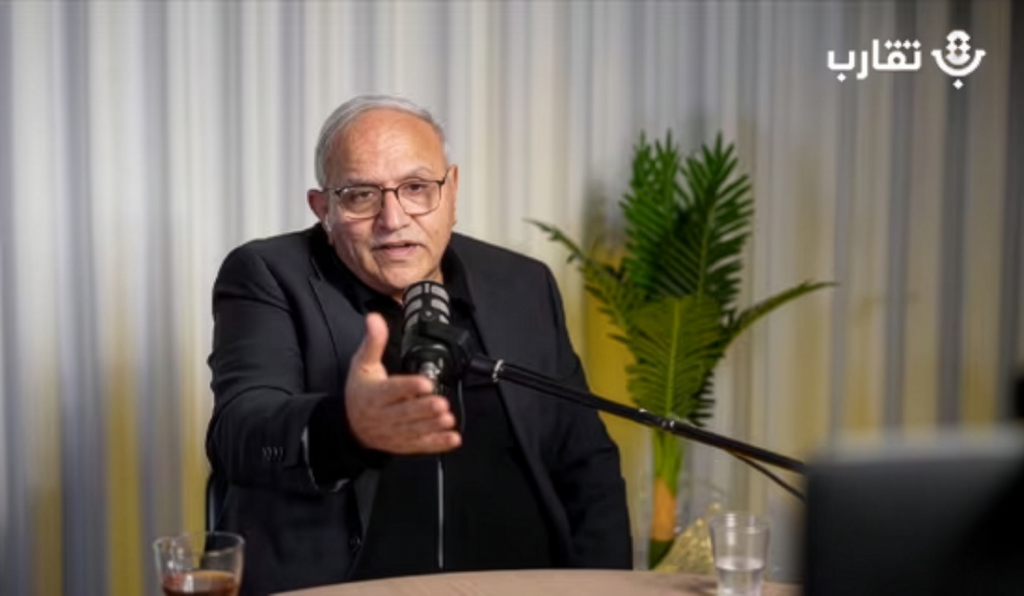
I want to give a sincere thumbs-up to two Palestinians whom I don’t know much about, but who gives me some hope for the future. One is Ali Daragma, host of “Sabah Filastin” (“Morning Palestine”), on an-Najah NBC, a radio station affiliated with Nablus University. The other is Palestinian political analyst and former PA official Hani al-Masri, now Director-General of the Palestinian Centre for Policy Research and Strategic Studies. Daragma interviewed al-Masri in a reel the station posted on Facebook in mid-February.
The subject of the interview was very simple: What is wrong with Palestinian thinking that is keeping them from solving their many problems?
Daragma opens by saying:
I want to take you to a place we have never been before. I want to ask: why do we think the wrong way?… Why isn’t our thinking right? Why is our logic so arbitrary and reactionary?
Al-Masri replies by implying that Palestinians are used to blaming others for things that go wrong and refuse to look at how their own behaviour and thinking contribute to the bad place they are currently in:
Whenever a problem occurs – even when you are a child in school, if you didn’t get good grades, the fault lies with the teacher, or the questions were too hard, or “my genes are bad,” or “my parents aren’t smart enough” – notice all these answers relate to others. There is never a question of, “What did I do to understand the questions, answer correctly and succeed?” This is the prevailing pattern that feeds this failure…
You grow up being told that your fate is “written for you,” and that you must simply accept what is written. This is a misunderstanding of religion… Instead of believing that “he who seeks shall find,”… we always look for external causes – whether related to parents, family, neighbours, the school, the [Palestinian] Authority or the party. Never look for a cause related to yourself, even though the only thing you can actually change is what is related to you. What relates to others is their responsibility…
He then recommends two books his centre has published designed to encourage fresh thinking, before warning about the dangers of relying on existing ways of thought and slogans without rethinking them in the face of changing realities:
If you continue to use old methods in a completely new situation, you cannot advance. This is why you make mistakes in both personal and public matters. Self-criticism and evaluation are vital. Thought doesn’t come in the abstract; it must interact with reality.
The two then, somewhat gingerly, tackle how the repressive forces in the PA are preventing fresh thinking and change. Daragma brings up how journalists are being threatened on social media because they criticise certain actions of the Palestinian security services.
Al-Masri says that this repression:
…threatens civil peace and social security. We are entering areas that should be off-limits. Just because someone criticised the Authority or demanded an investigation and trial for criminals, they become a target for attack and defamation… Preventing people from thinking and criticising is dangerous.
The whole interview is only about five minutes, but it was nonetheless heartening. I have no doubt that if Palestinian society was able to do what they urge – rethink old slogans and thinking, be willing to stop blaming others and take responsibility for their own plight, look at reality in a clear-eyed way in formulating their approach, and end the culture of repression and forced conformism that stifles original thinking – we would be a lot closer to stable Israel-Palestinian coexistence, and eventual permanent peace.
Unfortunately, the bad news is that the Daragma–al-Masri interview was very much an outlier, broadcast only on a small community radio station. It is currently unimaginable that something similar would appear on official PA radio or TV, which have a vastly larger audience, and generally follow an editorial line that says questioning traditional Palestinian positions is unthinkable, and all problems in Palestinian society are because Palestinians are victims of Israel and other evil forces beyond their control. Hopefully, people like Daragma and al-Masri are a sign that this might change someday.
Tags: Palestinian Authority, Palestinians, UNHRC
RELATED ARTICLES