Australia/Israel Review
Keeping Faith: Energy amidst agony
Dec 19, 2025 | Rabbi Ralph Genende
AIJAC’s latest religious leaders Rambam study tour arrived in Israel shortly after the commencement of the US-brokered ceasefire, announced on October 10. It was from the outset a remarkable time to be in Israel, reflected in the unseasonably sunny and warm autumnal days.
The group – which included Australian Protestant ministers, two Samoan Christian leaders based in NZ and a Hindu faith leader – found the cafes in Jerusalem and Tel Aviv spilling onto the pavement, the bougainvillea bursting from the walls and window boxes; and a warm almost spring-like energy all around. It felt like the ceasefire had opened the skies and let the sunshine and laughter back into the heavy and grieving hearts of the people of Israel.
This trip was different from previous AIJAC clergy tours because we were not just introducing our participants to the rich and complicated interplay of religion and politics in Israel, but also exposing them to the trauma and triumphs of the country over the past two years. We were also exploring how interfaith relationships in Israel and beyond had been affected by the ongoing conflict.
For all the sunshine and warmth, the darkness and grief of the past two years were palpable and the signs of a wounded nation visible and present in every encounter and conversation. Just a thin tissue separated the energy and the agony.
All around, the yellow banners and flags and empty chairs – representing the hostages – were ubiquitous. On virtually every bus stop, public wall and power pole were pictures of those killed on October 7, together with information about their lives and quotes reflecting their hopes and aspirations.
The TV stations every day featured families of the returned hostages. We were there as the body of Hadar Goldin was finally returned and poignantly laid to rest after 11 years and four months. Hostage Square was quiet and lonely, but the families of the two remaining deceased hostages were still there waiting with forbearance. They were especially appreciative of the friendship and support of non-Jews coming to Israel at this time – a sentiment we heard throughout our trip.
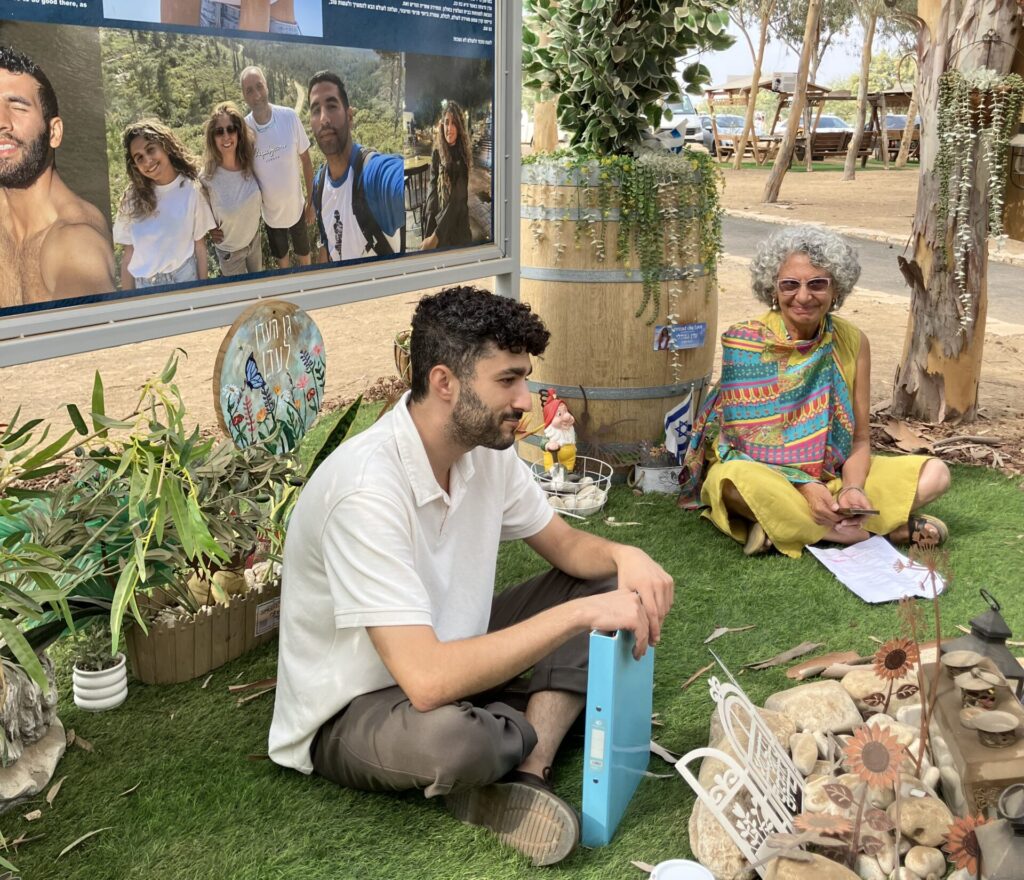
Of course, the Gaza envelope area is emblematic of the trauma, but it was also reflective of the triumph and resilience. At Kibbutz Be’eri, as we sat amidst the mute, burnt and broken houses, Australian born Danny Majzner spoke of his personal loss. As I sang the poignant El Maleh prayer in memory of his murdered sister, Galit Carbone, tears washed over us all. But Majzner also spoke of his hope that the kibbutz would rebuild. The logo on his T-shirt said it all: Build Be’eri Better. There are new houses going up and people are returning.
At the Nova music festival massacre site, we sat in a circle around 24-year-old survivor Shalev, who narrowly escaped the rampage thanks to the shelter he was given by a courageous Bedouin. He spoke with wisdom beyond his years about how grateful he was to be alive: “I have learnt how to find pockets of hope and strength when facing the inevitable challenges and suffering of life.”
I asked one of our Samoan participants to thank Shalev and she said the best way she could thank him was through song. The strains of her “Amazing Grace” rose hauntingly over the wretched landscape – encapsulating both the pathos of the place and the faith, grace and courage of the survivors and the families of the victims.
Faith and fortitude characterised the whole trip – epitomising not only the participants, but also our outstanding presenters, many of them Israeli faith leaders.
There was the renowned Yossi Klein Halevi, who works at the Shalom Hartman Institute in Jerusalem together with Muslim colleagues. Yossi is unafraid of tackling the moral dilemmas of a war fought in civilian areas (Hamas and Hezbollah’s chosen arenas). He is not uncritical of some of Israel’s conduct but cogently points out the difference between war as atrocity and war as tragedy. He asks, what is the intent of a battle? He also pointed out that if you want to accuse Israel of genocide and underplay its enemies’ actions, then you need to think about the implications for the future of Western countries like Australia if extremism goes unchecked.
Our Hindu participant was buoyed by Klein Halevi’s contention that the source of almost all religious faiths emerges from Judaism and Hinduism.
We also met with an Israeli interfaith panel led by Rabbi Dr Aharon Ariel Lavi of the Ohr Torah Interfaith Centre, which works with religious leaders – especially Muslims – not only in Israel but also worldwide, including Australia.
Sheikh Imad al-Deen al-Massri of the Ahmadiyah movement in Israel told us: “We must not stop talking, for we are all pilgrims. You may be unable to go out of your box of ideology but God speaks to all who recognise the different boxes of our many faiths.”
This sentiment was echoed by Father Piotr Zelazko, the Patriarchal Vicar for Catholics in Israel, and Pastor Milena Hasselmann, Pastor at the Church of the Redeemer in the Old City of Jerusalem, who also runs a study program for students of theology from Germany at Hebrew University. The war has not curtailed but rather strengthened interfaith relationships in Israel.
This trip reinforced my passionate belief that the wars in the Middle East and beyond will not be resolved by politicians or military strategists alone. As Rabbi Jonathan Sacks would aver: Religion is an essential part of the cause and it’s also a vital part of the solution. His words are reflective of the prophetic message: “not by strength but by the spirit of God” will war be won.
The healing of Israel has long to go There is still tension and great public awareness that Iran, Hamas and Hezbollah, while subdued, have not given up their intention of harming Israel and Jews everywhere.
Yet for all this there’s a deep spirit and remarkable energy there. We left energised not only by the sunshine and promise of some peace, but also by the soul of this remarkable country and its diverse people.
RELATED ARTICLES