Australia/Israel Review
The Gaza gap
Mar 18, 2026 | Bren Carlill
Phase II of Trump’s peace plan vs Palestinian reality
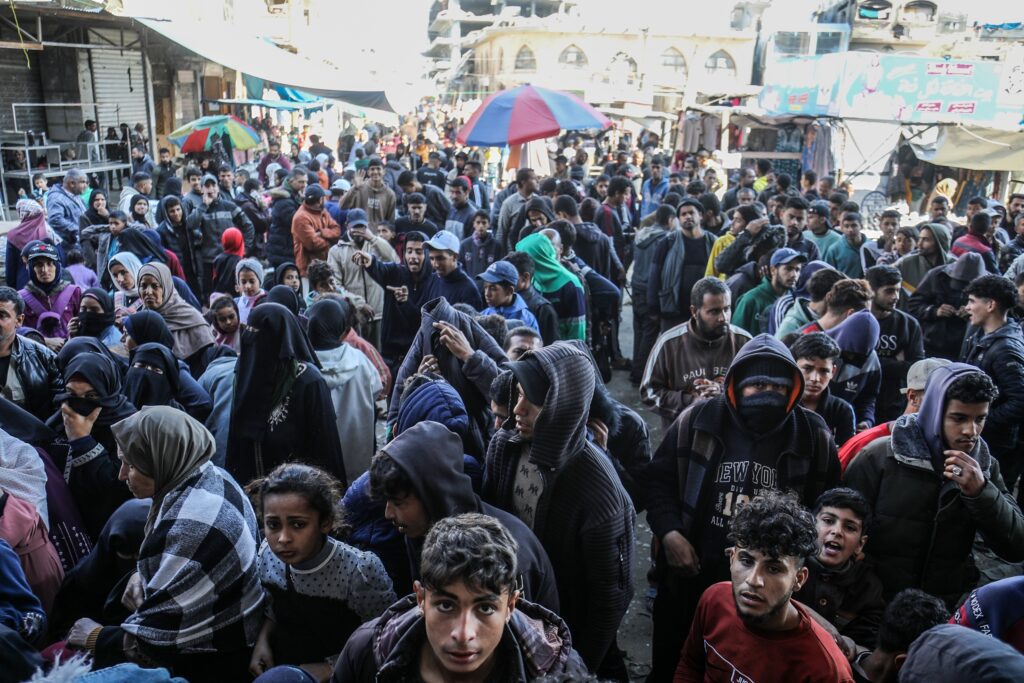
In January 2026, Trump Administration officials announced the commencement of ‘Phase II’ of US President Donald Trump’s ‘20-point plan’ for Gaza. In Phase I, Hamas was to release all hostages (alive and dead), and Israel was to release nearly 2,000 prisoners, as well as to withdraw to the ‘yellow line’, which divides Gaza into an eastern half remaining under Israeli control and a western half under Hamas control.
Phase II is, at its core, a state-building project.
Strip away the diplomatic language and what remains is an attempt to construct a new governing model in Gaza. The goal is a technocratic government administering a rules-based order enforced by a combination of international and local forces, in place of a disarmed Hamas.
Putting aside the vexed question of who, exactly is supposed to disarm Hamas, Phase II assumes, first, that administrative competence will generate legitimacy, second, that the technocratic government (in concert with the local and international security forces) will have the monopoly on the use of force, and, third, that the security forces will impartially enforce the law.
In short, it is attempting to set Gaza up as a normal, modern state.
This article does not ask whether such a state is desirable. Rather, it asks whether Phase II’s vision aligns with the views on sovereignty, legitimacy and law held by Gazans.
Polling data gathered over the past decade suggests the answer is, well, “no”.
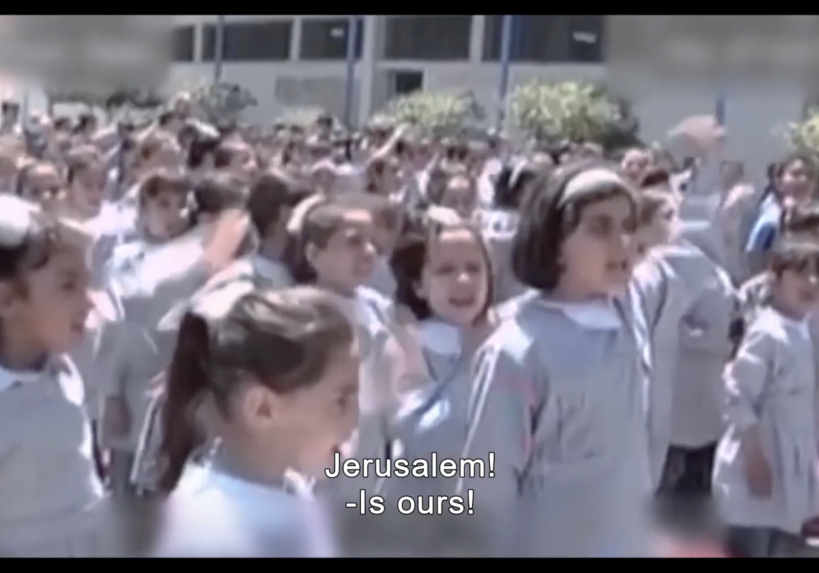
Instead, what emerges from the data is a political culture in which law is conditional, legitimacy flows from ‘resistance against Israel’ rather than administrative prowess, and political identity is embedded in religious meaning.
That combination complicates any externally designed technocratic template, and flies in the face of Phase II’s objectives.
Law as conditional, not absolute
At the heart of Phase II lies a simple premise: Governing authority must monopolise force and enforce the law consistently.
In the context of Gaza, this means that armed factions cannot operate independently, and that security forces must prevent attacks launched in the name of “resistance”.
Yet Palestinian polling consistently reveals significant discomfort with this idea.
In the three surveys between December 2022 and June 2023, Palestinians were asked whether the Palestinian Authority (PA) security forces should prevent armed groups from attacking Israel. The PA had asked these groups to surrender their arms to the PA security forces, to prevent them from being attacked by Israel. Asked about this, an average of 80% of Gazans were against the groups surrendering their arms.
When asked whether the PA had a right to arrest members of these groups in order to prevent them from attacking Israel (or being attacked by Israel), an average of 87% of Gazans said it did not.
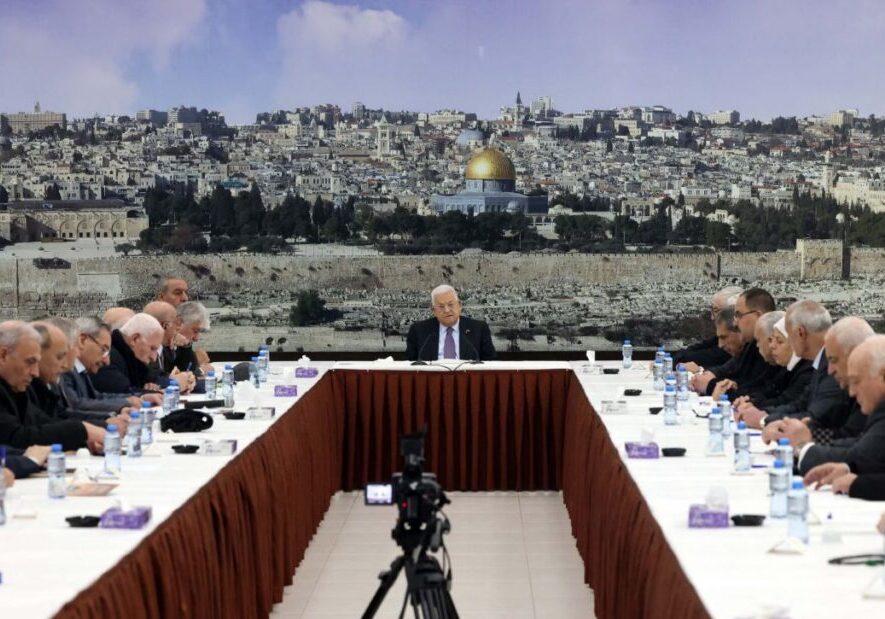
These results came four years after an average of 68% of Gazans, in the four surveys between June 2018 and March 2019, supported the presence of armed groups alongside the PA’s security services, thereby explicitly rejecting PA President Mahmoud Abbas’ call for “one government and one gun.”
Back in July 2015, Gazans were asked under what conditions the armed groups in Gaza should be dissolved. A plurality said they should never be dissolved.
The implications of these and similar results are profound. They suggest that violence framed as national struggle occupies a moral category distinct from ordinary criminality. In that domain, the law becomes negotiable.
However, a rule-of-law society requires the law to be applied universally and for the legitimacy of force to rest with government forces. If armed action by non-state actors is viewed as legitimate then sovereignty is not fully transferred to central authority.
Phase II assumes that a reconstituted security apparatus in Gaza will suppress unauthorised force in the name of institutional order. But polling has long told us that, for many Gazans (indeed, for many Palestinians in the West Bank as well), the siren call of struggle against Israel is a higher value than institutional order.
That tension has long sat at the core of the Palestinian state-building challenge. It has long been ignored by well-meaning Western officials – including in Phase II of Trump’s plan.
Legitimacy through struggle, not administration
In theory, technocratic governance depends on performance legitimacy, such as the ability to deliver services, restore infrastructure, pay salaries and maintain order. Legitimacy follows competence.
Yet Palestinian polling tells a more complicated story.
Figures with violent credentials routinely outperform technocratic administrators in hypothetical elections. Marwan Barghouti, head of an ‘armed wing’ of a Palestinian political party and imprisoned for orchestrating murderous terrorist attacks, consistently polls ahead of politicians who advocate non-violence.
Salam Fayyad, widely respected internationally for technocratic, institution-building efforts, has historically polled poorly.
This pattern is not reducible to frustration with corruption. It reflects a deeper source of political capital. In Palestinian political culture, legitimacy is often derived from perceived steadfastness and resistance, not administrative and managerial skills.
Phase II, however, imagines the opposite dynamic. It assumes that if Gaza receives competent governance, public support will consolidate around those institutions.
That may be true in some contexts. However, polling over many years suggests that in Gaza (and the West Bank), symbolic legitimacy outweighs technocratic competence. A leader’s standing in the struggle carries more weight than their ability to balance a budget.
Political identity embedded in religion
The Western state-building template assumes institutional neutrality. Politics is, at least formally, separated from theological doctrine.
But Palestinian polling suggests that this separation is not widely embraced in Gaza and the West Bank.
In almost every survey since 2014, Palestinians were asked what was the most important goal the Palestinian people should strive to achieve. While a Palestinian state and the so-called ‘right of return’ were always the first and second most popular choice, what is of note is that, typically, there were more Palestinians who thought that building a more pious society was more important than those who favoured establishing a democratic political system.
Over the entire 11-year period, 14% of Gazans thought that building a more pious society was the single most important goal for the Palestinian people, compared with 13%, who thought that establishing a democratic political system was.
In July 2016 and eight months later in March 2017, Palestinians were asked about the separation of religion and state. An average of 57% of Gazans disagreed with the notion that religion is a private practice that should be separated from socio-political life.
This does not mean that Gazans seek a theocracy. Nor does it mean they oppose elections or public accountability. But it does indicate that political order is understood, by many, as religiously infused.
Phase II, by contrast, presumes a form of administrative rationality detached from theological identity. It assumes that governance can be framed in terms of efficiency, transparency and service provision, rather than nationalist or religious struggle.
This is particularly important when it comes to Gaza, because the Hamas religious narrative is tied to ongoing violence against Israel until the latter is destroyed.
It is worth recalling that the Hamas Charter reads, in part:
Nationalism, from the point of view of Hamas, is part of the religious creed…
Initiatives, and so-called peaceful solutions and international conferences, are in contradiction to the principles of Hamas… There is no solution for the Palestinian question except through jihad. Initiatives, proposals and international conferences are all a waste of time and vain endeavours…
Secularism completely contradicts religious ideology. Attitudes, conduct and decisions stem from ideologies… The Islamic nature of Palestine is part of our religion and whoever takes his religion lightly is a loser.
Hamas took control of Gaza in 2007, so an entire generation has been brought up on this dogma.
If public understanding of and respect for governance are tied to religious and national narratives, a purely technocratic authority will struggle to generate emotional allegiance. It might function – it might even be a marked improvement over the endemically corrupt Palestinian Authority in the West Bank and Hamas in Gaza – but it will likely never embody the meanings that Gazans attach to sovereignty or governance.
What this means for Gaza
None of this implies that Gazans prefer corruption, disorder or perpetual war. Polling also shows widespread frustration with weak policing and institutional corruption. But frustration with current institutions does not automatically translate into support for a liberal-technocratic model.
Phase II seeks to form a centralised authority that monopolises force, enforces law impartially and derives legitimacy from administrative performance. But Palestinian public opinion suggests a more complicated social landscape, in which law is not supreme when national struggle is involved; legitimacy flows heavily from resistance credentials; and political identity is intertwined with religious meaning.
These are not insurmountable obstacles. Societies do evolve. But we are faced with a structural dilemma that goes to the heart of Western attempts to establish viable Palestinian statehood: On the one hand, state-building cannot succeed by ignoring the society it seeks to govern, while on the other hand, a Palestinian state built in line with current Palestinian societal expectations of governance – not least its preferences for violent resistance over the rule of law – will lead to a failed state eternally at war with Israel.
Ultimately, much or all of this boils down to long-term Palestinian desires. Do Palestinians want to continue hurling their society against the rock of Israel’s permanence, or will they as a society finally make peace with the fact that the realisation of a Palestinian state requires the realisation it can only be next to – not instead of – the Jewish state.
Phase II has assumed the latter, but Palestinian society isn’t there yet. This fundamental flaw is the reason Phase II will very likely fail.
Tags: Gaza, Palestinians
RELATED ARTICLES