Australia/Israel Review
Safe spaces
Mar 18, 2026 | Ahron Shapiro
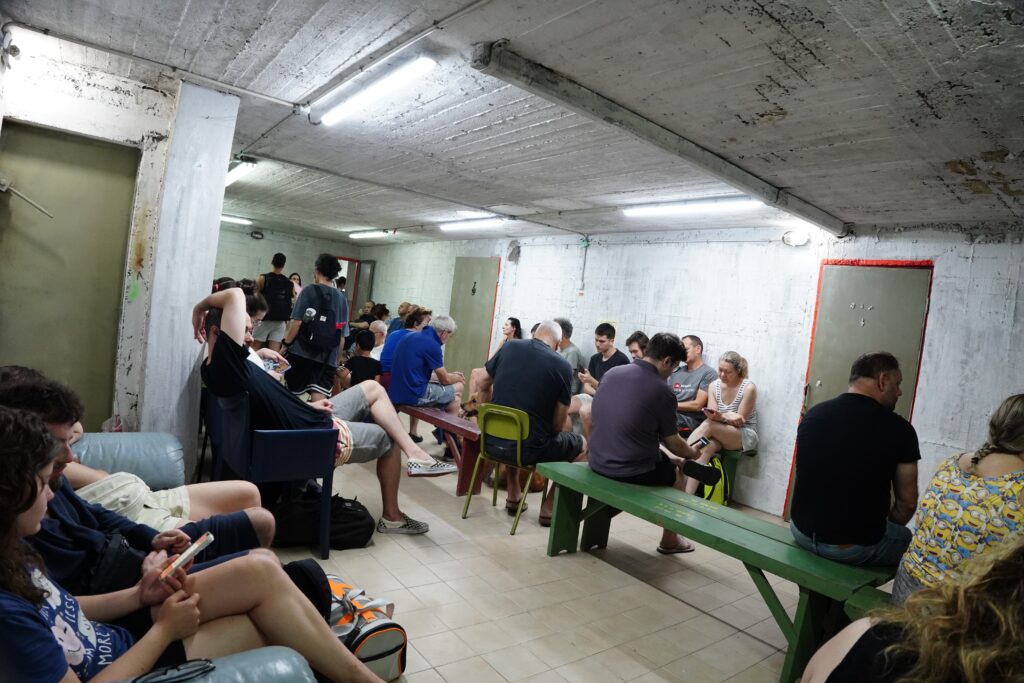
We were still a few steps away from the basement miklat, or bomb shelter, in our building when we heard the swooshing sounds of launching interceptors, followed quickly by loud booms, somewhere in the dark outside our apartment in Jerusalem.
From the moment the air raid siren begins, you have 90 seconds to get to a shelter. It seems like enough, and maybe it is, but just barely – once you factor in the fumbling for shoes and something to wrap around yourself in the winter cold.
Once we left the shelter after the “all clear” came over our phones and the kids tumbled back into bed, I paused by my teenage son’s room and whispered, “We did well tonight, but maybe let’s aim to get down there just a little sooner next time.”
I didn’t say, but I knew what the consequences of not getting to the bomb shelter in time can mean, if you’re unlucky. Those few last steps could be the difference between life and death.
Israel’s dusty old bomb shelters are like airbags. You never really notice them until the moment that you need them.
By law, all Israeli buildings built since 1951 are mandated to have bomb shelters. For decades, these were situated on the ground floor or basement. Public housing is an exception, typically opting for more economical shelter placement, outside, in an oversized underground space.
Following the 1991 Gulf War, regulation moved away from the shared shelter model in favour of a mamad, a safe room constructed as part of each individual apartment. These are super-convenient, but not optimal in terms of protection – the underground placement of the older shelters actually offers natural protection from explosive forces better than similar reinforced construction in above-ground apartments.
Everything is a trade-off. On one hand, my family envies people in modern apartments with a mamad as they can weather missile attacks with much less disruption of work or sleep. On the other hand, there is a special kind of camaraderie you get out of going through these attacks with your neighbours in a shared bomb shelter, which you can’t get by staying locked in at home.
Buildings built before 1951 have neither private nor communal shelters. For these residents, cities provide government-maintained public shelters. These spacious shelters have modest individual living spaces for multiple families (first come, first served), toilet blocks, emergency water tanks, communal areas and CCTV cameras for protection.
In fact, while researching this article, I was stopped by police who questioned me on the spot, took my name and informed me that, journalist or not, I could not go around photographing bomb shelters because such photos could provide intelligence to Iran. Apologising profusely, I told them it was something that had never even occurred to me. For this reason, this article is illustrated only by authorised photographs, and the information I’m discussing certainly doesn’t reveal anything that isn’t available in the public domain.
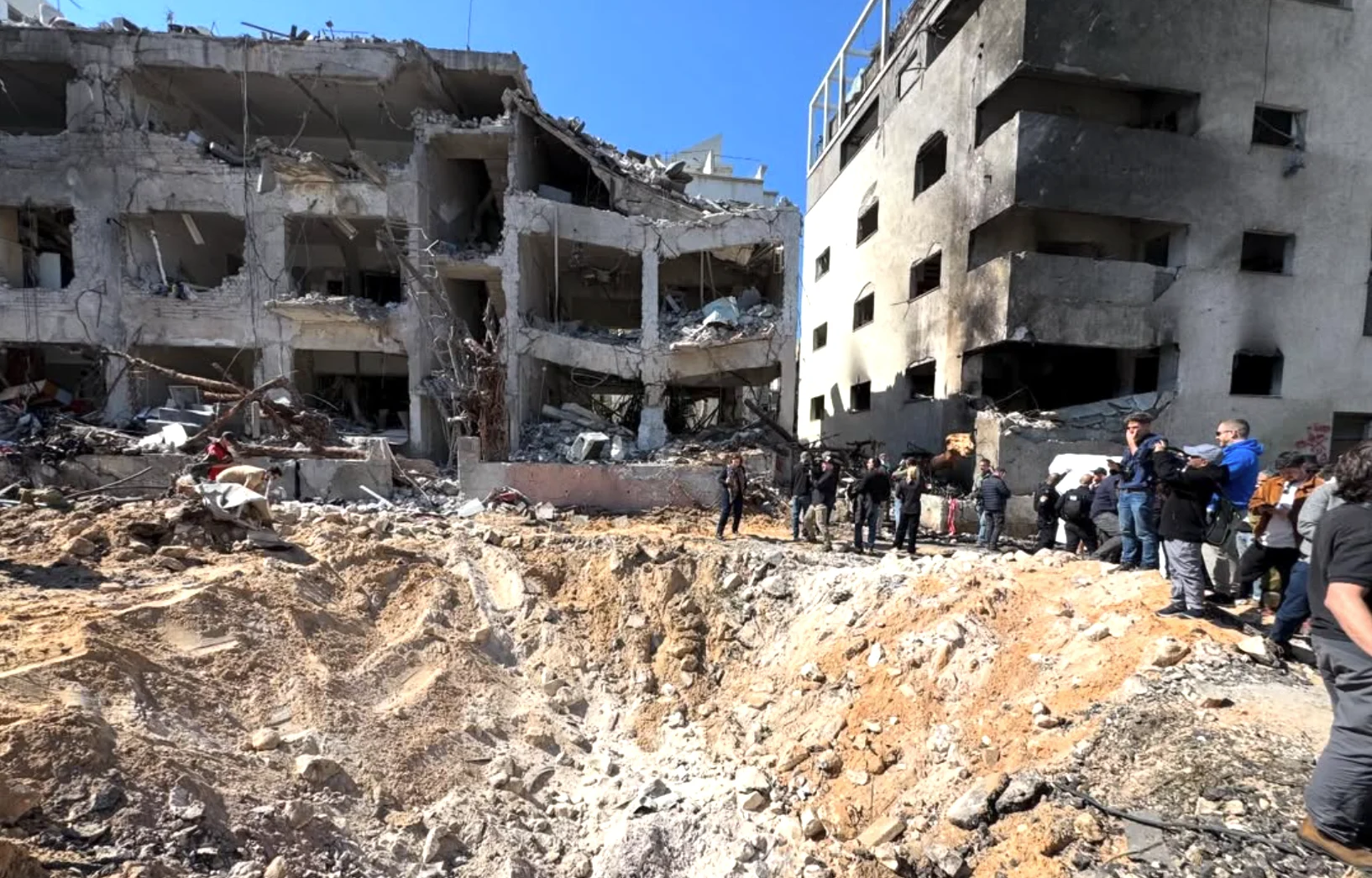
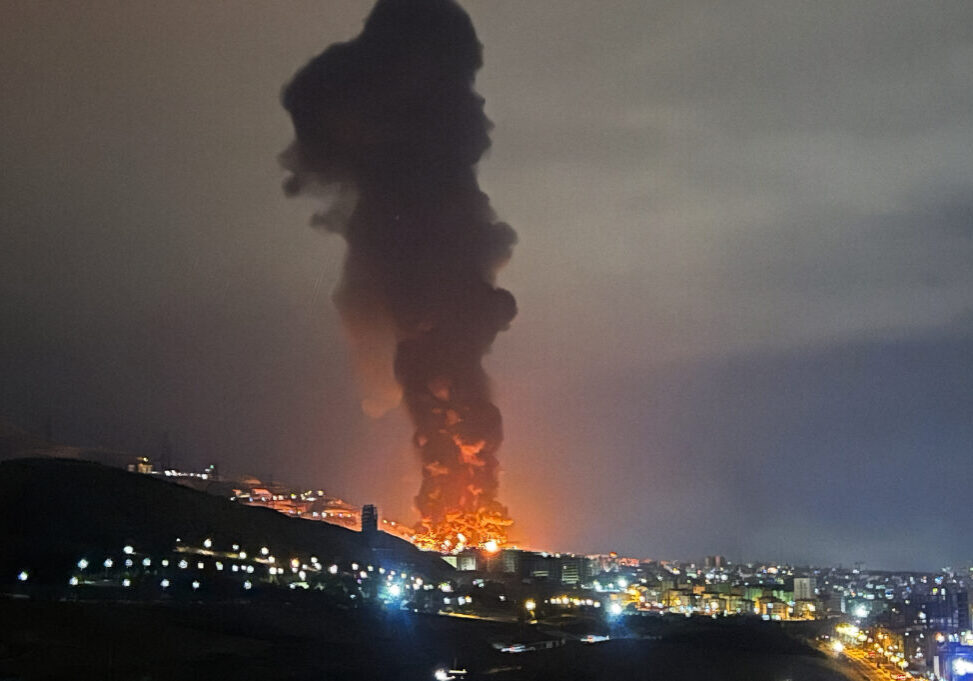
This explosion in Tel Aviv caused major damage to a historic apartment block (Image: Screenshot/ Bauhaus Centre)
The current conflict with Iran – with all the sprints to the bomb shelters and long minutes inside that have come with them – has given me time to pause and think about them. What’s obvious is that the shelters built from the ‘50s to the ‘90s – like ours – were never built with the expectation that people might be able to safely pop in and out of them several times a day.
Nobody back then anticipated that threats would ever be detected with the precision they are today. Rather, the spaces were built based on the same knowledge that every single Israeli had before 1967 – that every town in the country was either in mortar or artillery range. Therefore, an escalation or war meant living in your bomb shelter 24/7 until you heard over the radio that some sort of truce had been reached and the danger had passed.
For some Israelis in the border kibbutzim, even that kind of lifestyle was beyond their reach. History tells us of the children who slept in the kibbutz bomb shelters every single night, and of the armoured tractors that were used to till the fields – and even that wasn’t always enough protection.
This is why, post-October 7, the idea of having the country’s borders being reduced to the armistice lines of June 4, 1967 – as narrow as 14 kilometres – is now seen as unrealistic and indefensible to most Israelis. It’s the demand made by people who have never had to guard their own country’s borders while neighbourhoods of innocent people were literally just behind your back.
They also likely cannot imagine a situation where your life and that of everyone you love can depend on an alert that wakes you out of a deep sleep and requires you to get to safety before you are even completely awake.
For all the endless debates on Western university campuses about “safe spaces”, for Israelis, bomb shelters are at times the only “safe spaces” that matter. In those terrible moments, those thick concrete walls provide precious protected space to live, breathe deeply, and seize a few moments of feeling alive.
As the Iran war began during the first week of March, Israel, together with the rest of the Jewish world, celebrated the holiday of Purim, which commemorates a miraculous reprieve from the plots of murderous Persian enemies over two and a half millennia ago.
Our neighbours brought down craft supplies and balloons for the kids to make Purim decorations for the shelter, and distributed homemade hamentaschen, triangle-shaped holiday treats.
On the night of Purim itself, we all gathered in the shelter and followed the age-old tradition of hearing the story of Purim read from a scroll, a story of the victory of the few over the many and the weak over the strong, and the enduring survival of the Jewish people despite the antisemitism that follows us from generation to generation.
It is a story where God is never mentioned, and yet where God’s protection and guiding hand are found between every line.
In one memorable line from the story, the heroine Esther is asked at a fateful moment, “Who knows whether you have [been placed in this position] for just such a time as this?”
For Jerusalem’s dusty, trusty bomb shelters in today’s war, that’s more than just a rhetorical question.
Tags: Israel
RELATED ARTICLES